Catherine Valois
Interview & Photography / Catherine Bernier
In collaboration with Milo & Dexter
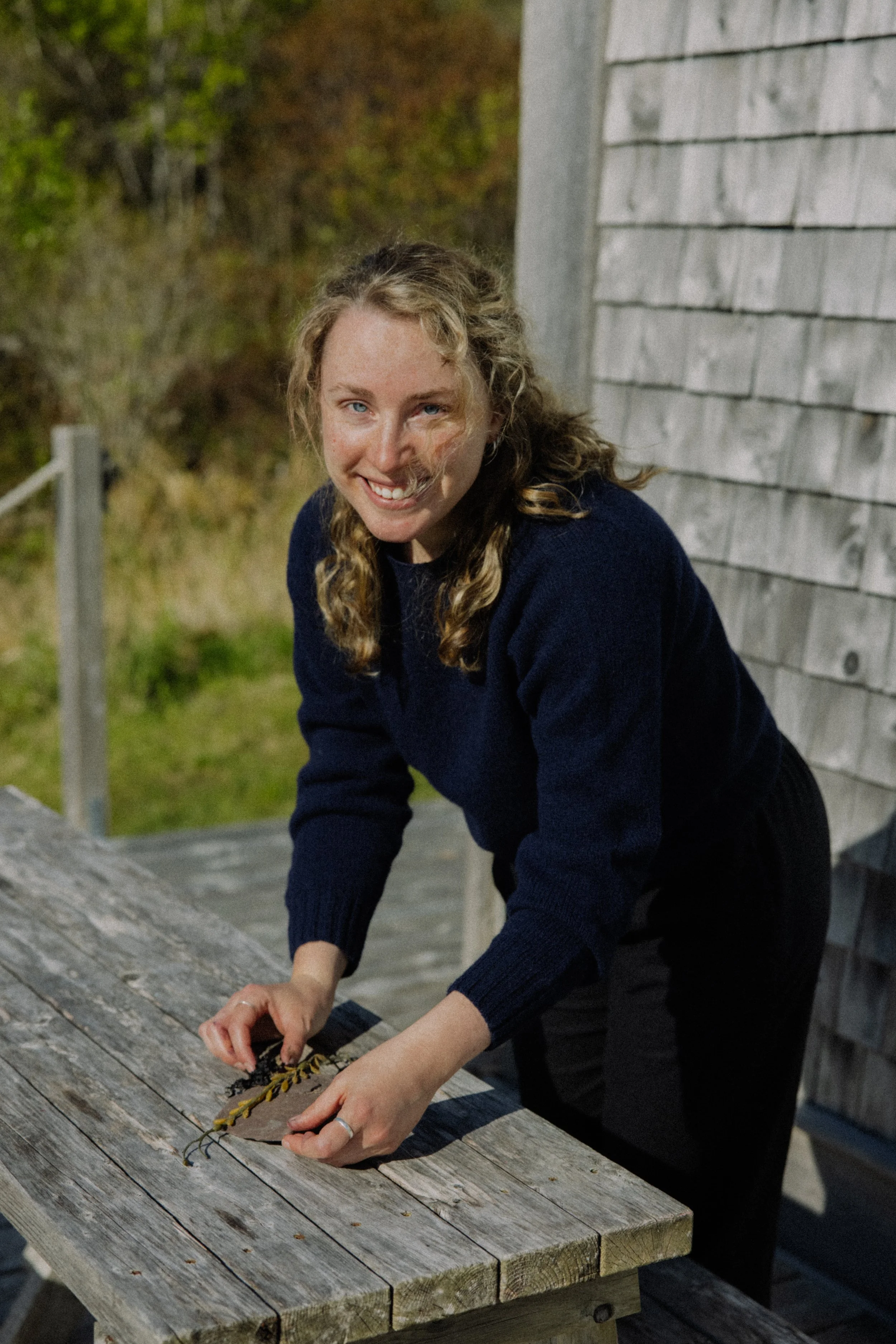
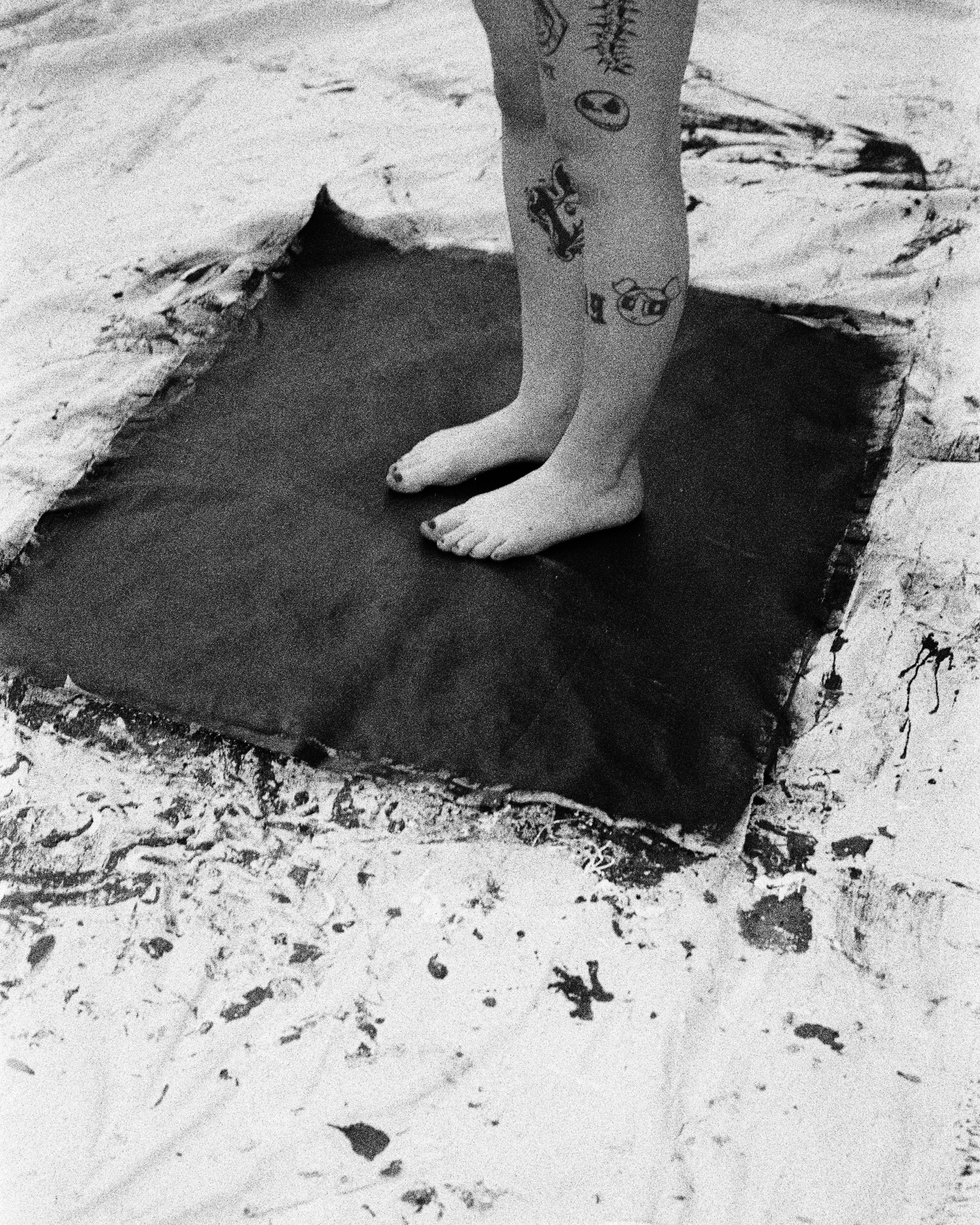
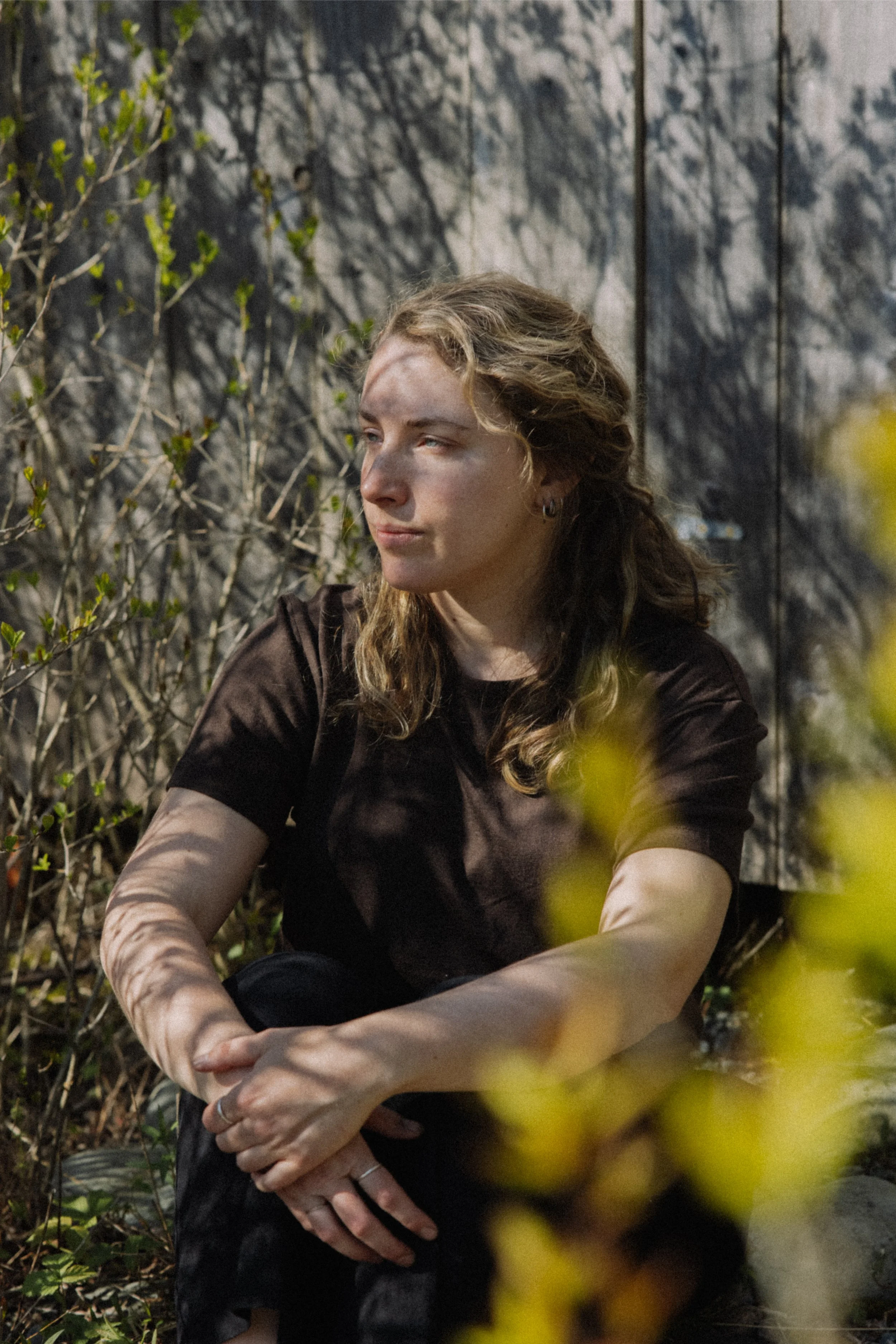
During her residency at The Parcelles in Seaforth, ceramic artist Catherine Valois (Caval Ceramique) found herself in a landscape that echoed many of the themes already present in her practice: impermanence, memory, fragility, transmission, and the quiet traces left behind by time.
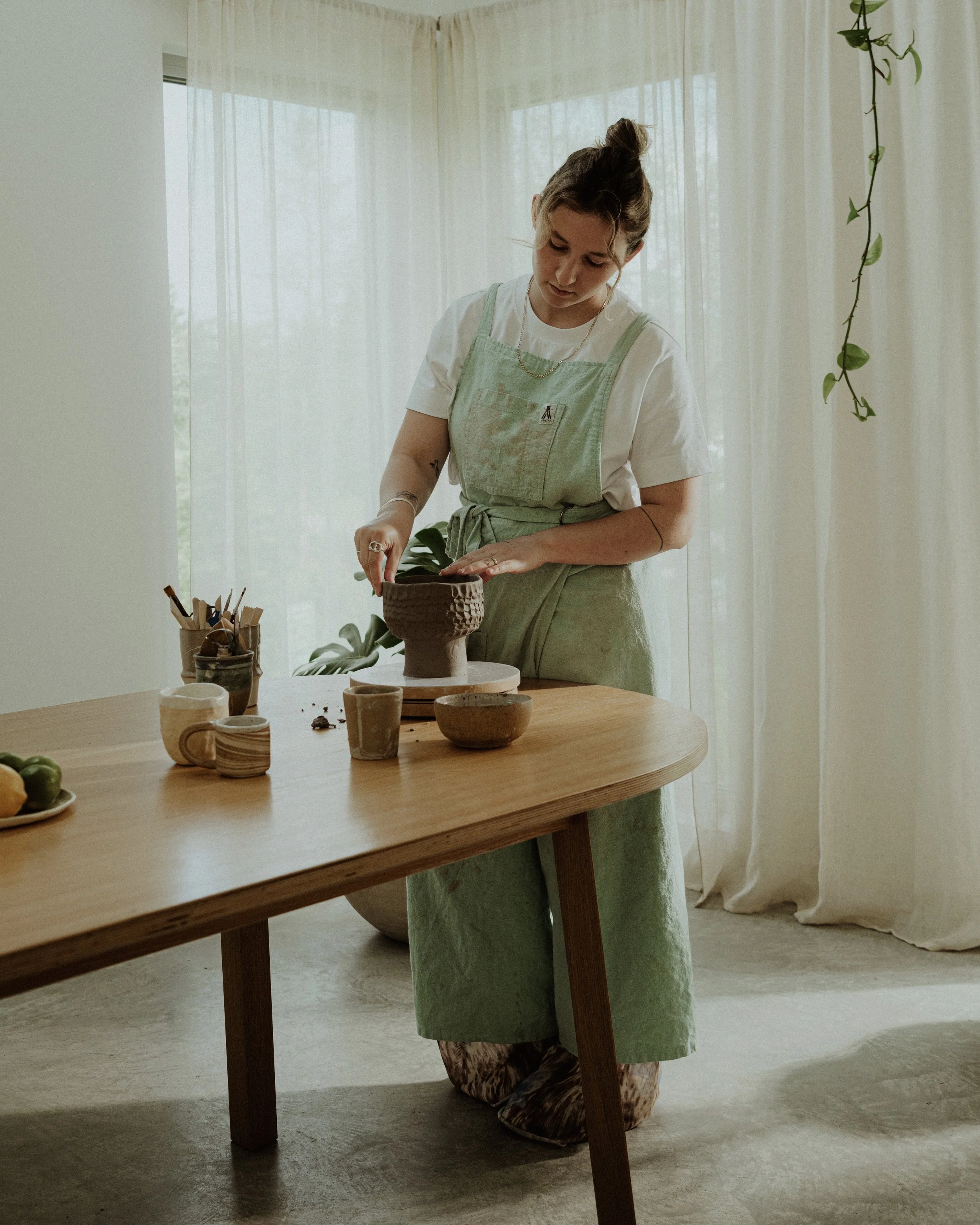
Based in Quebec City, Catherine works across ceramics, handmade paper, poetry, and sculptural forms. Her practice is deeply rooted in material exploration, but also in what cannot always be held onto—the memories that fade, the stories passed between generations, and the marks that remain.
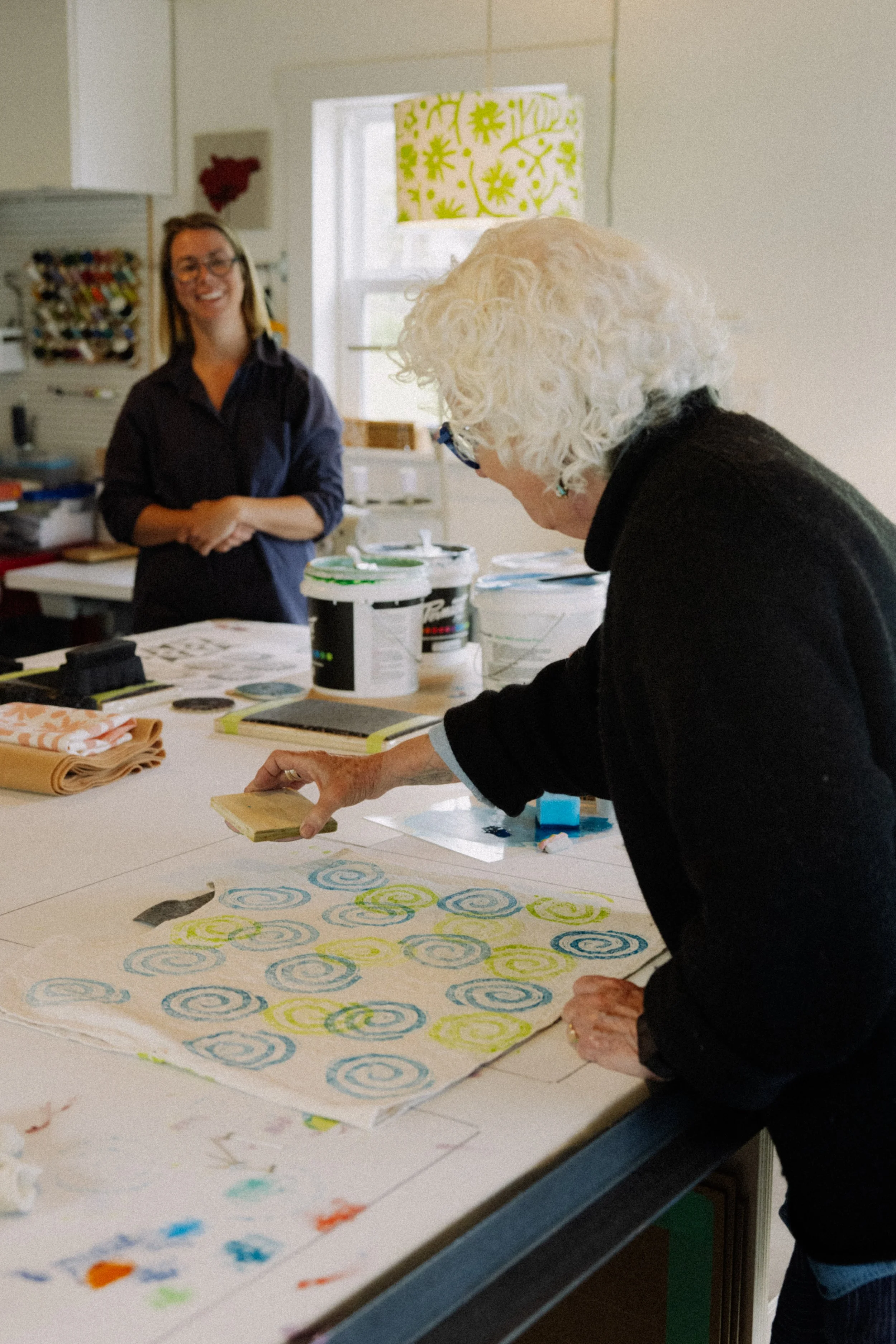
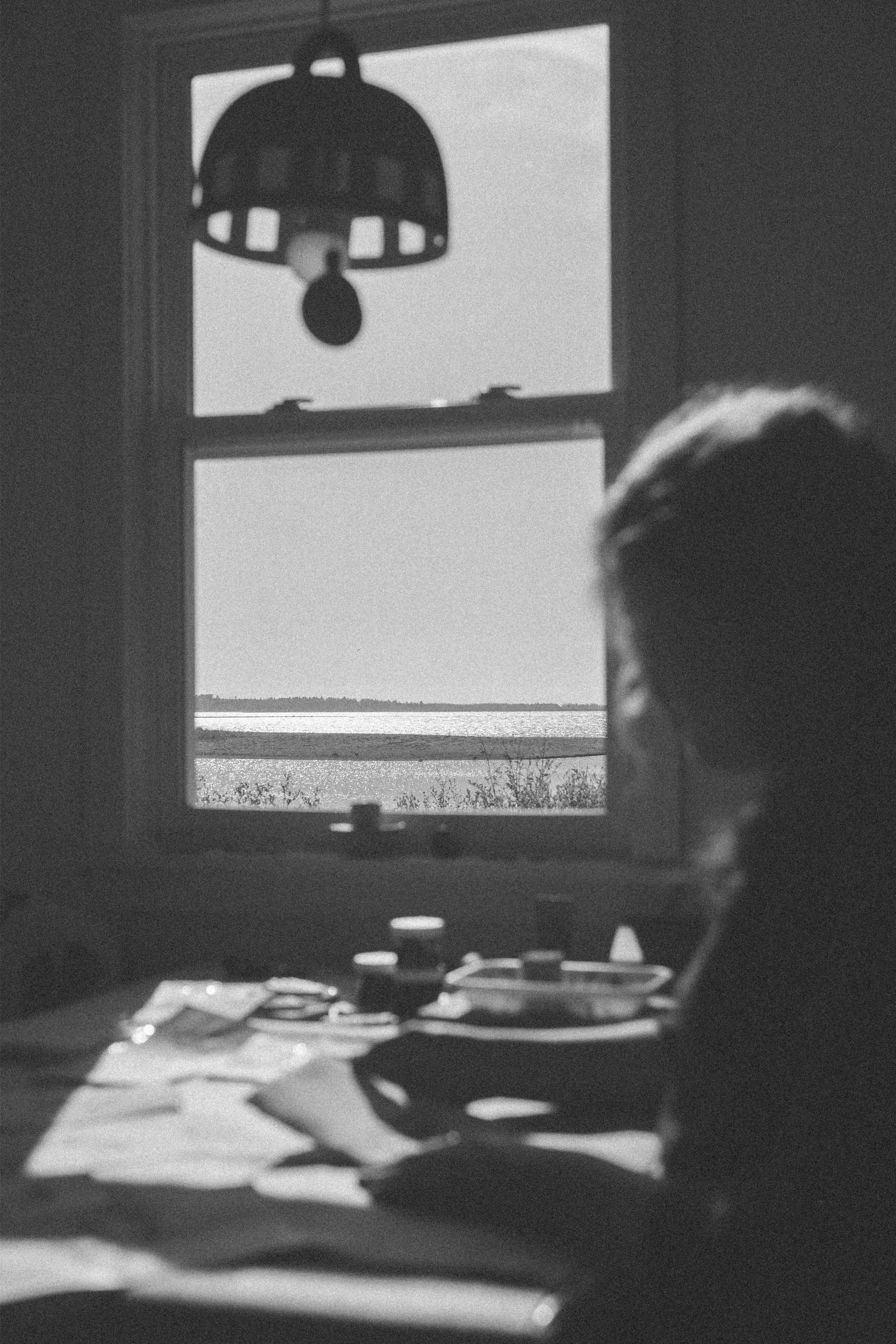
She arrived at The Parcelles with the intention of stepping away from the city and giving herself space to write, draw, photograph, and begin imagining a new artist book. Between rainy mornings by the fire, long walks along the ocean, and days immersed in her project, Catherine found her way back to a slower creative rhythm. Her time at The Parcelles also included a block-printing workshop with Alissa Kloet of Keep House, alongside Dartmouth-based contemporary fibre artist Meryl Cook—adding another layer of exchange and experimentation to her residency.
We spoke with Catherine about her practice, the women and memories that inspire her work, embracing imperfection, and what can emerge when an artist is given the space to simply pay attention.
What lies at the heart of your artistic practice?
My research focuses primarily on impermanence, quiet strength, and fragility. Drawing from the ghostlike memories that live within us—and sometimes haunt us—I create book-like and sculptural pieces in which ceramics, handmade paper, and poetry intertwine.
I alter clay using reclaimed materials as a way of reflecting our fallible memories and the forms of wear that shape us. I carefully observe and document their transformation through firing, while searching for more environmentally responsible approaches to making. From these explorations emerge delicate, ethereal works through which, in places, light finds its way.
How does your cultural background or personal story shape your practice?
From a very young age, my world was filled with imagination and daydreaming. I quickly became fascinated with coloured pencils and making things by hand.
I cherished my grandparents’ cottage by a lake, where we spent a great deal of time as a family. Rowboat rides, picking raspberries, fires in the fireplace, and the unobstructed view of the horizon are memories that have stayed with me. It is in places like these that I feel grounded.
At fifteen, I took my first recreational ceramics class, simply because I wanted to put my hands in the earth. A few years later, I travelled through Europe, immersing myself in architecture, museums, and history. From the azulejos of Portugal to Gaudí’s mosaics, ceramics continued to captivate me.
Curiosity led me through several different fields of study before eventually bringing me back to this vast medium. In the end, my winding path has proven quite useful in a profession that calls for so many different skills.
What were your intentions for the residency and how did it unfold?
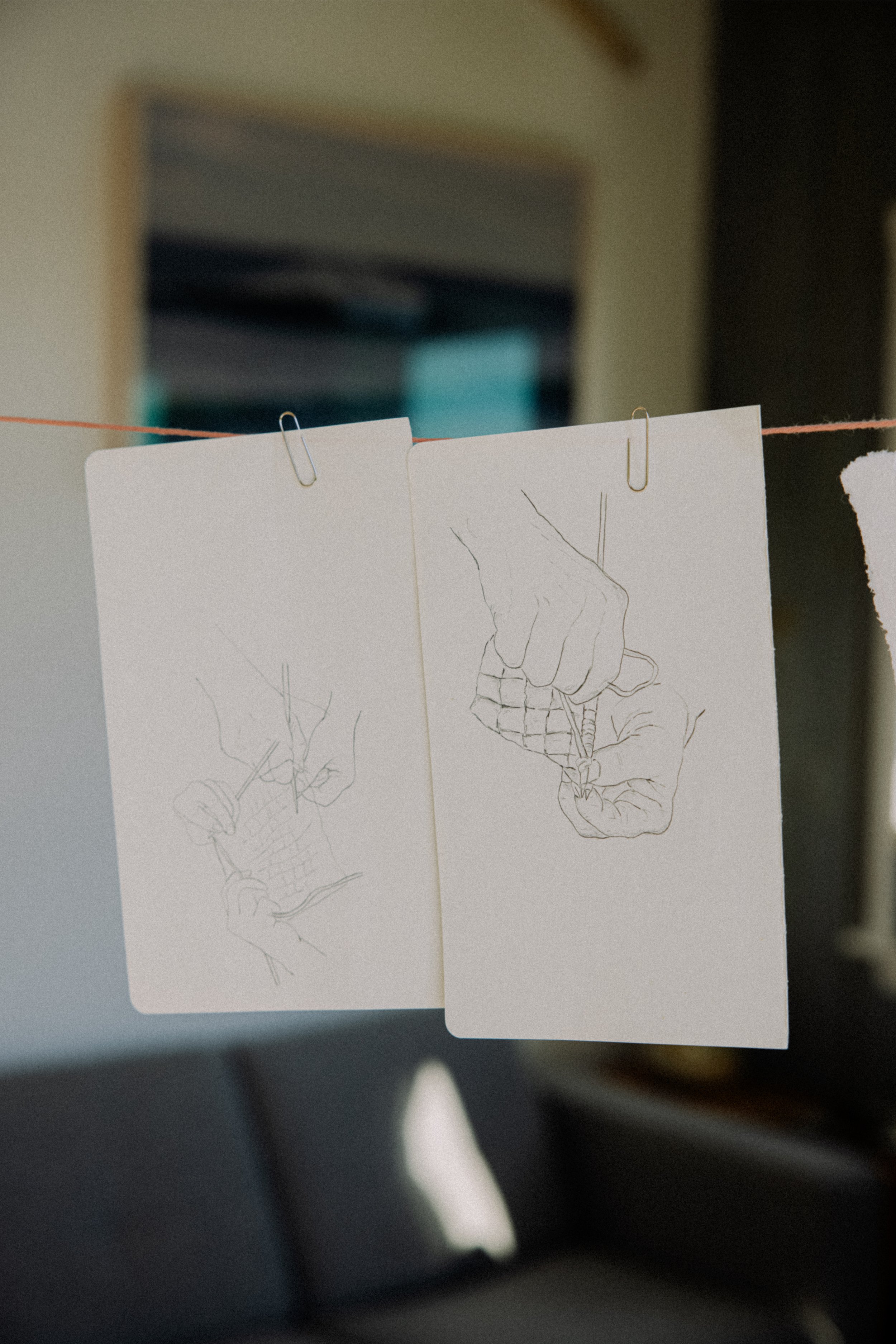
I imagined this residency as precious time away from the city—an opportunity to dedicate myself to writing, drawing, and photography, while considering how these mediums might become integrated into my projects.
Lately, I’ve been interested in the richness of the generations that came before us and of whom very few traces remain. I pay particular attention to lineages of women—the ones who care, watch over, and mend. The residency was an opportunity to begin a collection or artist book that will grow from these ideas.
The residency was incredibly fertile—a true gathering of words and images that I brought home with me. From here, I’ll refine and expand the texts, then explore how all these elements might coexist and take shape on the page.
Can you describe a typical day during your residency?
Whatever the weather, I savoured every moment at the cabin.
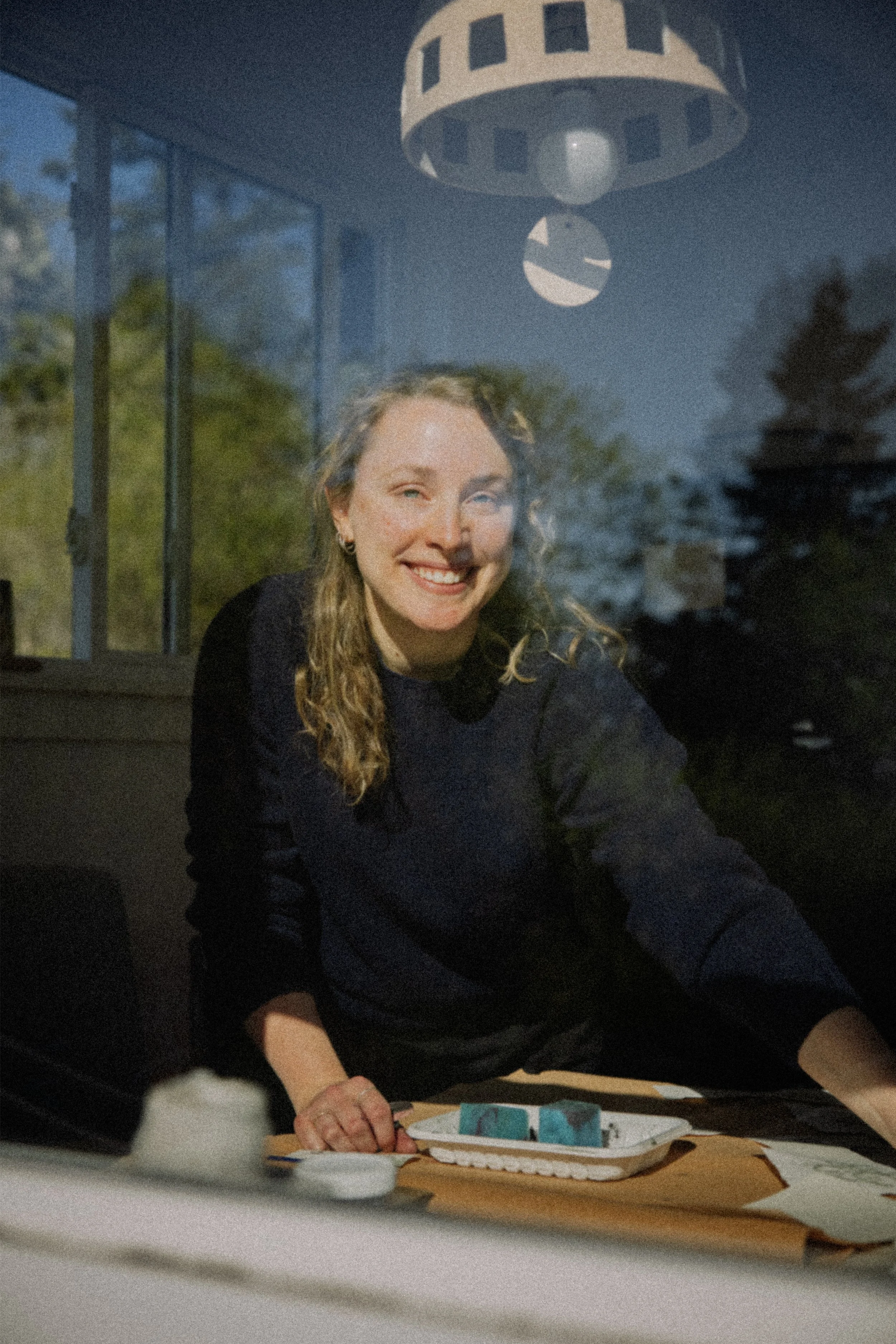
The first few days were cool and rainy, and I wrapped myself up by the fire to write and draw, coffee in hand. The days that followed were filled with sunshine, punctuated by long walks along the ocean with my notebook and time spent printing onto my handmade papers.
I became completely absorbed in my project and sometimes worked late into the evening without noticing the time passing.
How has the landscape or atmosphere of the surroundings influenced your creative process?
The peaceful surroundings invited me to slow down and pay attention to the shimmer of things, as Serge Bouchard called it.
I decided not to play music or listen to the radio, allowing the sound of the waves and the birds to become my soundtrack instead. Having a break from the constant noise of city life felt like a true privilege.
The quiet and restorative presence of the ocean created space in my mind, allowing ideas to emerge and giving me the chance to immerse myself in my project in a way that is rarely possible in everyday life.
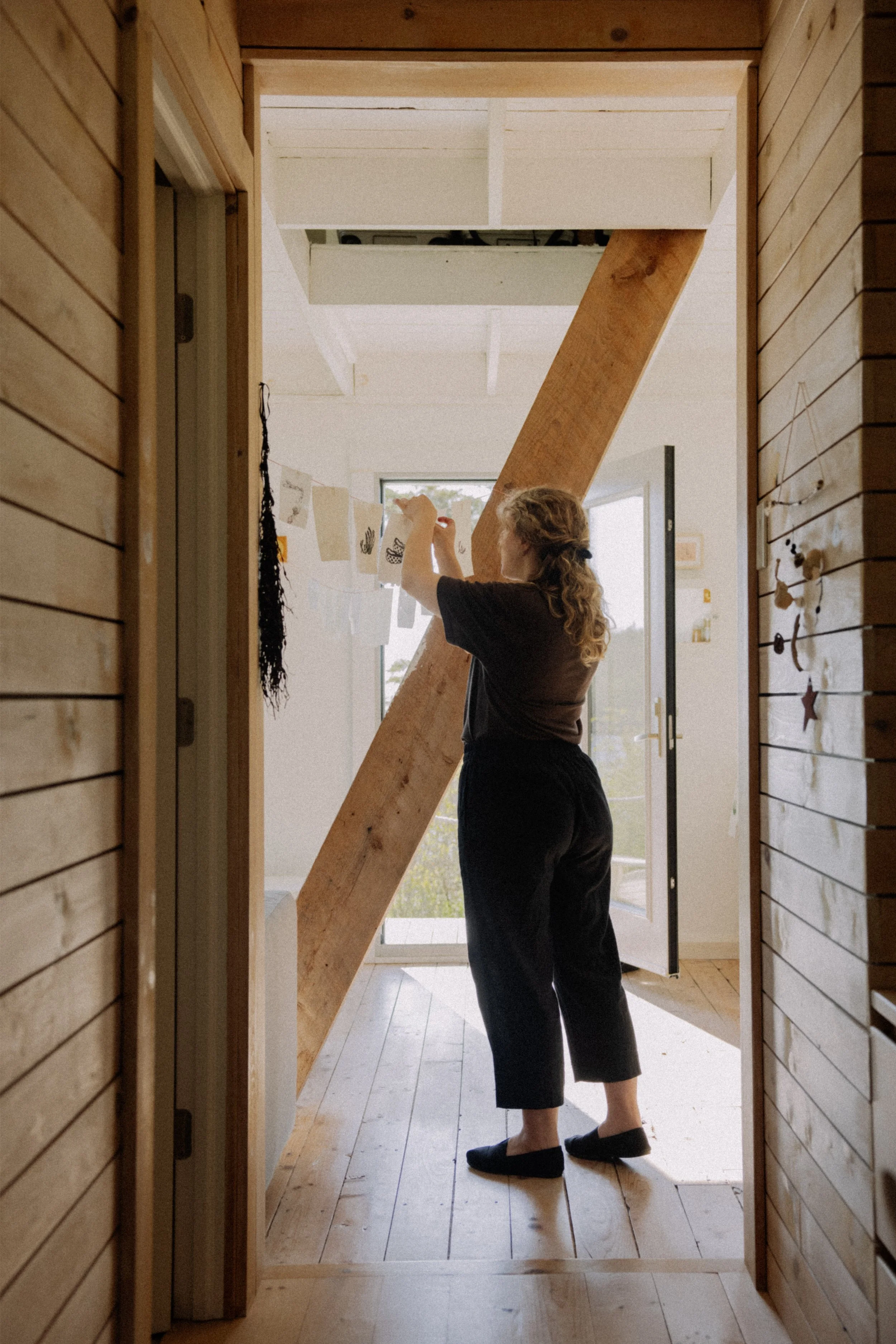
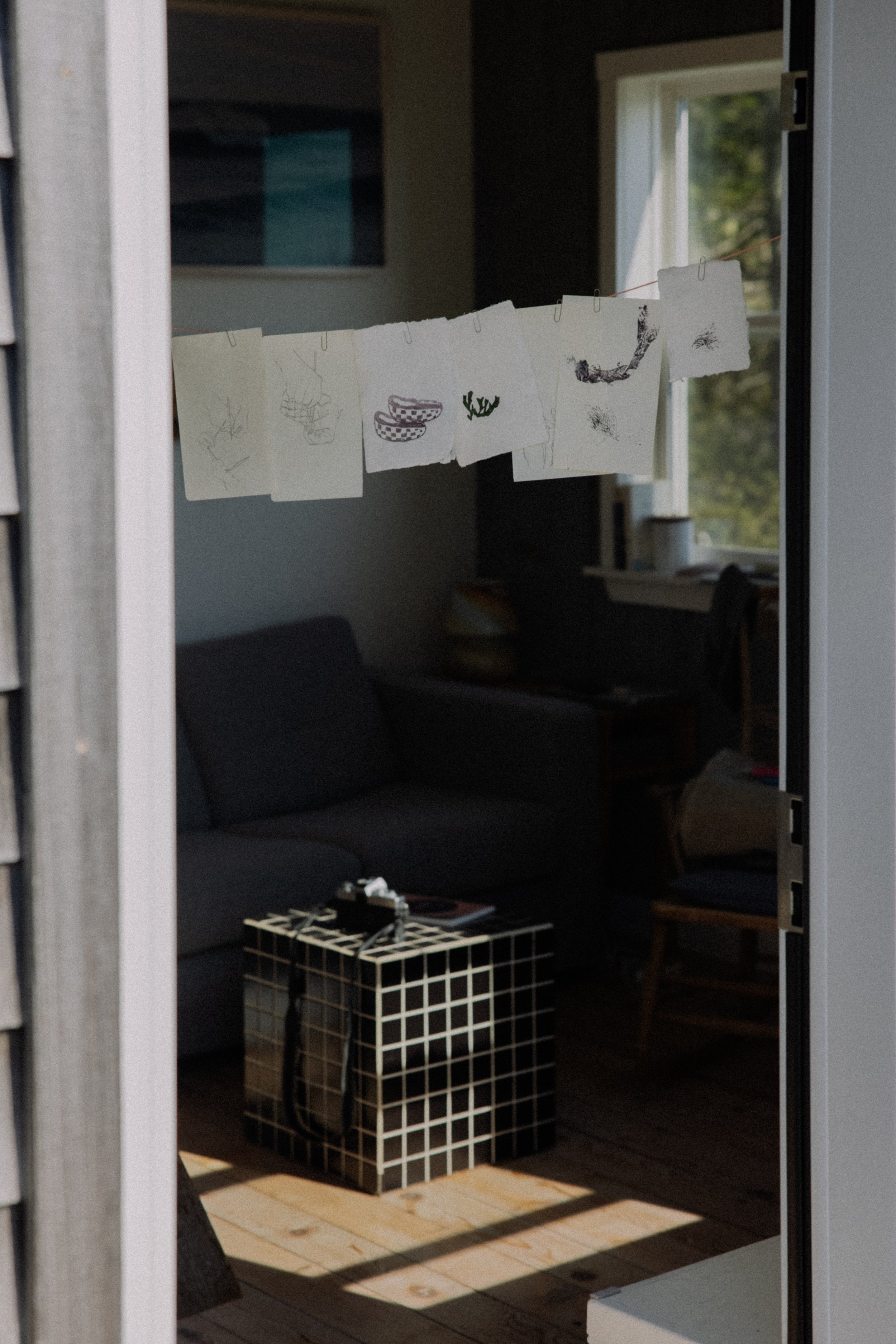
“Lately, I’ve been interested in the richness of the generations that came before us and of whom very few traces remain. I pay particular attention to lineages of women—the ones who care, watch over, and mend. The residency was an opportunity to begin a collection or artist book that will grow from these ideas.”
-Catherine
Is there a medium or technique you experimented with here that you hadn’t tried before?
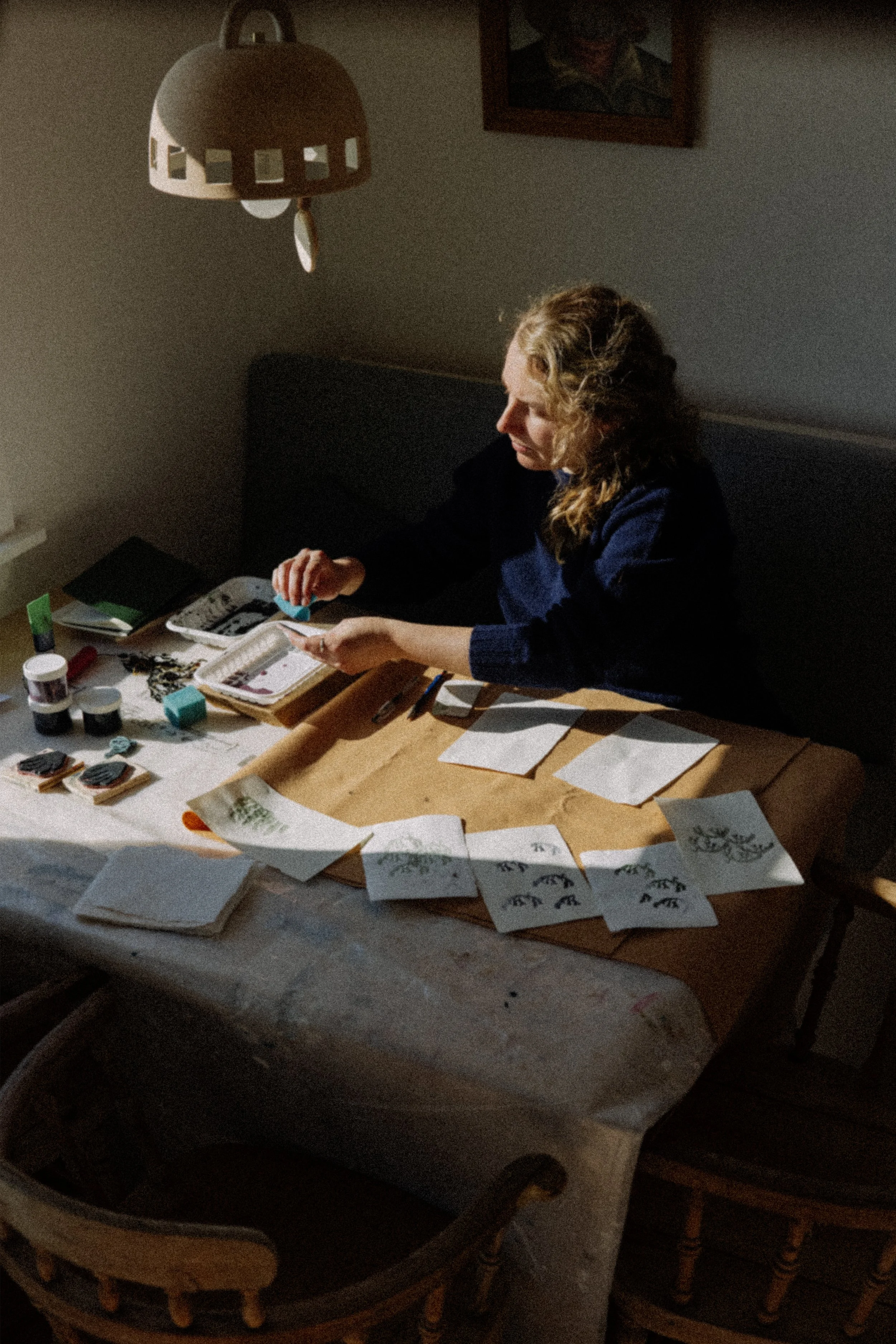
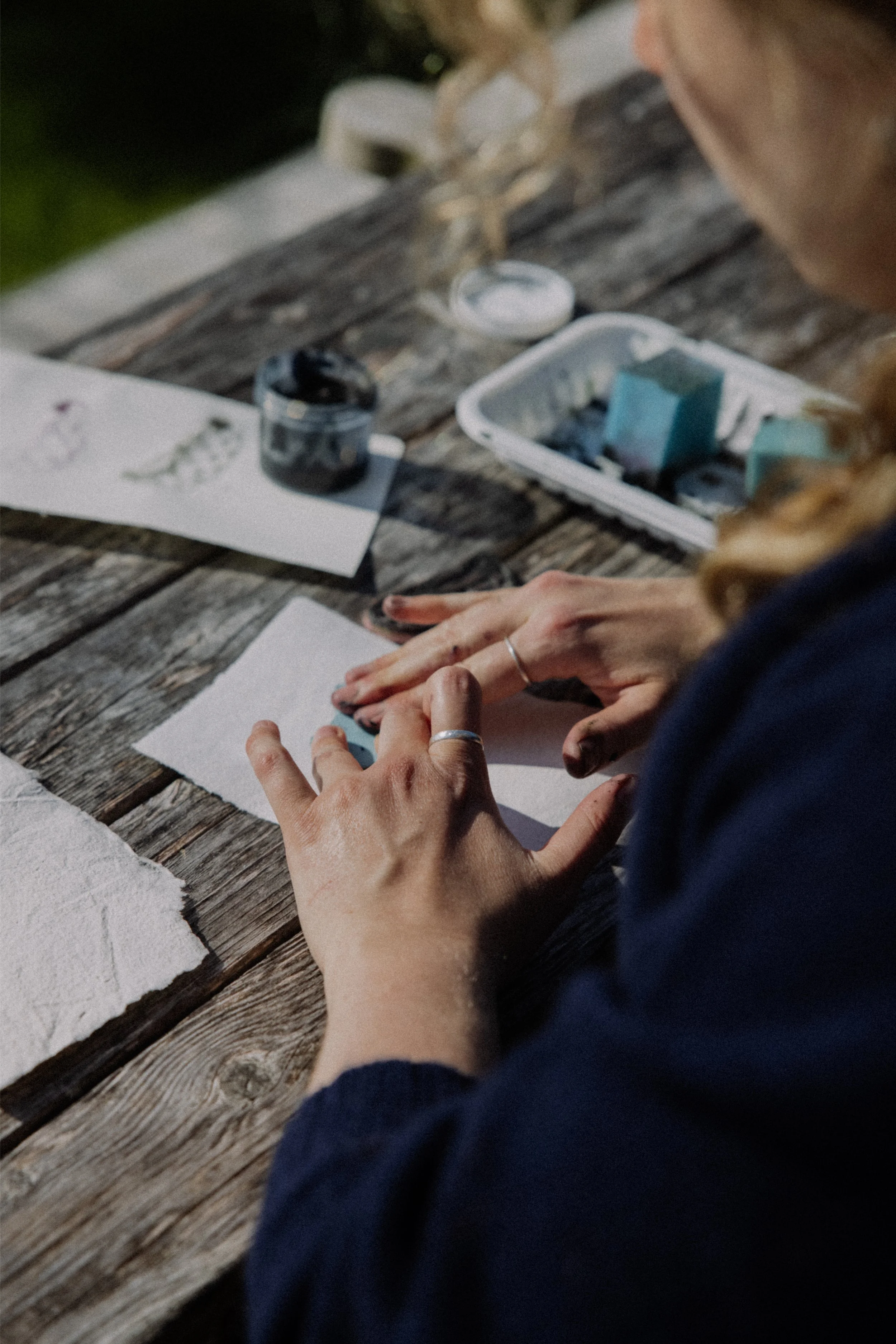
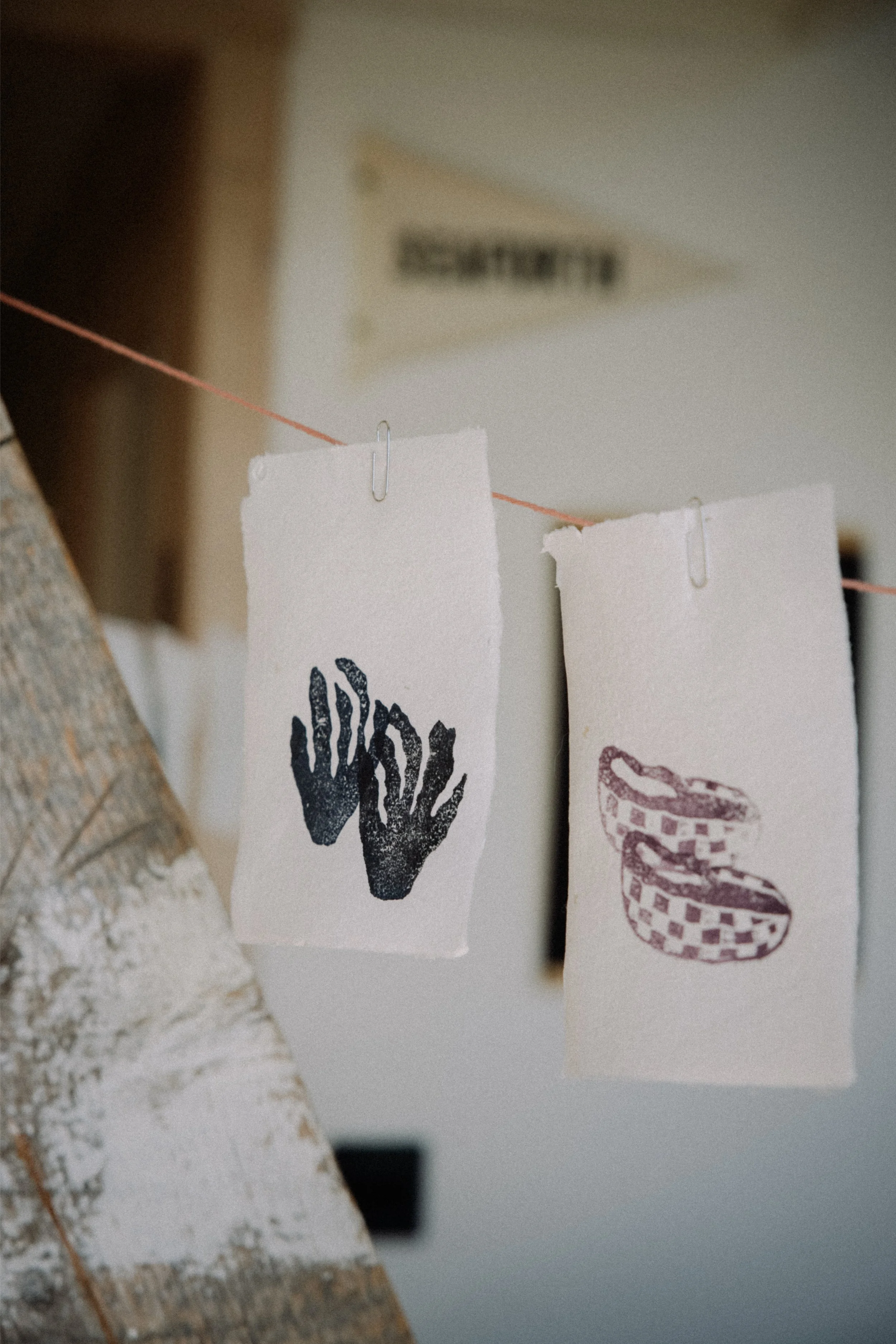
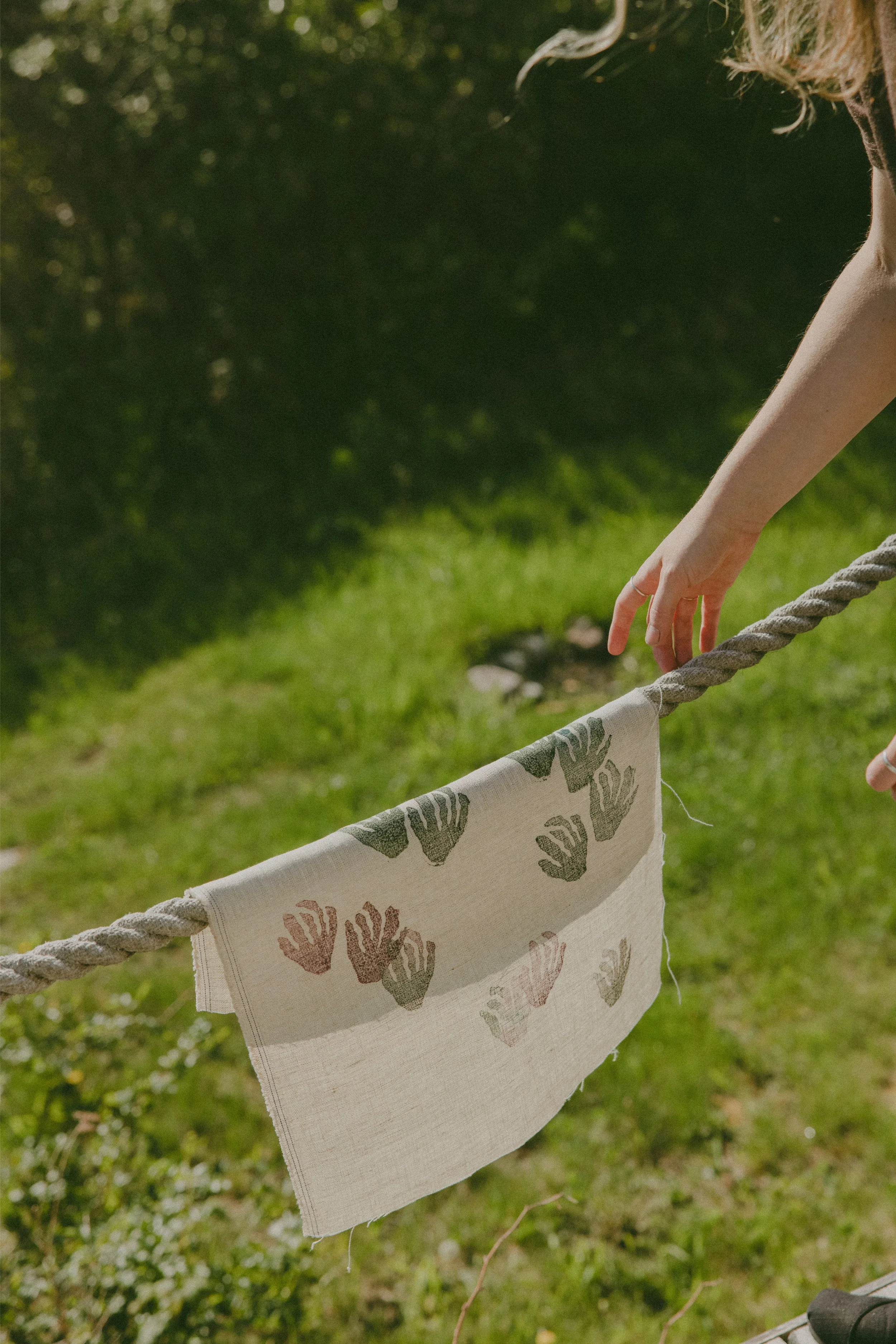
I took part in a linocut printing workshop with Alissa Kloet of Keep House.
I loved playing with the blocks I had carved beforehand. The layering, the spontaneous mixing of inks, and the faded effects speak beautifully to ideas of erasure and memory slowly disappearing. Rather than seeking uniformity, I’m drawn precisely to these variations.
The texture of handmade paper also introduces interesting nuances. There is something in this process that really excites me, and I can’t wait to continue exploring it—particularly on clay.
What has challenged you most during this residency?
I had to remind myself not to put pressure on myself to be efficient or productive.
I tend to create endless lists and rush from one task to another, almost despite myself. And yet, it’s often in moments of stillness that a multitude of ideas begin to form.
I tried to adopt a rhythm that was more in harmony with the atmosphere around me. Deep down, I know that this is the way of working that suits me best.
How do you see art as a bridge between people, cultures, or generations?
Art is a way of meeting one another through our sensitivities. It sparks conversation and creates empathy. It can be confronting or deeply moving, but it is rarely insignificant. Paths begin to intertwine, and stories are told with sincerity.
For the past few years, I’ve been teaching ceramics and handmade-paper workshops to both children and adults. I never tire of seeing their expressions of wonder and concentration, or the pride they feel when their projects begin to materialize.
I can see that creating and being in contact with materials does us good. It brings people together, offers an escape from routine, and gives us a way to cultivate curiosity.
Have you found inspiration in conversations or encounters with locals?
During the workshop day, I met Alissa and Meryl.
Alissa welcomed us into her studio and guided us generously throughout the block-printing workshop. I appreciated her advice and the stories she shared, including anecdotes from her printmaking residency in India.
Meryl is an inspiring woman whose journey deeply resonated with me. Our worlds intersect around several themes, particularly transmission and crafts traditionally associated with women. She recommended many things to me, including local artists to discover.
I had the chance to see her again a few weeks later in Halifax, where we caught up and visited exhibitions together. I’m certain we’ll stay in touch.
I also visited textile artisans in Chéticamp who practise the art of rug hooking. We spoke at length about this local tradition, passed down from mother to daughter, and the importance of preserving it.
Has this residency shifted something in the way you see your own practice or future projects?
My time in Seaforth has been deeply significant in my journey—a suspended moment that allowed me to focus on what truly matters to me as a maker. I came away with renewed momentum and confidence.
I also appreciated the opportunity to deepen the multidisciplinary nature of my practice.
I’ve realized just how sensitive I am to my surroundings and how profoundly they influence the way I work. I would love to find more opportunities to create in nature and to carry this sense of quiet with me.
What’s a small, personal memory from your time here that you’ll bring back home with you?
The absolute sense of wonder I felt when I first discovered the place.
I immediately fell in love with the cabin and its surroundings. And really, that feeling of wonder stayed with me throughout the entire residency.
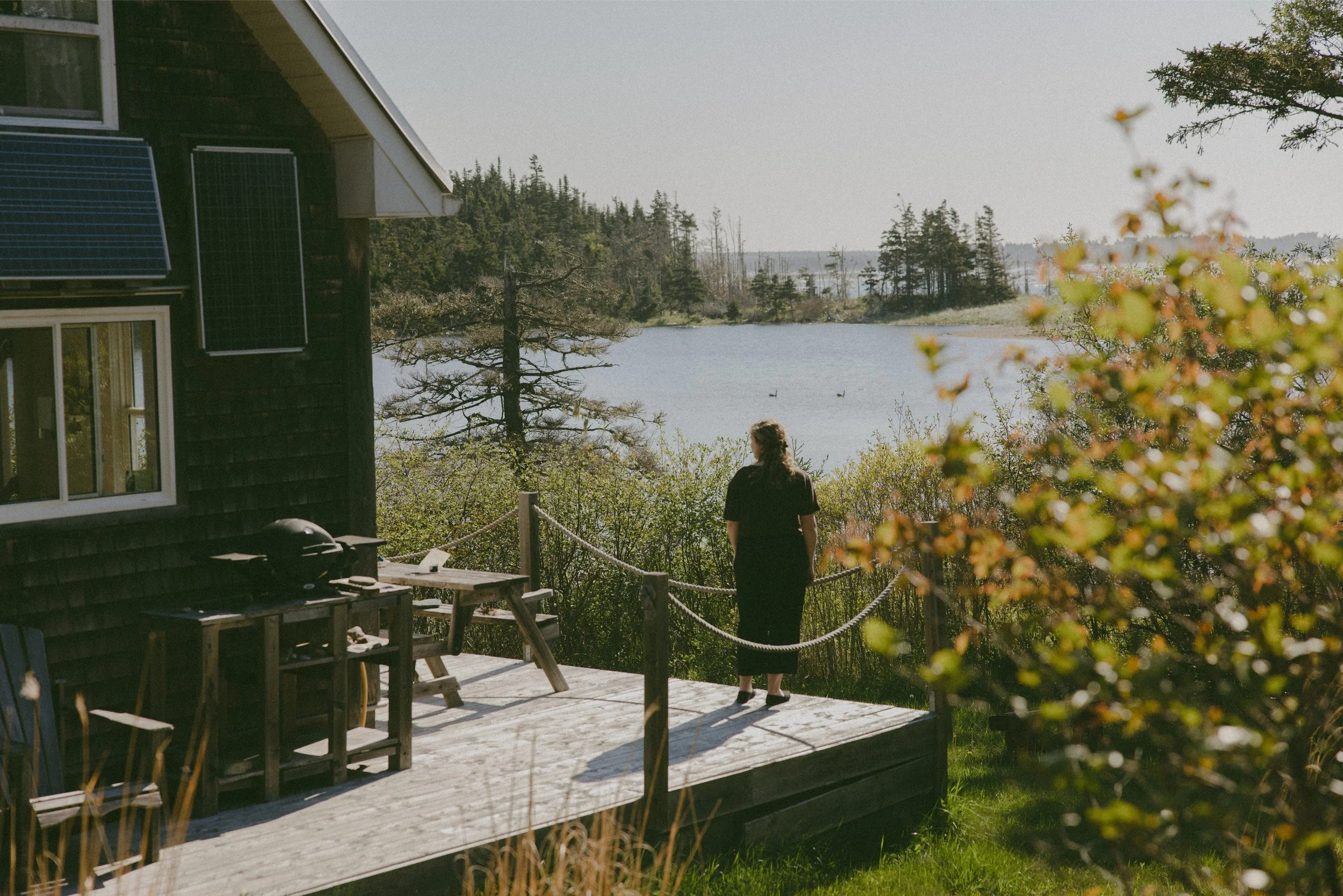
I savoured every moment: the movement of the tides, watching the lobster boats pass along the horizon, looking at the stars in my pyjamas…
Those moments are still with me.
What role do you think residencies like The Parcelles play in supporting artists today?
A residency in a restorative place like The Parcelles is an invaluable opportunity to focus on a project and allow yourself to be enveloped by the colours and whispers of the surrounding natural world.
There is something precious about stepping outside our usual creative environment and giving ourselves the chance to see with fresh eyes.
Offering this kind of opportunity to emerging artists makes it even more meaningful, giving them space and support to flourish.
Catherine’s residency reminds us that creative time does not always need to be measured by what is finished.
Sometimes its value lies in what is gathered: fragments of writing, photographs, impressions on paper, conversations, observations, new techniques, or simply a different way of looking at one’s own work.
At The Parcelles, we believe that changing an artist’s environment—even briefly—can create room for something unexpected to surface. Away from familiar routines, surrounded by a landscape that moves according to its own rhythm, ideas have the chance to arrive differently.
Catherine left Seaforth with a collection of words and images that will continue to evolve into new work. But perhaps just as importantly, she left with a renewed sense of the rhythm in which she wants to create: attentive, multidisciplinary, connected to the natural world, and with enough quiet for ideas to take shape. We look forward to seeing where those traces lead her next.
Follow Catherine Valois / @caval_ceramique
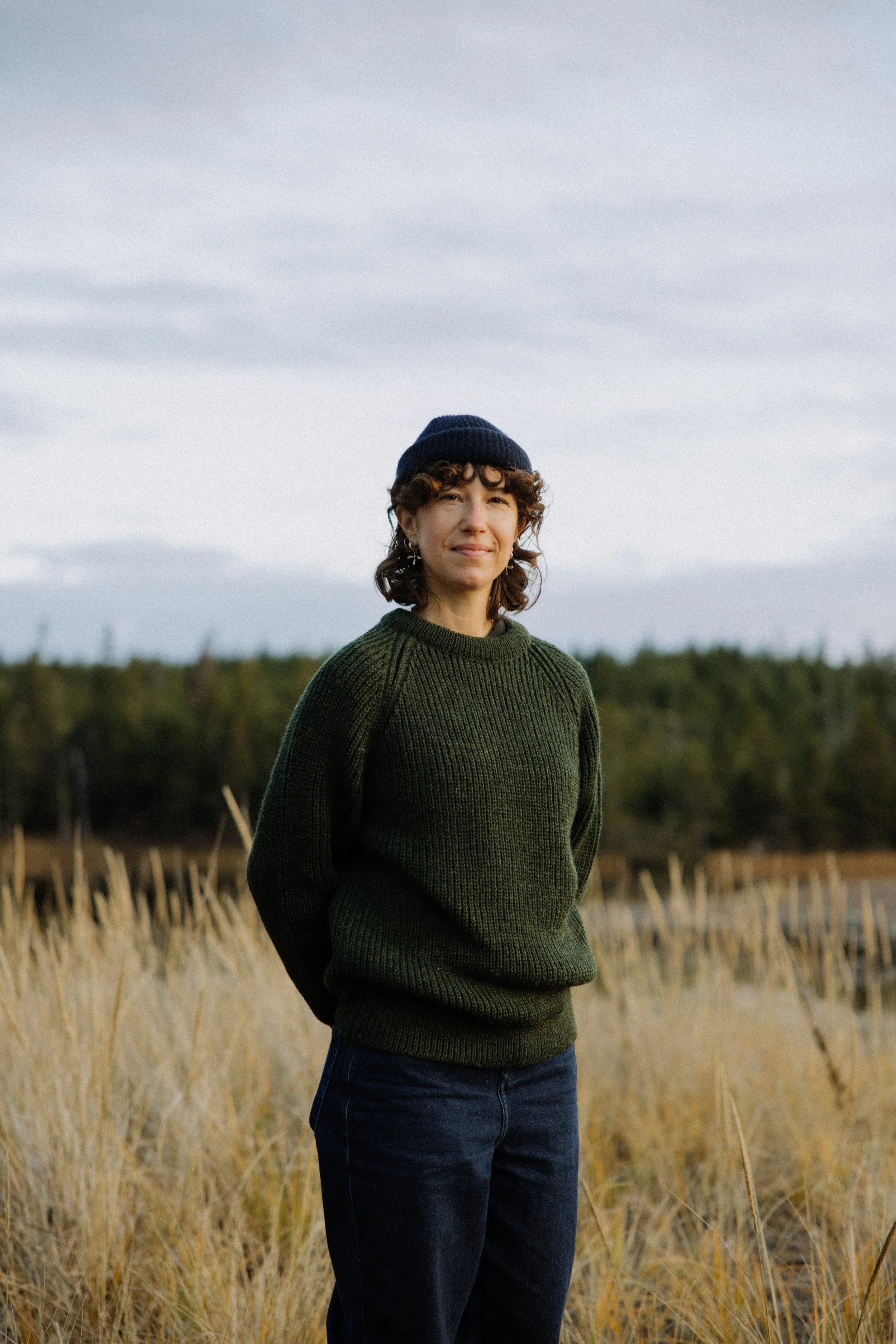
Canadian Wool Sweater & Merino Wool Tee by Milo & Dexter / @miloanddexter
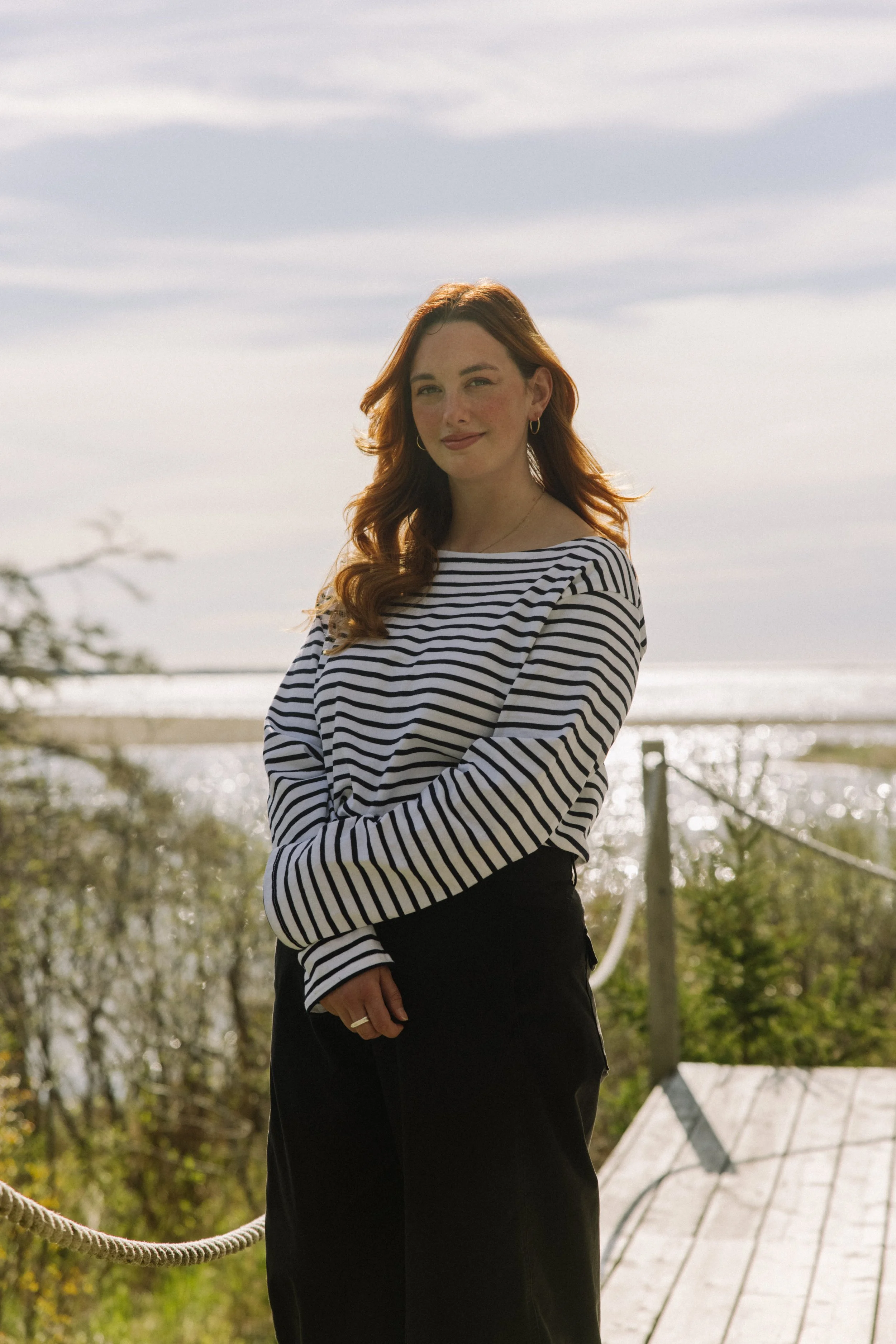
Portraits by Catherine Bernier / @cath.be