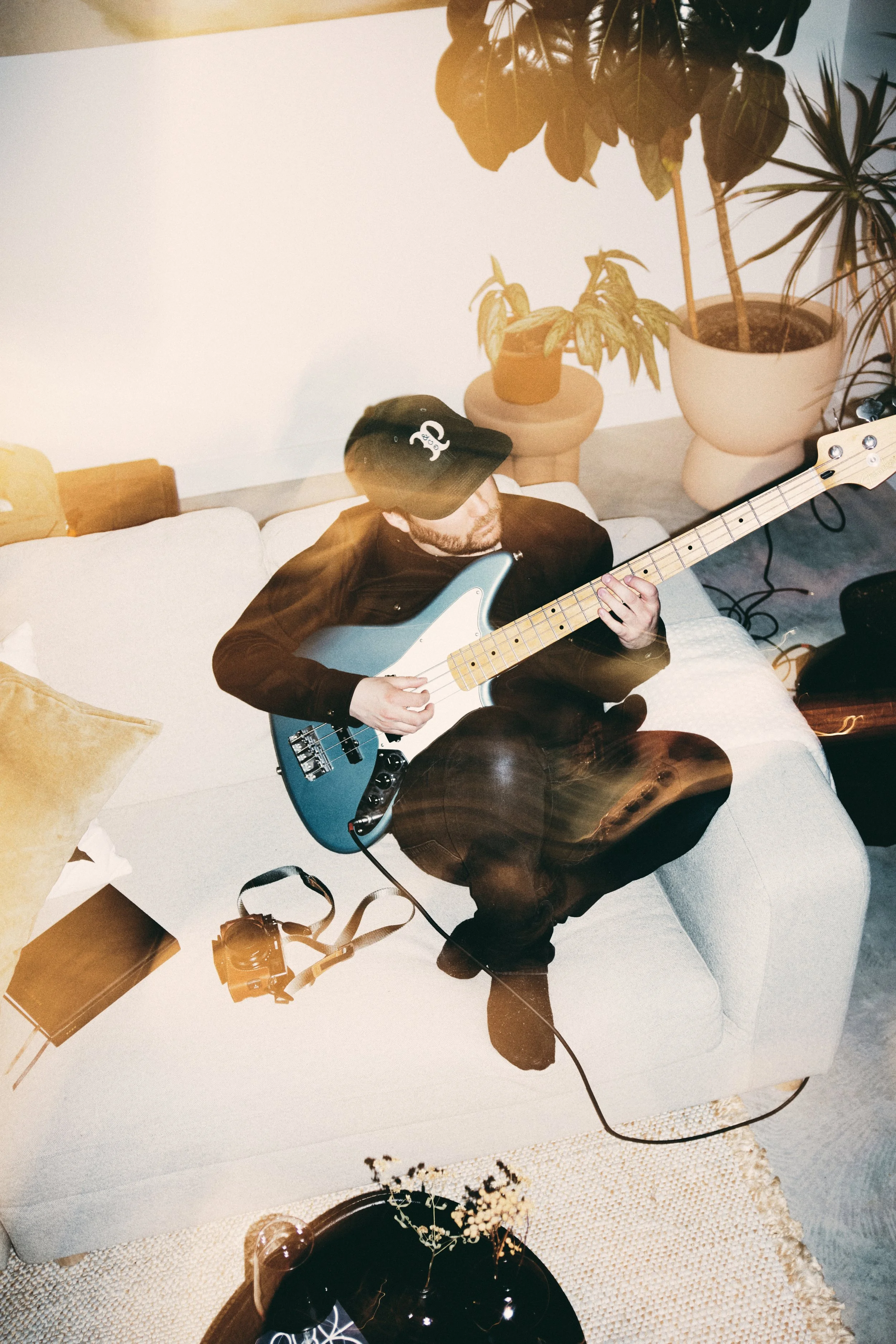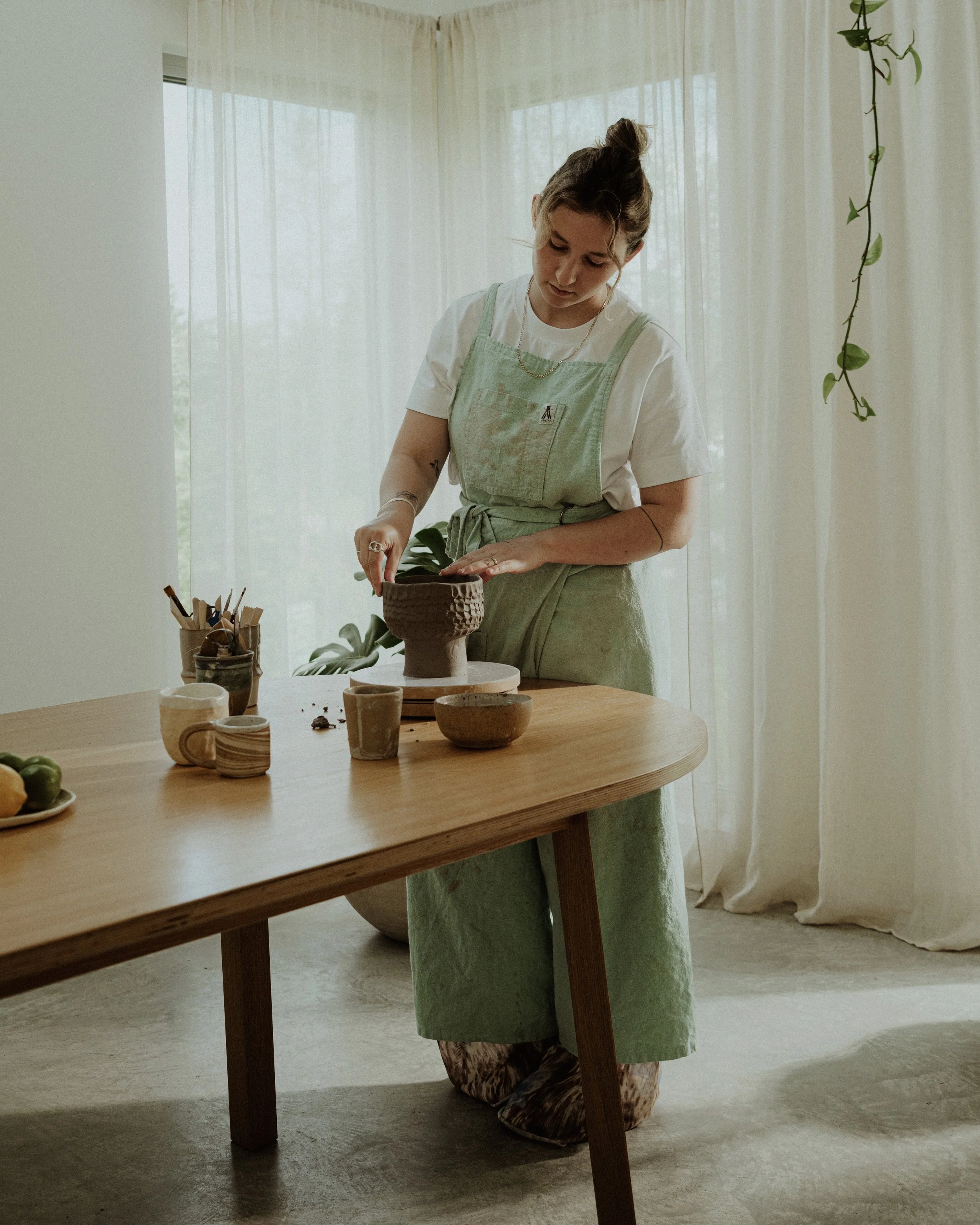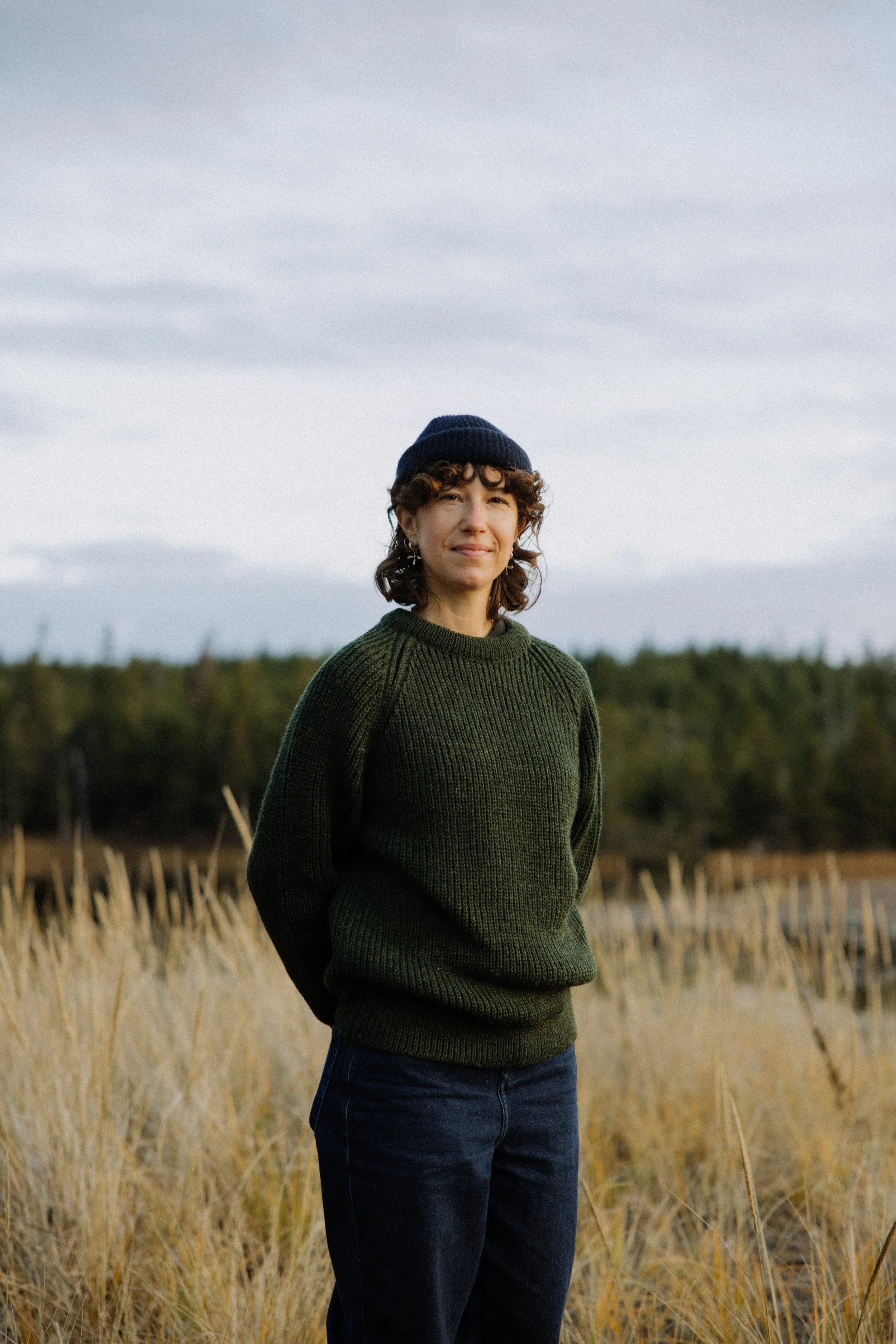
Anne-Sophie St-Onge (Orizon Studio)
Words / Anne-Sophie St-Onge
Photography / Frederic Leblanc
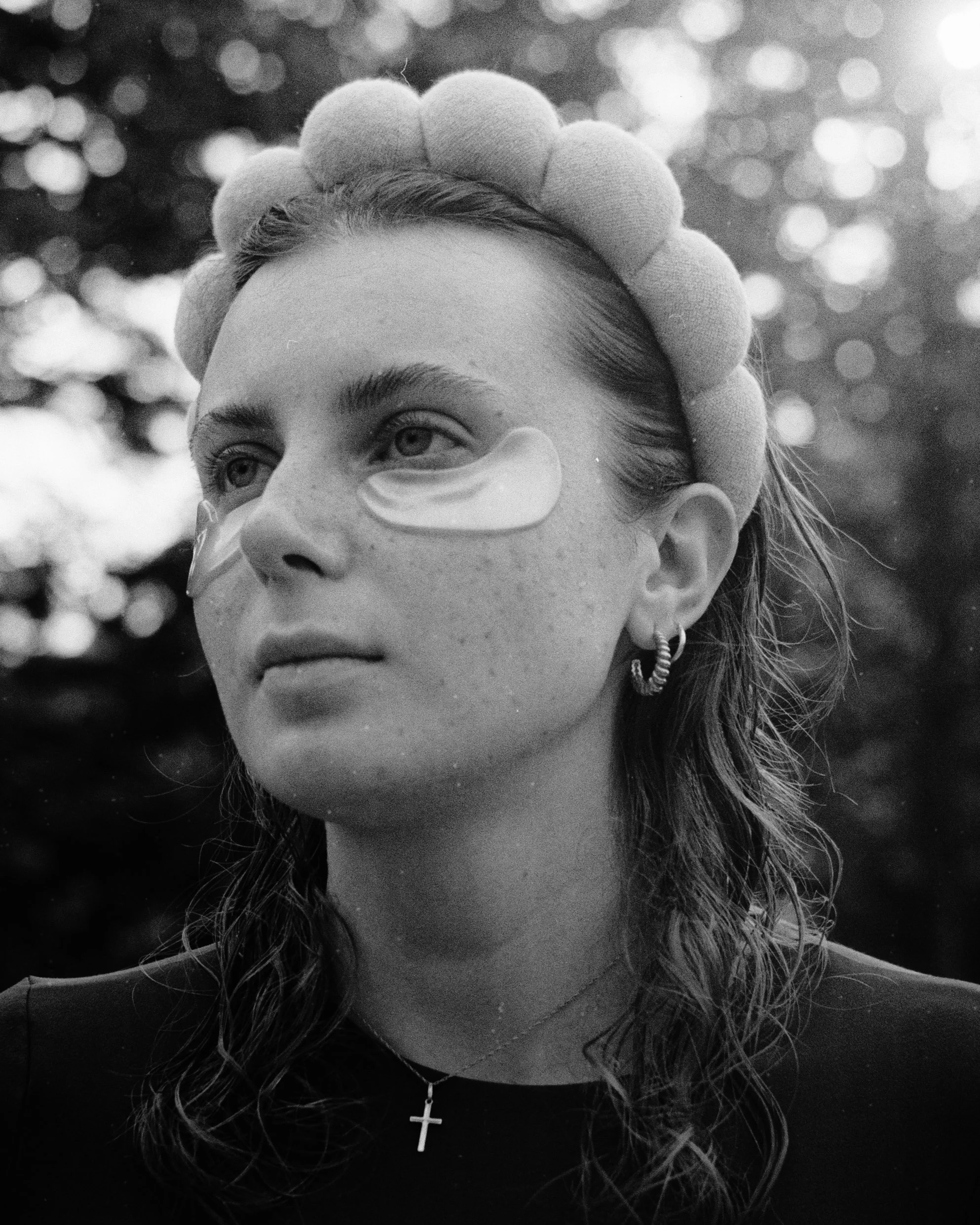
When Anne-Sophie arrived at The Parcelles, she didn’t come alone. She brought with her an idea, a small group of artists, and the intention to use the residency as a space for experimentation, reflection and connection.
A writer, curator and the founder of ORIZON, Anne-Sophie has built her practice around creating opportunities for emerging and counterculture artists to meet, exchange and find visibility outside more traditional structures. For this residency, she invited artists Frédéric Leblanc, Pierre-Luc Frattin (Prendre le thé) and Arnaud Ehrlich into a temporary creative community, stepping away from their usual environments and mediums as they prepared for an upcoming exhibition at Le Lieu in Quebec City.
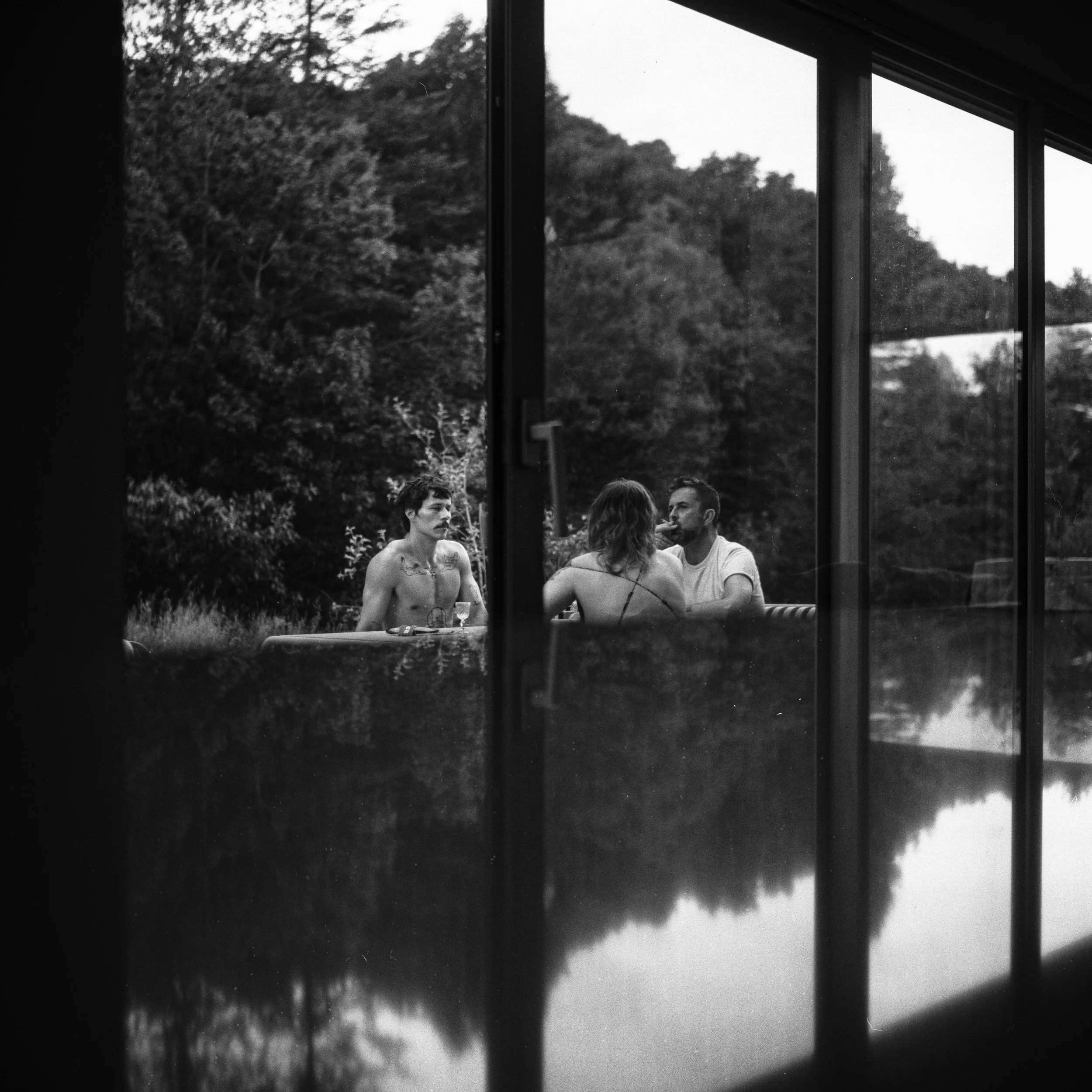
What unfolded was as much about creating work as it was about proximity: slow mornings over coffee, conversations, writing, painting outside, experimenting with unfamiliar materials, music, shared meals and learning to work within the rhythms of nature.
In her thoughtful reflections below, Anne-Sophie looks back on what emerged from that time together—and on what can happen when artists are simply given the space to gather, experiment and create.
What lies at the heart of your artistic practice?
I have always been drawn to the art world and the people who shape it. From a young age, I explored every artistic field available to me, always looking for new ways to experience and understand art. I would describe my practice as multidisciplinary, but more than anything, it reflects my personal philosophy.
After years of being surrounded by people trying to find their place in the art world, I decided to create ORIZON, a gallery and platform where we could share our beliefs and ambitions. Through ORIZON, I aim to give emerging and counterculture artists unexpected visibility. I curate exhibitions with local art organizations, collaborate with local businesses, and organize community events and activities with artists. At its core, my work is about building a lasting and healthy artistic community.
Ultimately, I am working toward creating an art platform and studio that democratizes the art world and art production. By surrounding myself with artists who share these values and reaching a broader public, I see a real future for emerging art and the people behind.
How does your cultural background or personal story shape your practice?
I come from a small town, but my ambitions have always reached beyond what was expected of me. My way of seeing the world has often been perceived as unconventional, leading me toward experiences far outside the familiar. I don’t see myself as a black sheep; I have simply always wanted to experience the full magnitude of life—the good, the bad, and everything in between. And while I haven’t seen it all, I have seen enough to recognize the realities around me that I want to help transform. To do that, I first felt the need to understand them deeply.
My background in philosophy and literature led me to a personalized university program combining history, visual arts and art history. I am now completing a master’s degree in art history. Building this knowledge gave me the foundation to pursue my desire to create an art community and gallery project. I see myself as a liaison between artists who live to create and the industry that art production has become. Ultimately, it is less about me than about the people willing to take part in the journey. Community is, to me, one of the most essential—and increasingly lost—elements of our society.
Poetry has always been part of me and shapes the way I experience reality. Creating images through words, rhythm and verse gives me a way to demystify realities held within our emotional bodies. Being close to people who think and act outside the box makes writing feel almost effortless; inspiration comes endlessly. I feed on experiences, people, and the small details they reveal without realizing it, then put them on paper. Through writing, I try to show how fragments of moments, hesitations and tongue-tied words can hold something deeply valuable and necessary to our humanity.
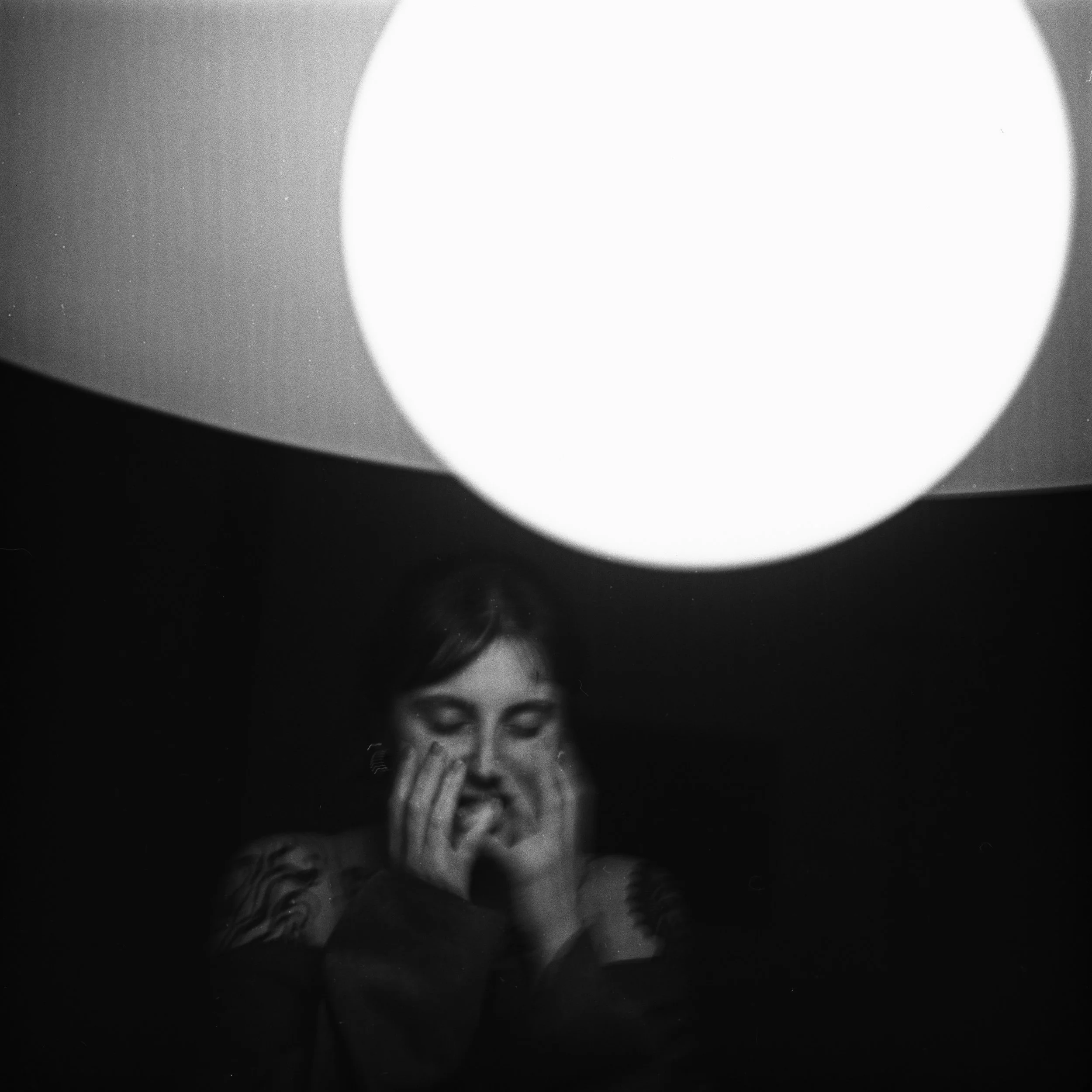
What were your intentions for the residency and how did it unfold?
After four years of curating exhibitions with artists across different practices and themes, I wanted to approach this year’s event with greater intention. While our previous exhibitions had been successful, this year we wanted to assert ourselves within the local art scene and demonstrate that ORIZON was a project worth investing in.
In preparation for our August exhibition at Le Lieu, I invited the artists to step away from their usual environments and practices. My intention was to destabilize everyone—to create space for experimentation, reflection and new ways of working. Being isolated from the lights and sounds of the city gave us exactly that, while also allowing us to build stronger relationships with one another.
Frédéric Leblanc and Pierre-Luc Frattin (Prendre le thé), who exhibited at Le Lieu in Quebec City on August 22, were encouraged to move beyond their traditional mediums and explore different approaches during the residency. Both embraced the challenge, finding new ways to express themselves outside of what they usually relied on to create.
On the final day, Arnaud Ehrlich (Porcelaine de fer) joined us to connect, exchange ideas and make music. He later performed instrumental music throughout the exhibition, but during the residency, he gifted us with sounds created entirely around the atmosphere and moment we were sharing.
Can you describe a typical day during your residency?
I would wake up, and not long after, Frédéric would too. I’d prepare everything outside for our daily coffee ritual, and Frédéric would make his V60—always perfect. We talked about everything from history to personal histories, then read, wrote or did the dishes, which became a form of meditation in itself.
With jazz, folk or blues in the background, Frédéric would set up his outdoor studio and paint in the hot summer humidity. When he entered his “zone,” I would explore, read or write about what I was witnessing. I did the same with Pierre-Luc and Arnaud when they joined us. My role as an observer was to understand as much as I could about the artists in front of me, asking questions and sharing books I felt could resonate with their practices.
Dinner was either quick or long and complicated. No real routine settled in, and it was better that way. We danced, sang or rested, then ended the day reflecting on what had been created, surrounded by the canvases painted that day.
How has the landscape or atmosphere of the surroundings influenced your creative process?
Since Frédéric and I experienced the residency together, I can only answer this through the conversations we shared about the environment and how it influenced us.
I had only met Frédéric briefly twice before, but I knew he was drawn to city life—a kind of carnivalesque life. Part of our routine became talking outside over morning coffee, and one thing quickly became clear: neither of us was used to silence or a slower rhythm. We both live fast, demanding lives, surrounded by people, so the peace of The Parcelles was disorienting—in the best way. Frédéric often reminded me how grateful he was to be there, and I felt the same.
Being isolated and without cell service did us both a huge favour. Without the sounds and distractions we were used to, we created a space that felt safe and open-minded. Time seemed to move more slowly, giving us room to reflect on our artistic approaches.
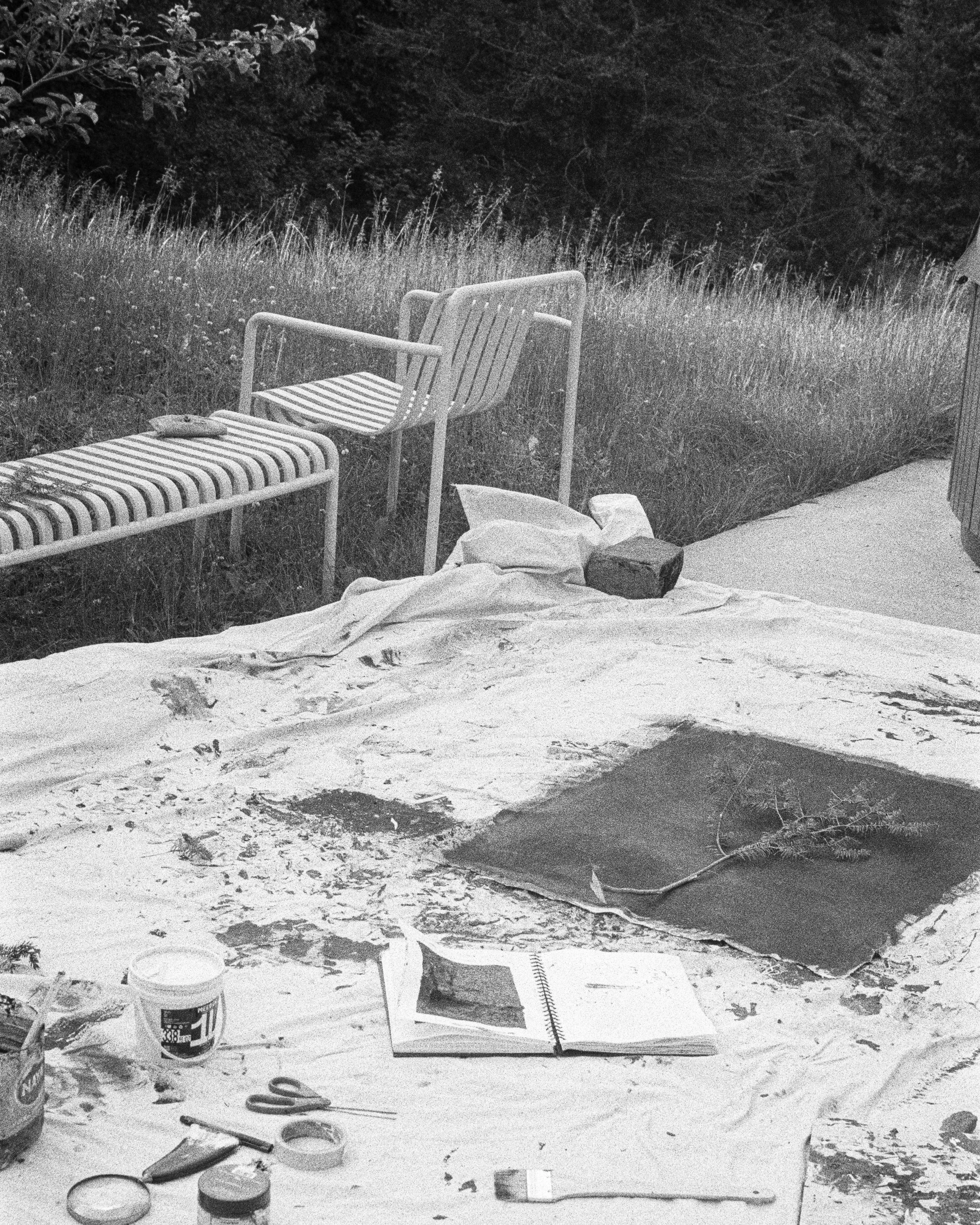
Frédéric chose to work outside. I would sit beside him, writing or observing as he painted for hours in the heat. Without his usual medium, his discipline—and especially his need to create—became undeniable. It felt vital, and it was what we had come for.
The sounds of nature and the “twin trees” beside the house became part of our daily dialogue, and meant something to us and to the others who joined along the way. Stepping away from our fast, sometimes vapid lives gave us the space to focus on what we had come to create.
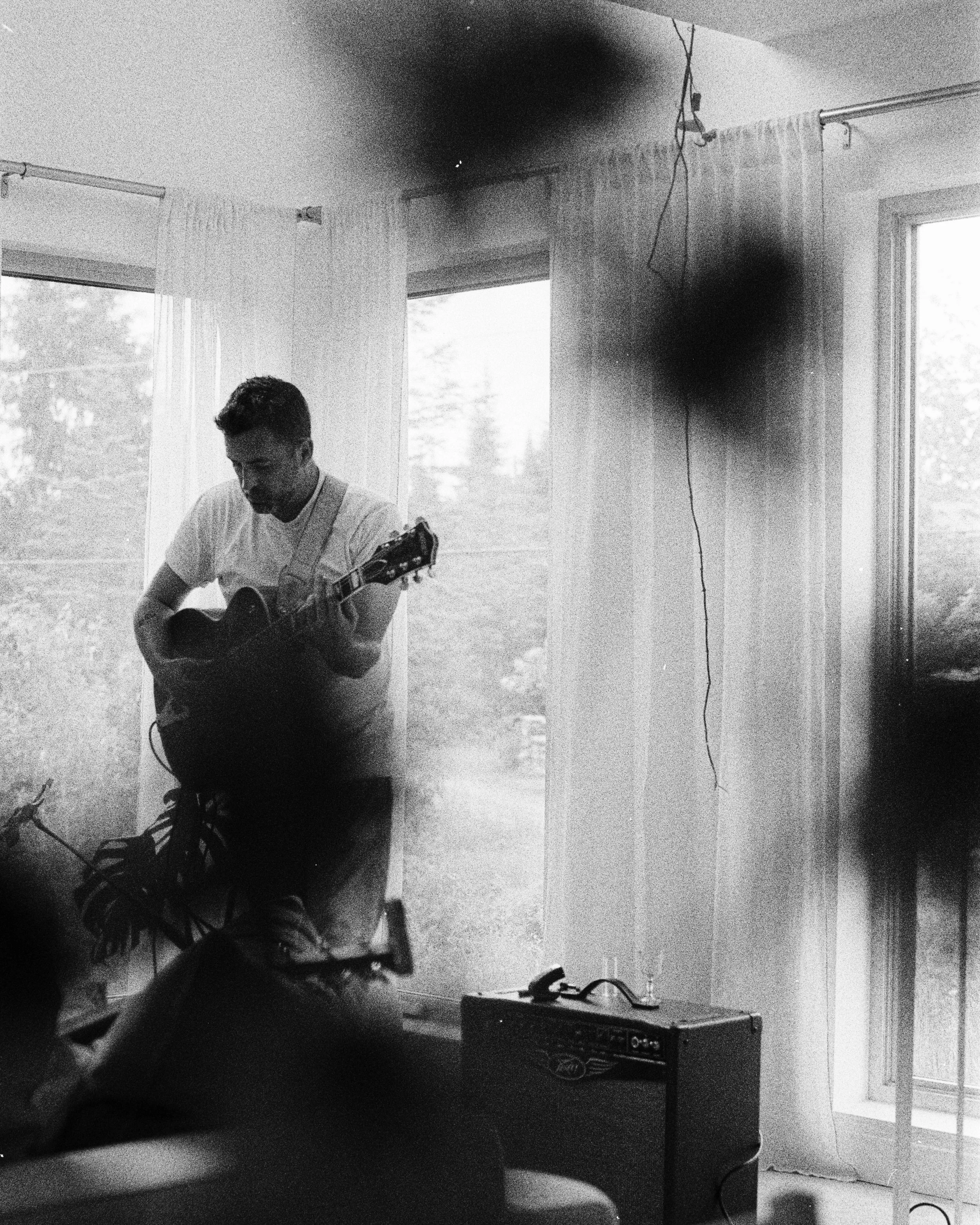
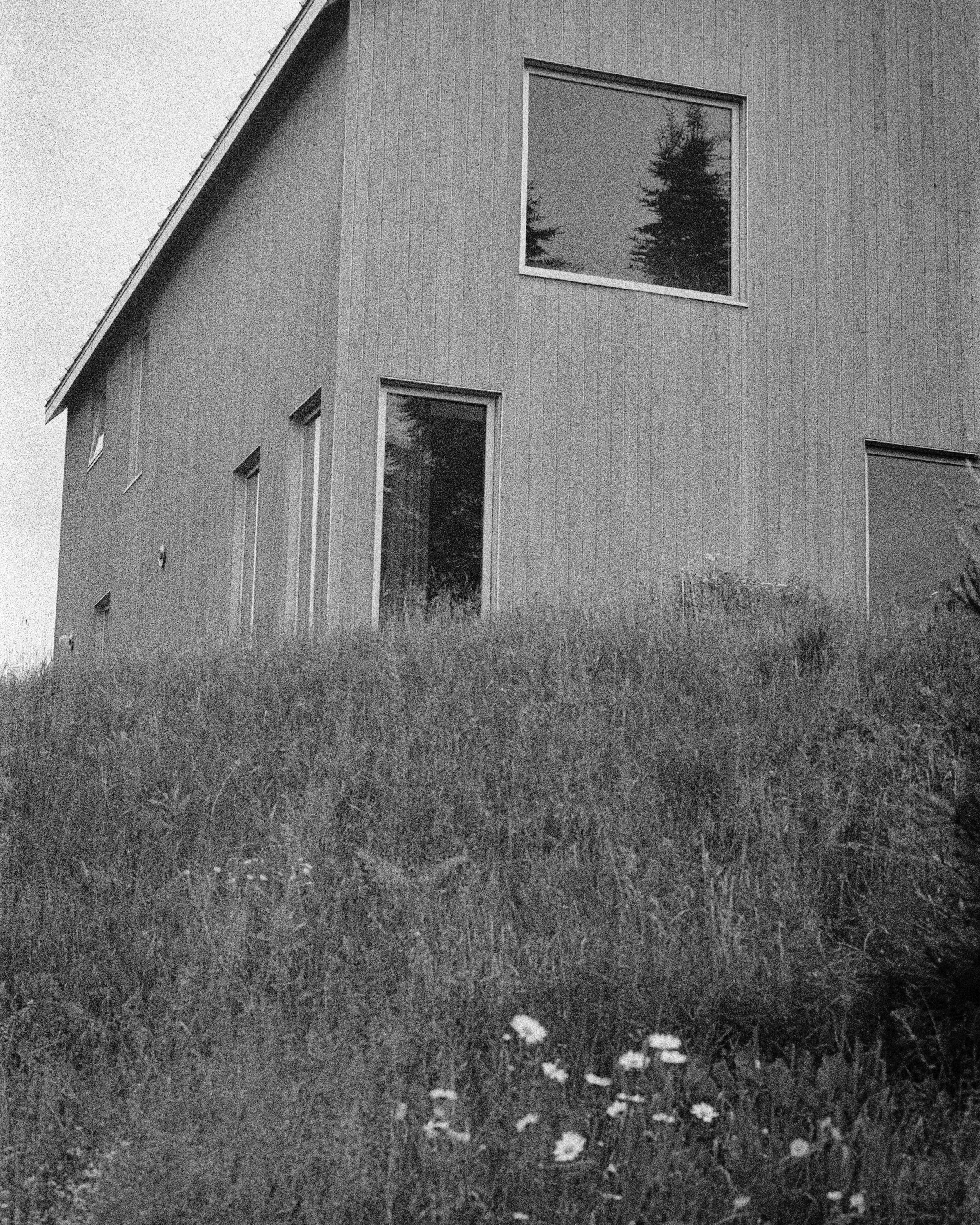
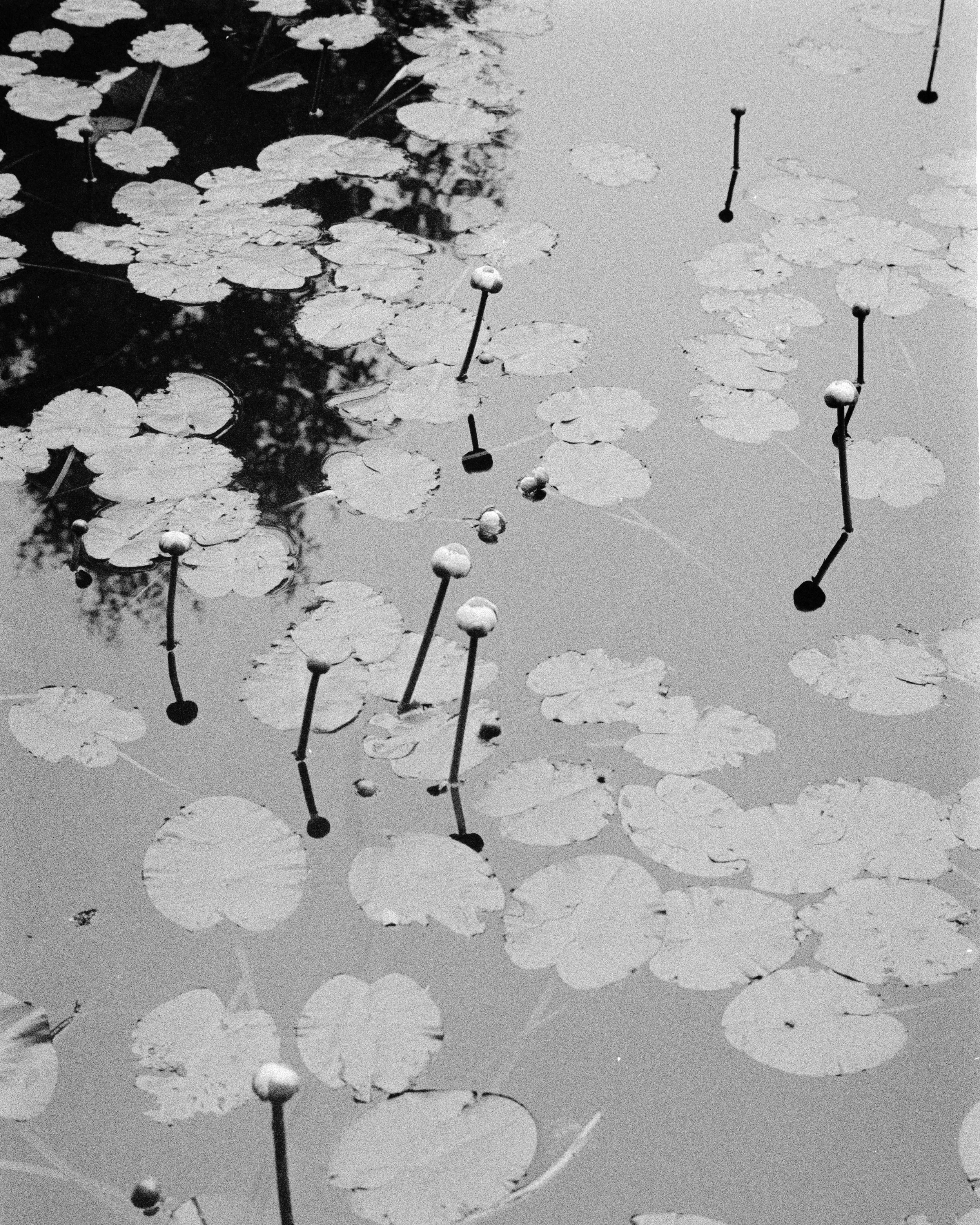
“Part of our routine became talking outside over morning coffee, and one thing quickly became clear: neither of us was used to silence or a slower rhythm. We both live fast, demanding lives, surrounded by people, so the peace of The Parcelles was disorienting—in the best way.”
-Anne-Sophie
Is there a medium or technique you experimented with here that you hadn’t tried before?
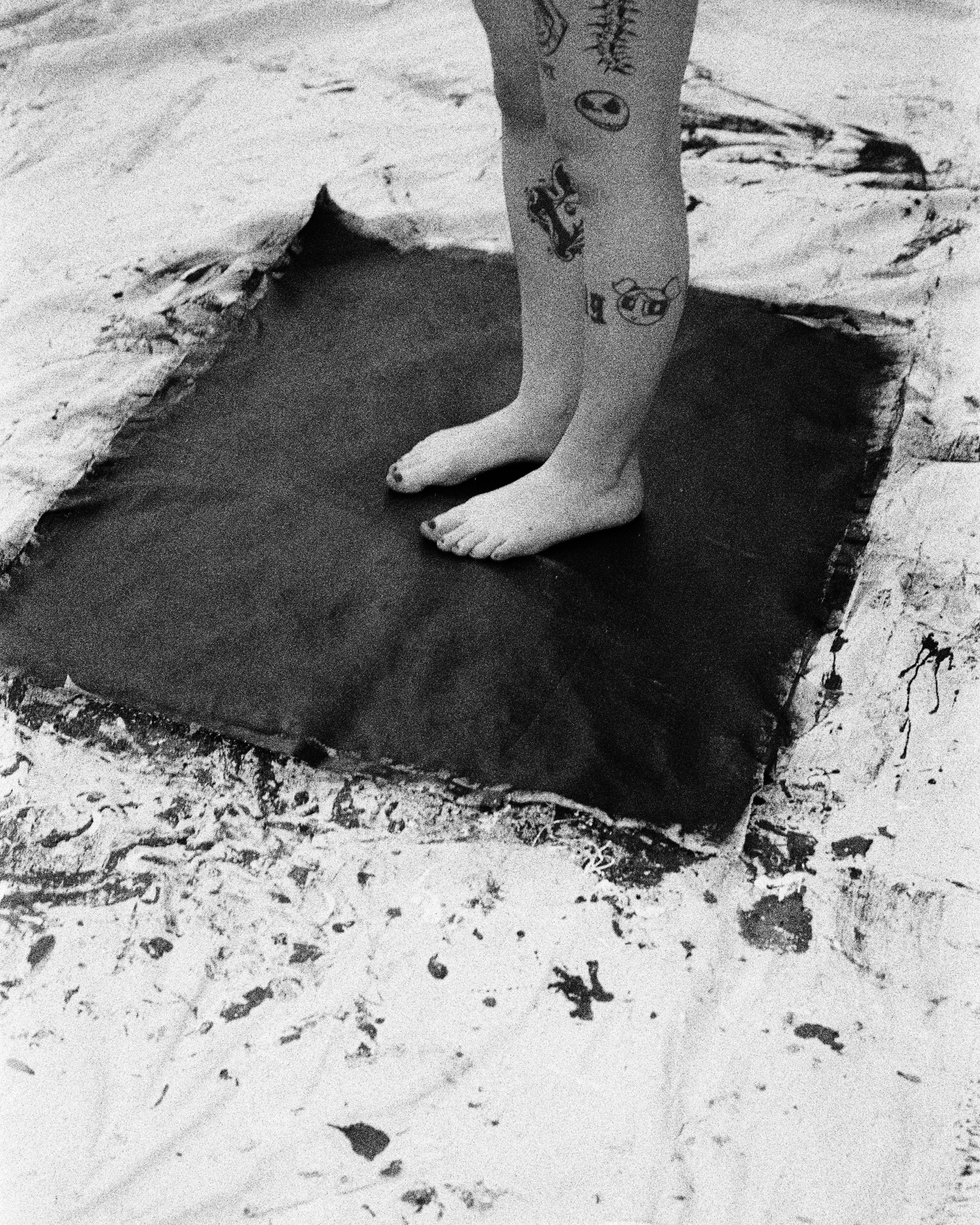
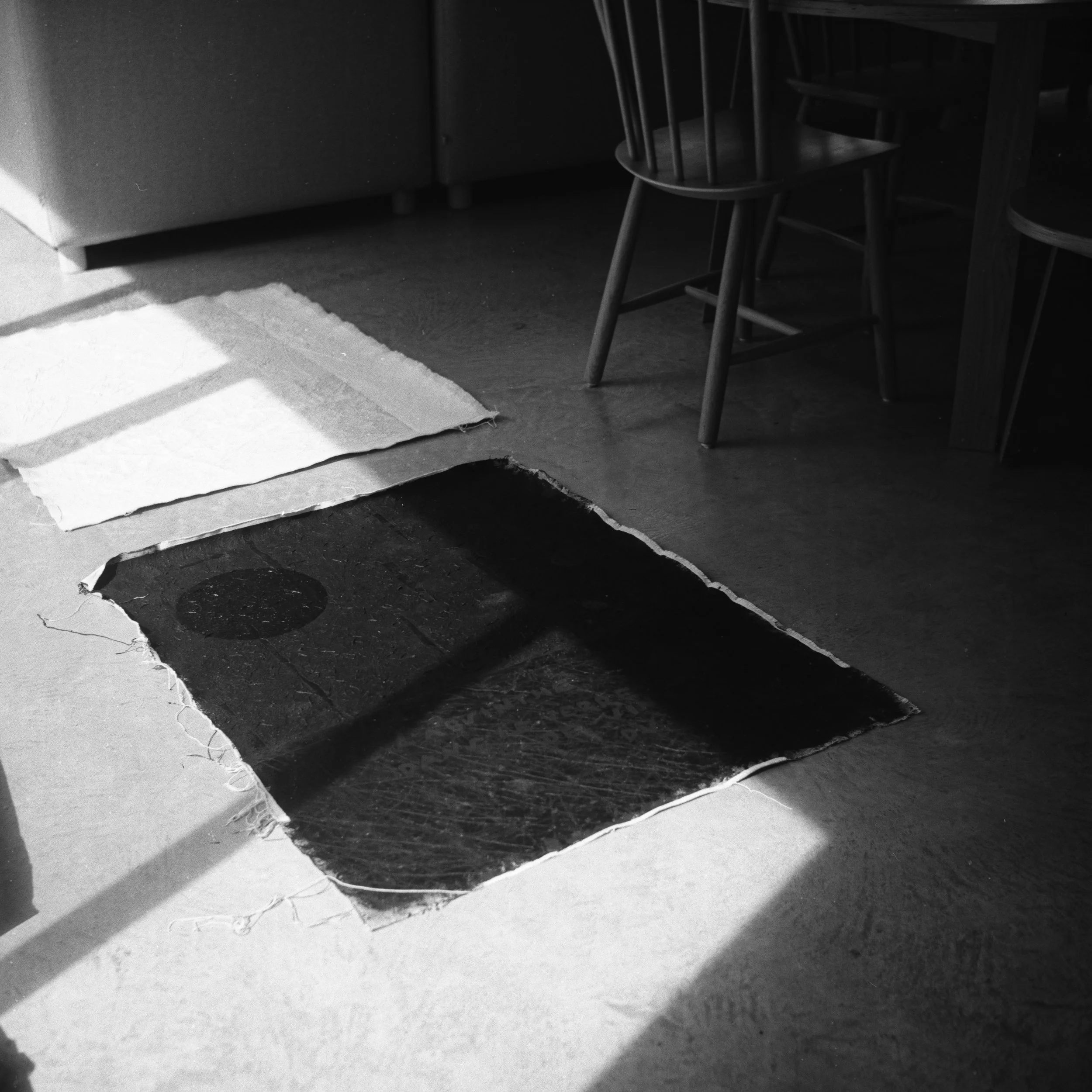
I speak on behalf of Frédéric on this one. Dead pine branches became paintbrushes. Rocks became an easel. Flowers from the field became stencils. Even the flies became part of the canvas when they flew too low. Everything around him became part of what he created. Without his primary medium of photography, Frédéric worked in sync with his environment, exploring techniques he had never tried before.
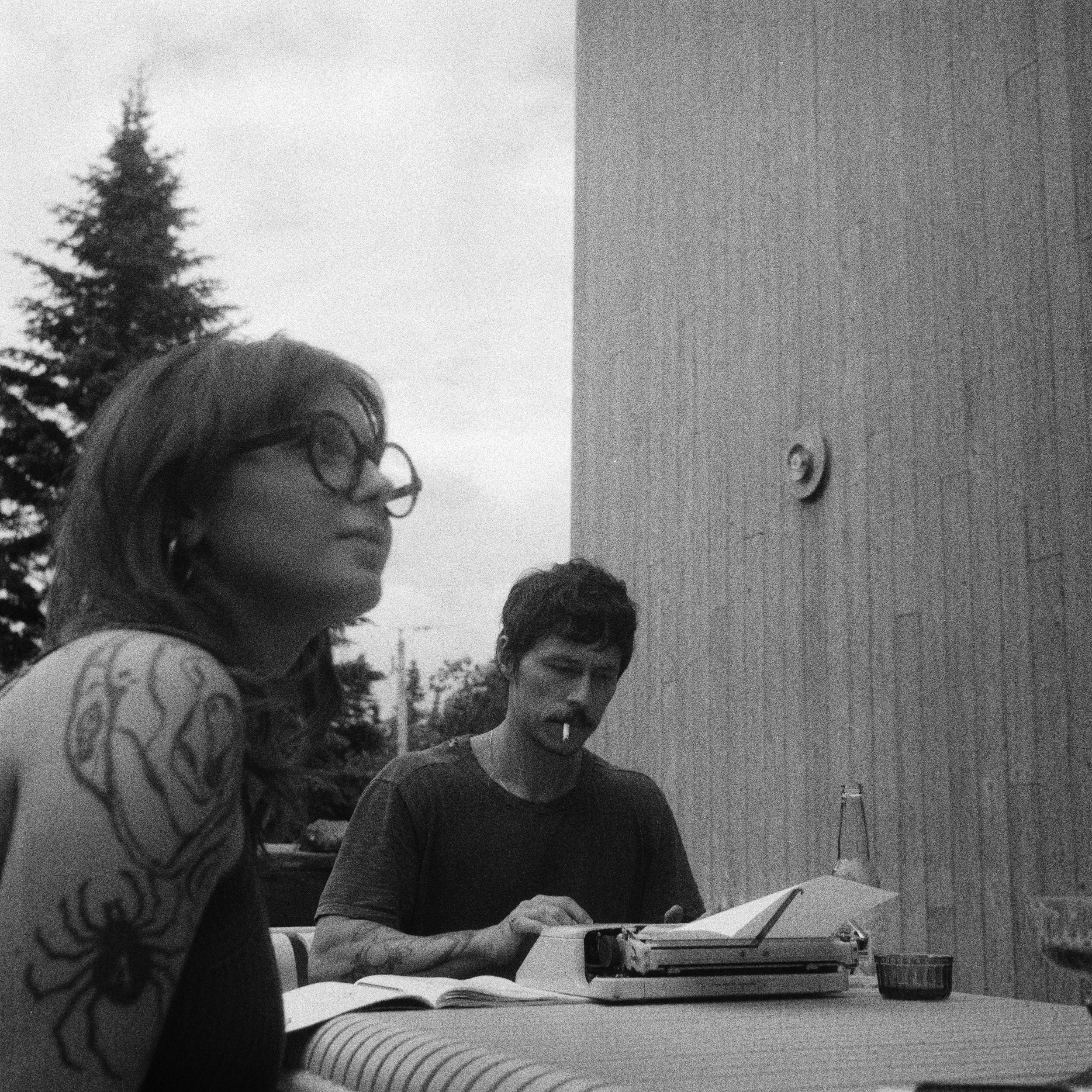
For me, always searching for new images and figures to write about, the environment was an endless source of inspiration. I was somewhat familiar with the typewriter, but creating a “cadavre exquis” in this setting was a first for Pierre-Luc and me. The three of us wrote until we truly had nothing left to say. The atmosphere changed the dynamic of our writing, and I could feel friendships being built through those moments.
What has challenged you most during this residency?
The real challenges came from outside the purpose of the residency itself: the heat, humidity and the insects that came to say hello. Beneath that was a larger challenge—being far from the comfort of our usual studios.
As Frédéric put it, creating at the mercy of nature is destabilizing. Our days were dictated by sunlight, with darkness acting almost like an ultimatum. It placed us in a rhythm we weren’t used to in the city. Time and its limitations became part of the challenge, but ultimately, also a gift: when darkness came, we were gently forced to breathe, stop and rest.
How do you see art as a bridge between people, cultures, or generations?
Art is a primary form of expression. It can be used for didactic purposes or even weaponized as political propaganda, but at its core lies its capacity to transmit a message—consciously or subconsciously. Through art and its interpretation, we can better understand social constructs, crises, historical events and the conditions in which an artist creates.
Art is also a foundation for community. It brings people together through connection, dialogue, similarities and differences. It gives us a way to share pain, trauma, passion, love, hate and social injustice in a form that remains, at its essence, peaceful.
Because the interpretation of art is fundamentally open, it can move beyond time and culture. Each person encounters a work through their own emotions and understanding. In that sense, art becomes a bridge—a liminal space where we can connect outside the boundaries that usually divide us.
Has this residency shifted something in the way you see your own practice or future projects?
Being in harmony with nature allowed us to connect with our inner nature—to become a “symphony within all nature.”
Without his usual tools and mediums, Frédéric felt a new need to create something entirely from within. The absence of constant imagery and familiar references pushed us somewhere else: toward our own inner worlds and the atmosphere surrounding us.
What’s a small, personal memory from your time here that you’ll bring back home with you?
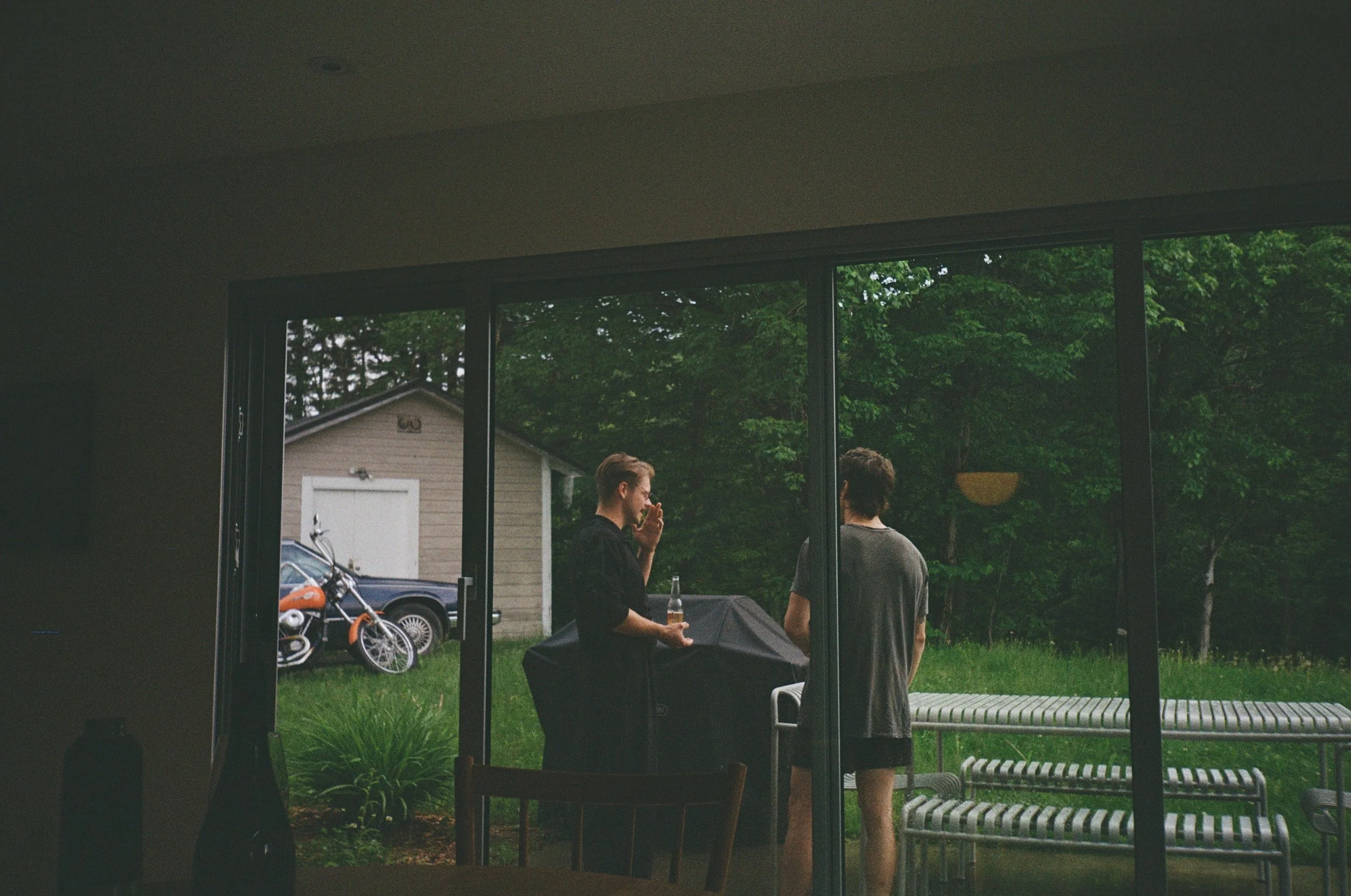
I think what we will remember most is the positive effect of briefly living as a small, isolated community. We left the residency with new ideas, deeper connections and, most importantly, friendship.
Stepping outside our comfort zones and sharing powerful creative moments within The Parcelles’ landscape created a safe space for expression. The architecture, the view, the sounds of nature and the peaceful atmosphere gave us a moment to breathe in the midst of creation. That breath allowed us to go deeper into what we came to explore: reflection, experimentation and what can emerge through proximity.
What role do you think residencies like The Parcelles play in supporting artists today?
Affordable, self-directed residencies like The Parcelles are essential to the development of emerging artists. Beyond offering recognition, they can be a first experience of residency life and creating in a remote environment.
Art history has long been shaped by elitism and nepotism. Initiatives like The Parcelles are a step toward democratizing the art world. While remaining professional and thoughtfully managed, the residency makes professionalization feel within reach and offers a sense of possibility—and hope—for a new generation of artists.
Anne-Sophie’s reflections touch on something at the heart of why we created The Parcelles. A residency doesn’t always need to begin with a defined outcome. Sometimes, what matters most is creating the conditions for something to happen: bringing people together, stepping outside familiar routines, exchanging ideas and allowing a project to evolve organically.
This is exactly the kind of gathering we want to support. Seeing Anne-Sophie use the space not only for her own practice, but to bring artists together around a shared project, feels deeply aligned with what we hope The Parcelles can be: a place where emerging ideas are given time, where artists can take risks, and where community can form naturally around the act of creating.
The work eventually leaves the residency—to an exhibition, a page, a performance or somewhere we couldn’t have anticipated. But the conversations, friendships and shifts in perspective that happen along the way are often just as meaningful as what gets produced.
Follow Studio Orizon / @orizon.studio
Film photography by Frédéric Leblanc / @fredericleblanc_