Interview & Photography / Catherine Bernier
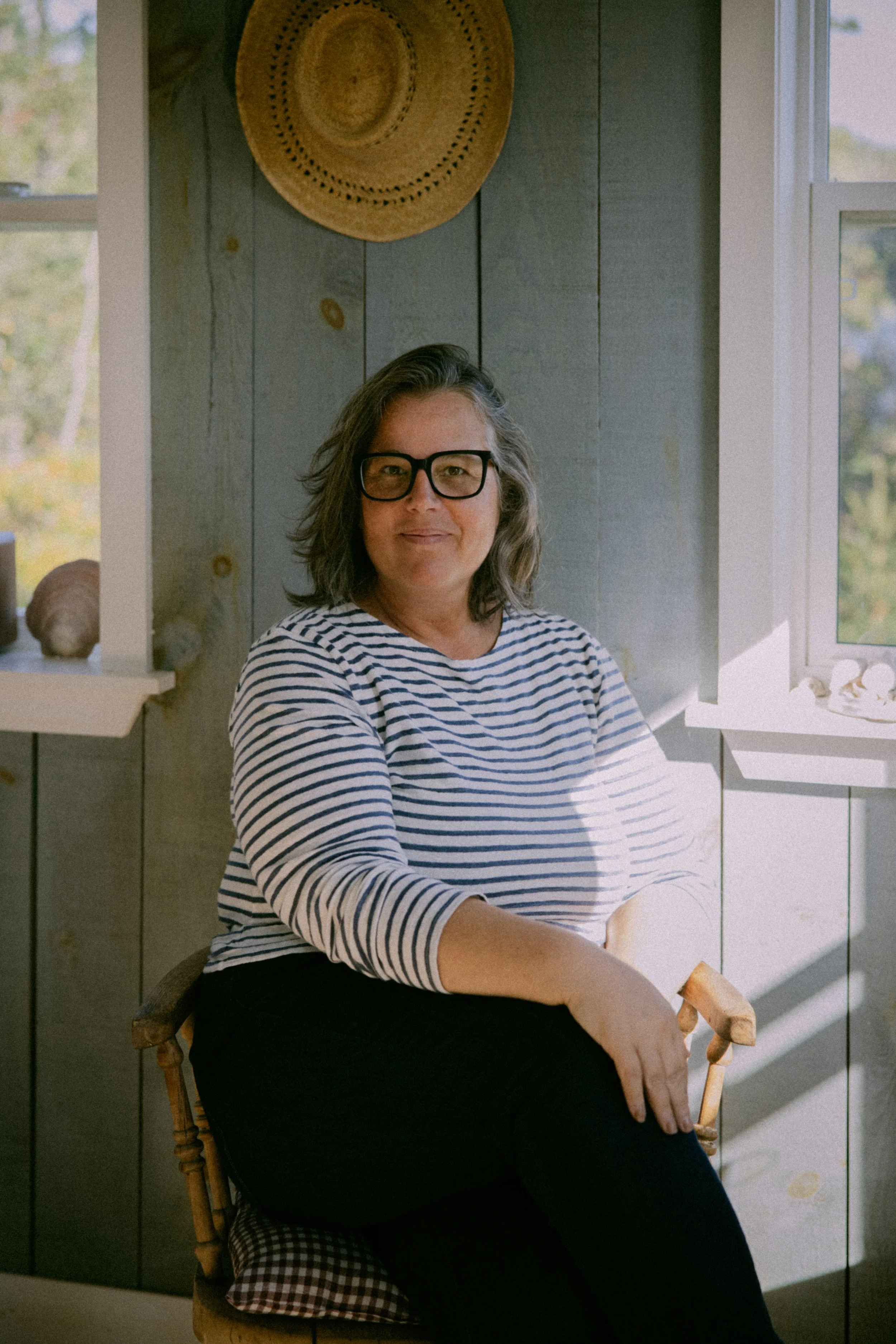
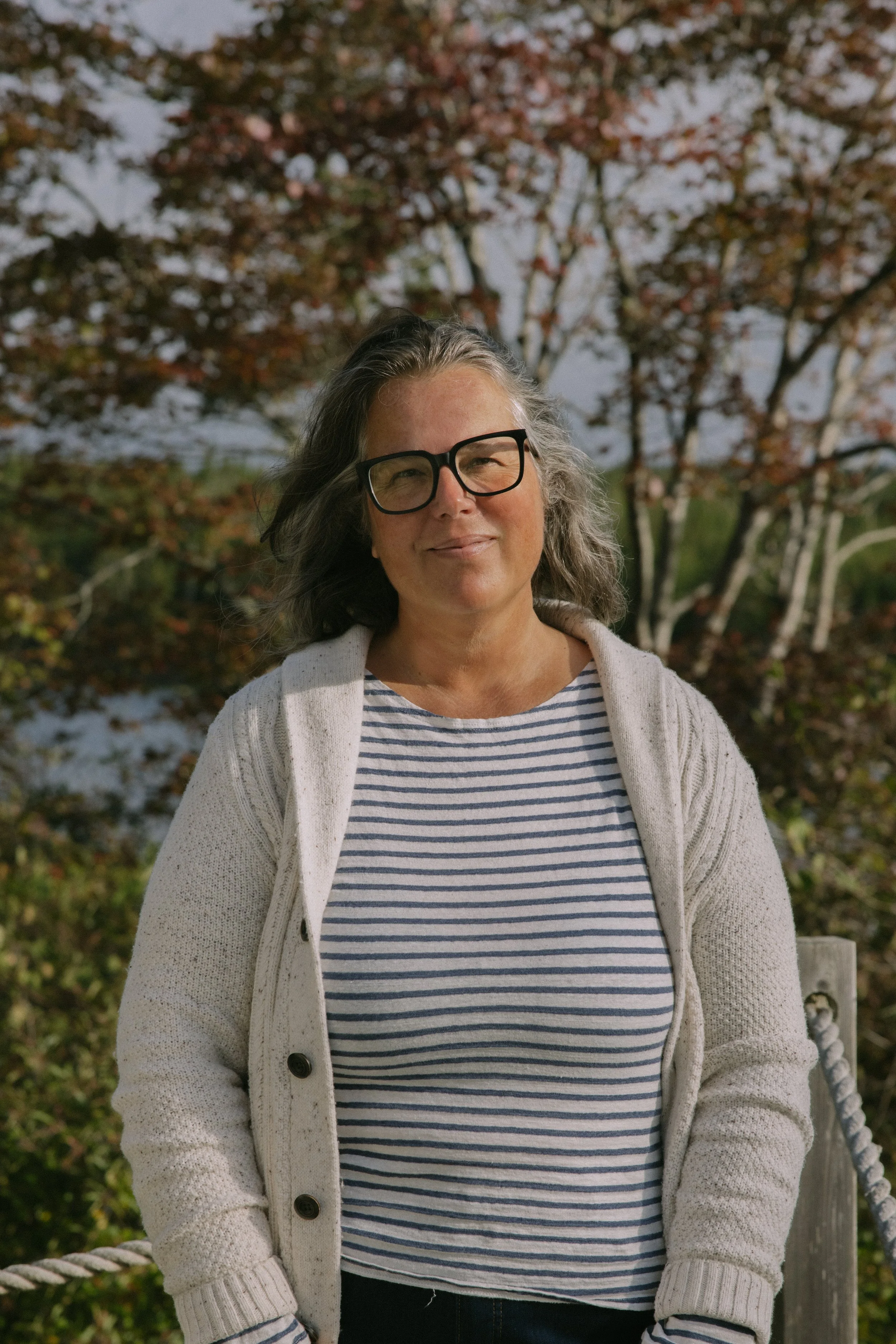
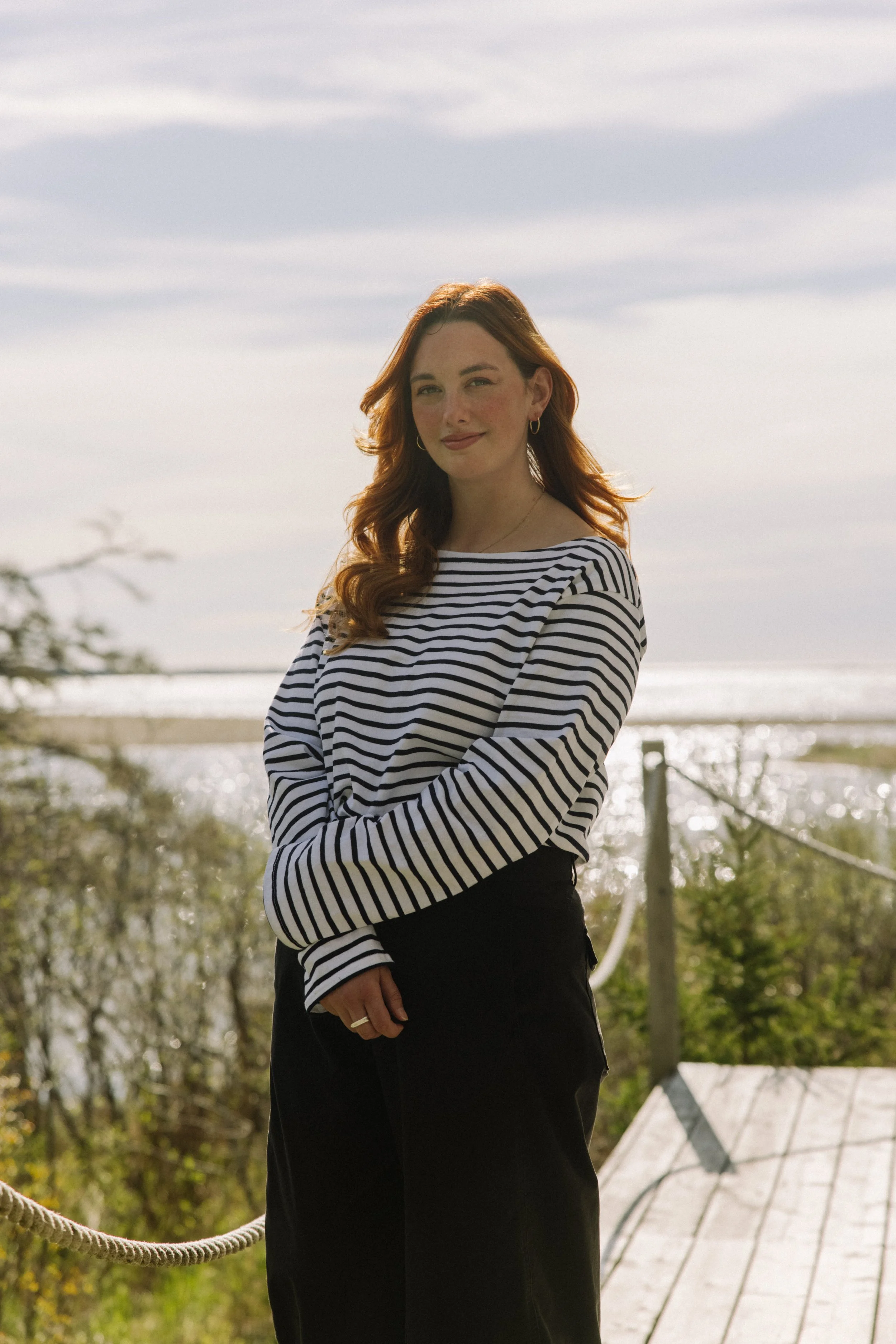
When I met Anik for her portrait session, what would normally take an hour turned into an entire morning of conversation. She is funny, with a quick mind and a way of getting straight to the heart of things. Between laughter and more personal conversations, we quickly moved beyond the usual introductions, sharing thoughts about our lives, our vulnerabilities, and the things we're still trying to figure out. There was something genuinely beautiful about that kind of openness between two people who had only just met.
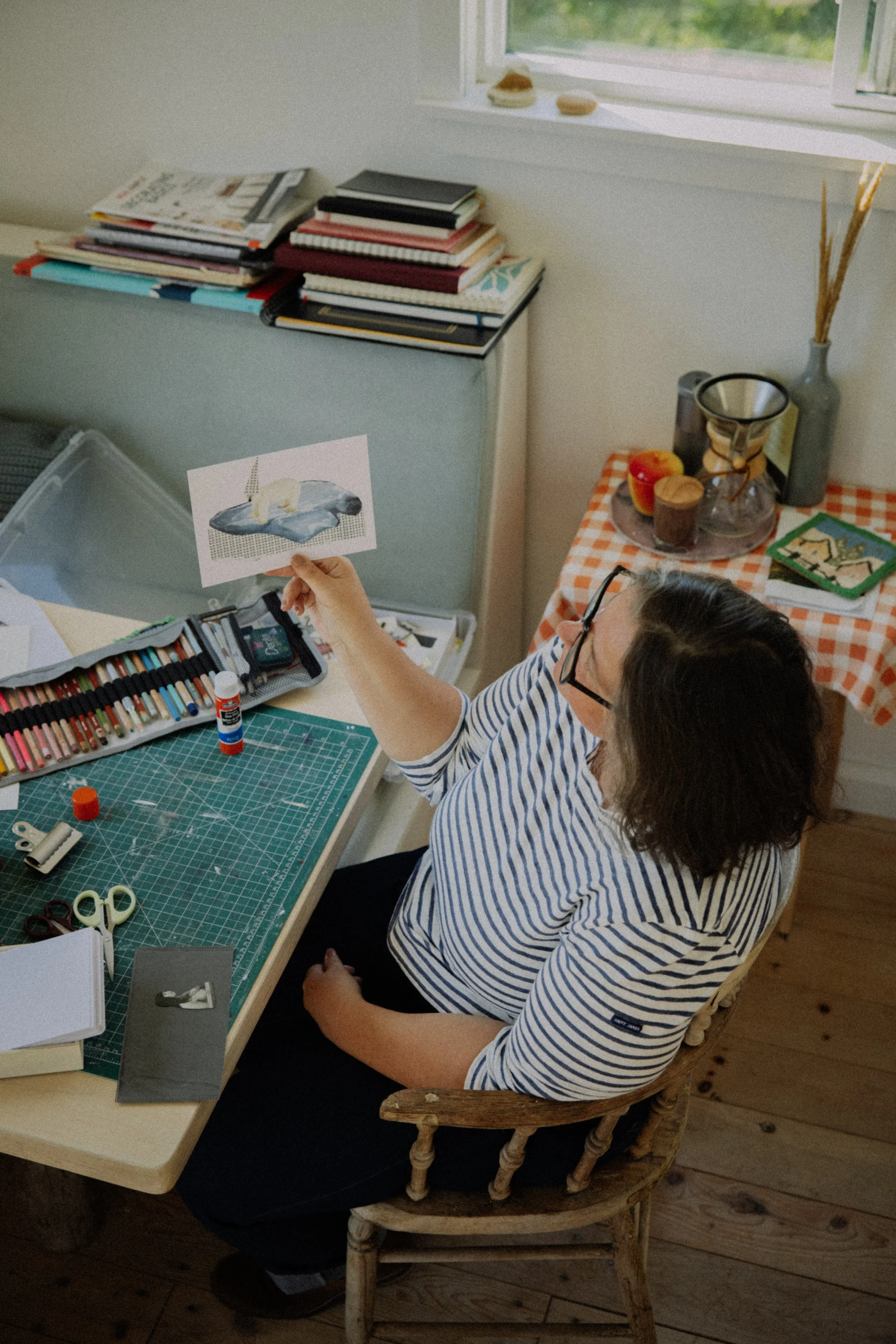
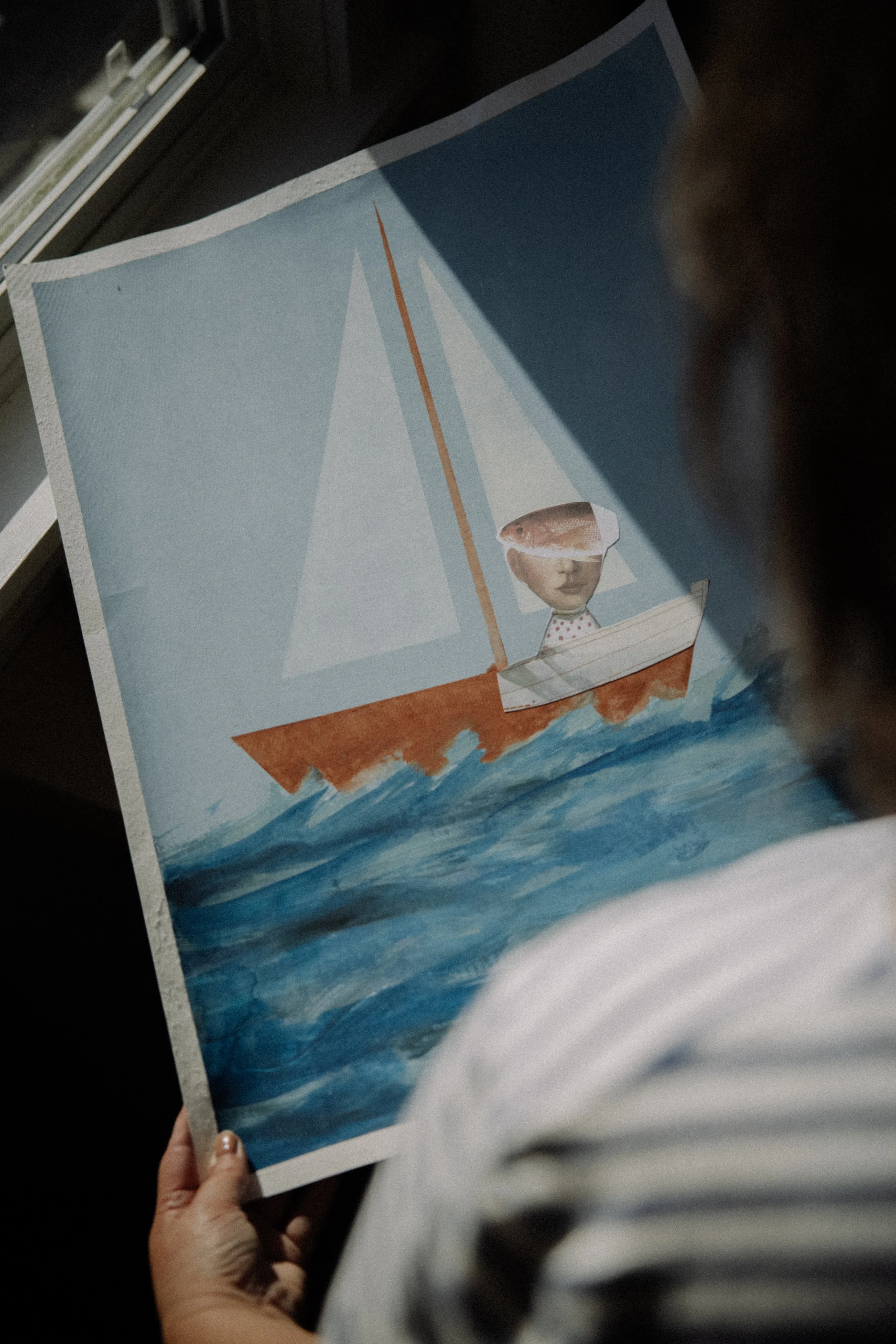
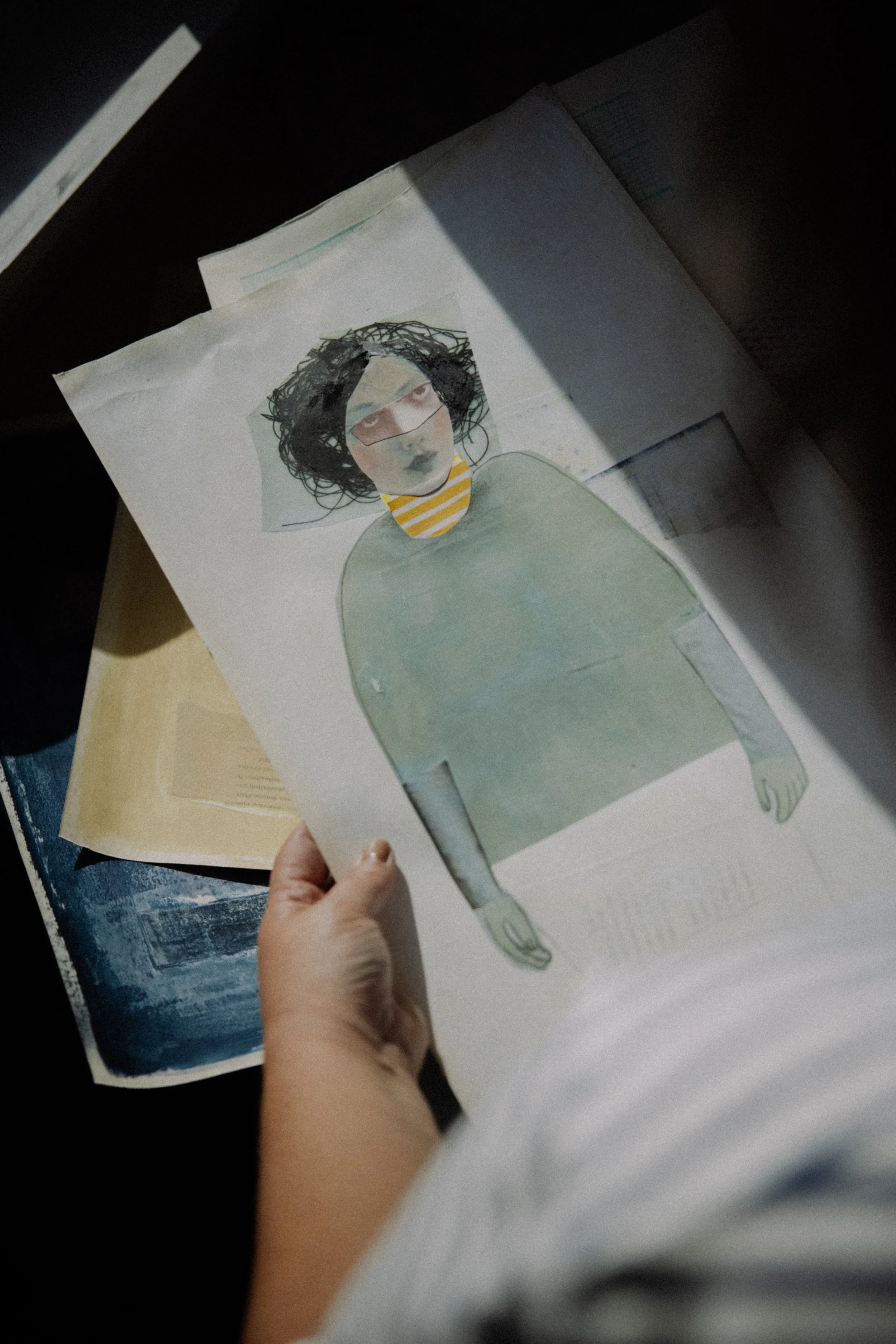
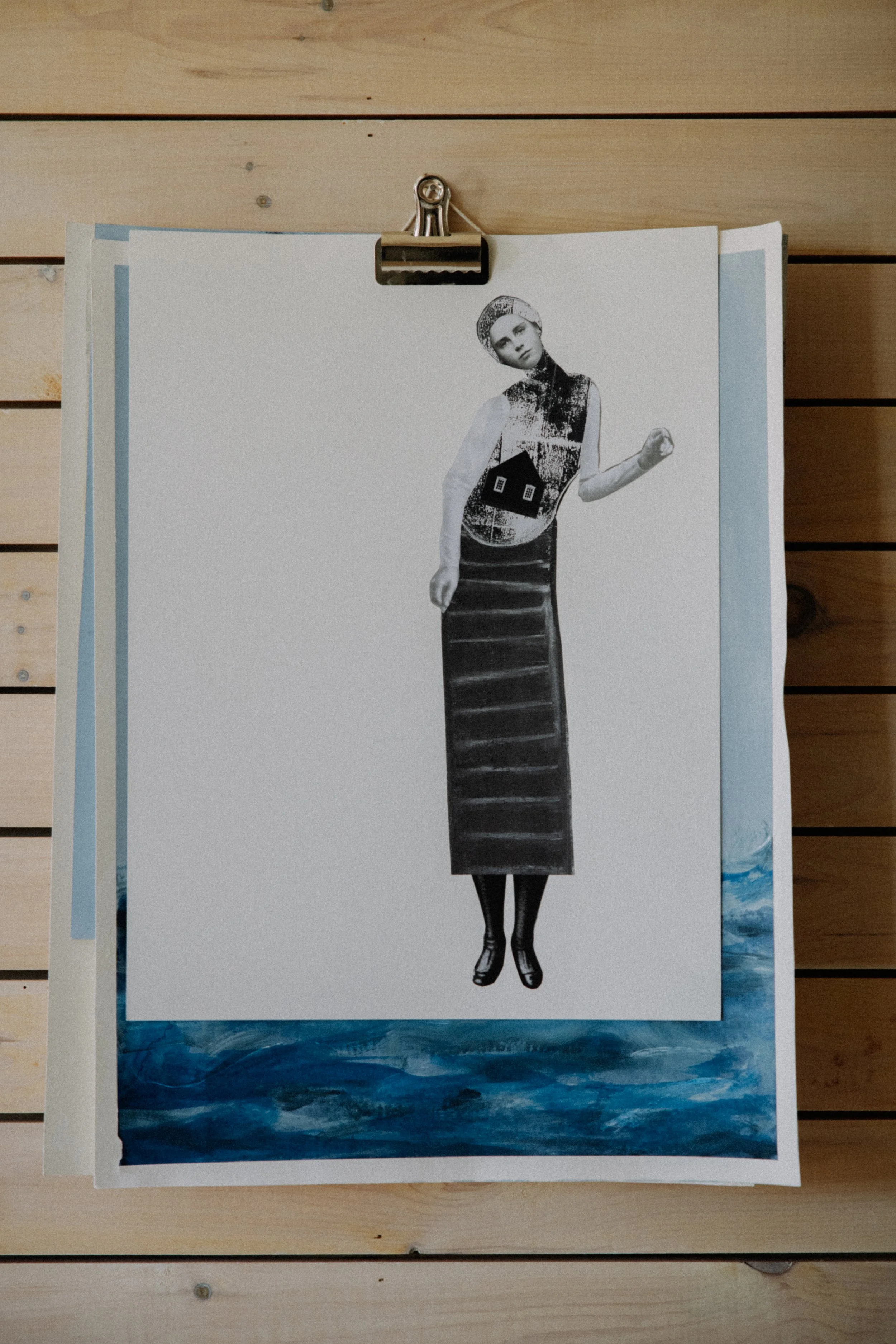
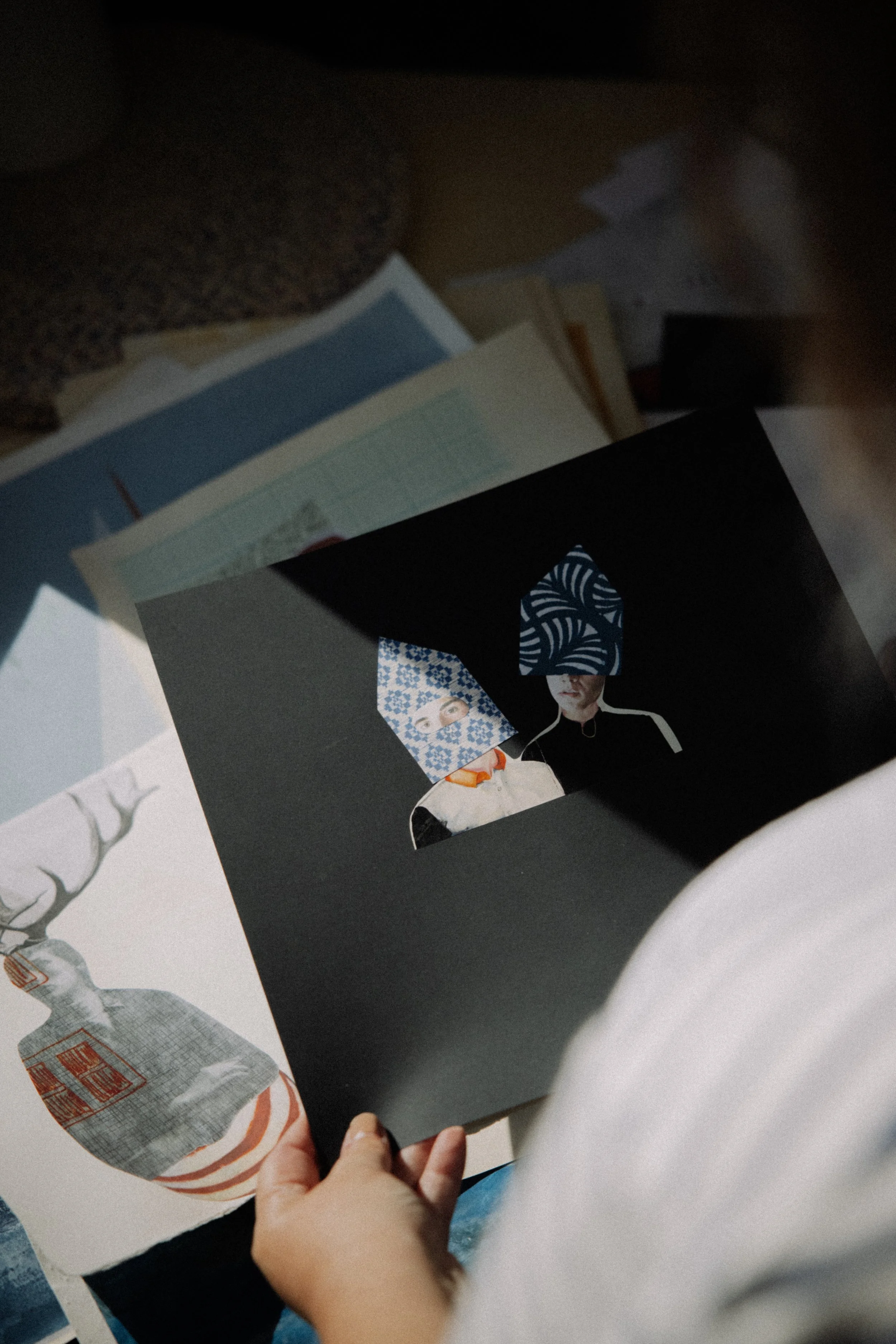
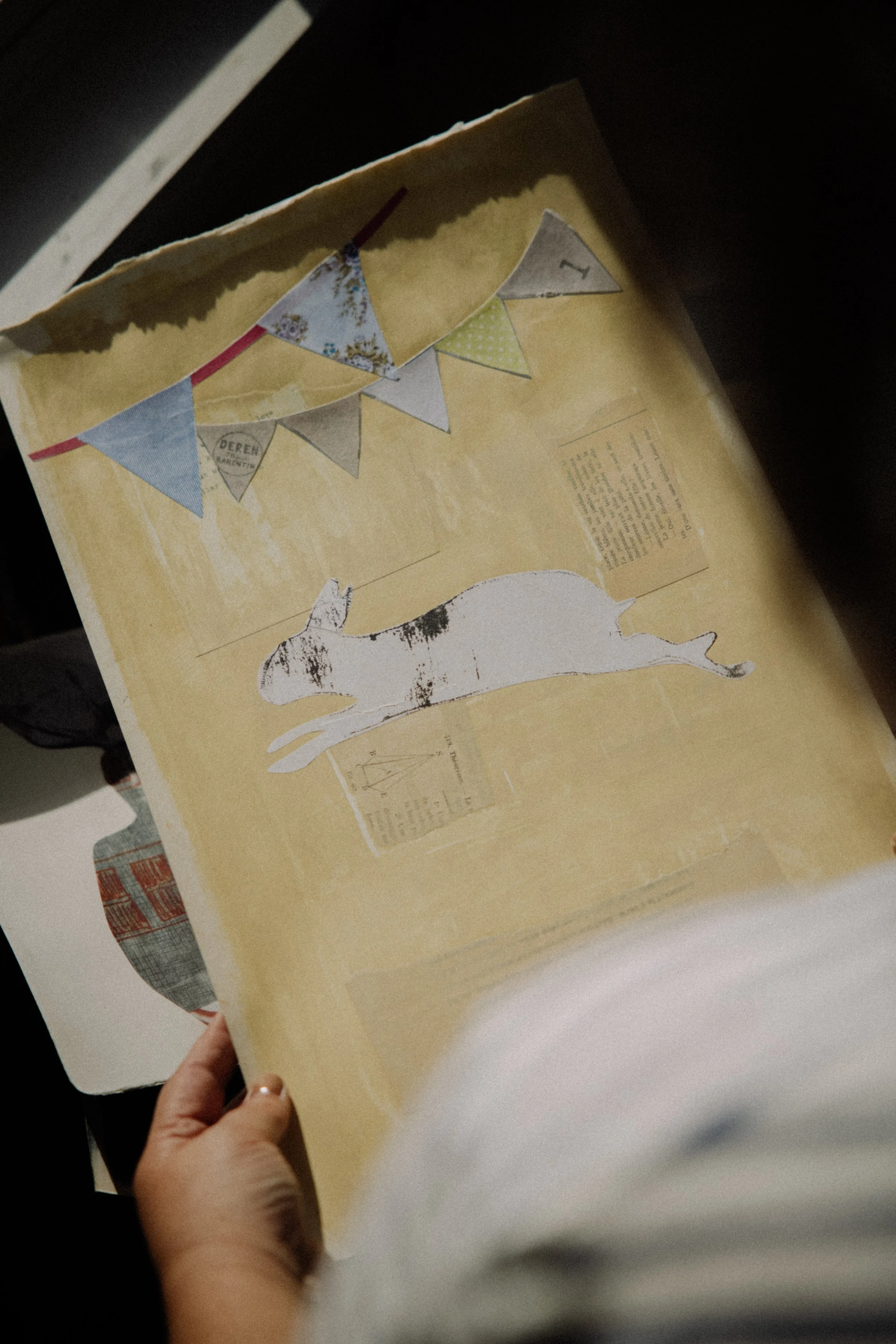
As I got to know Anik, I began to recognize that same sensitivity in her artistic practice.A Québec-based visual artist, Anik has explored many forms of creation over the years, from sculpture and jewelry-making to more decorative work, before gradually finding her way to collage on paper. Her work sits somewhere between image, storytelling, and poetry, exploring solitude, mental health, healing, and the more complex experiences of childhood. Often poetic and sometimes melancholic, her compositions reflect an ongoing search for meaning.
Her path into the arts hasn't always been straightforward. Encouraged to pursue a more conventional career, she eventually found her way back to visual art. Now in her early fifties, she's learning to give herself more freedom to experiment, question old habits, and let her practice evolve without necessarily knowing where it will lead.
Anik came to The Parcelles in Seaforth, Nova Scotia, hoping to reconnect with childhood memories of the province and find some clarity in her artistic practice. Her week unfolded a little differently than expected, with long walks along the coast, visits to local reuse shops, and more poetry writing than visual creation.
Throughout her reflections, one idea kept coming back: learning to accept where she is rather than where she thinks she should be. Perhaps that's a good place to begin her story.
How does your cultural background or personal story shape your practice?
Paper has always been part of my life.
My father worked on large industrial construction sites, particularly in pulp and paper mills, both in Canada and abroad. My mother was an executive secretary, so our home was full of notebooks, notepads, and pens that fed my childhood games of pretending to be a secretary or a fashion designer.
My parents encouraged my creativity, until I wanted to make a career out of it. At that point, they strongly steered me toward academic subjects and university studies, with the arts no longer considered an option.
I studied psychology and sociology in college, followed by social work and public communications, specializing in advertising. Once I became independent, I went back to earn a certificate in visual arts, reconnecting with something I had buried deep inside myself.
For a long time, I created with the feeling that I had to be reasonable: watching my spending, carefully considering every investment, and limiting the scale of my projects.
I sometimes wonder whether my love of reclaimed materials is also a way of reconnecting with that passion while giving myself permission to pursue it without spending too much.
I have a deep love of colour, but my palettes tend to remain restrained, with something nostalgic, mature, and sometimes elegant about them.
These days, I want to give myself more freedom and make more room for the unexpected in my work.
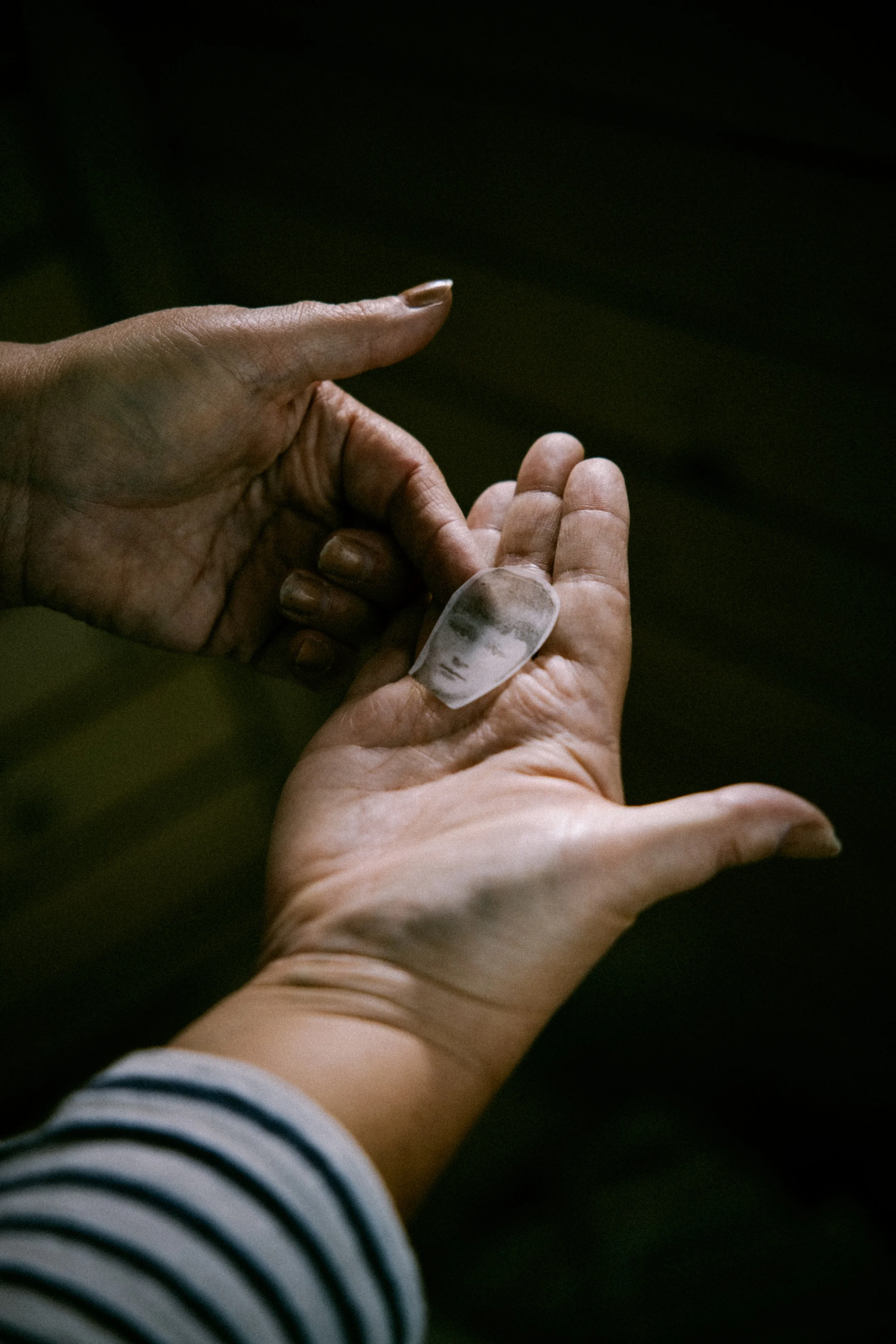
What were your intentions for the residency and how did it unfold?
I wanted to step away from my everyday life and reconnect with a happy childhood memory.
When I was around nine or ten, I spent a few weeks in Pictou, Nova Scotia, where my father was working at the time. My mother, brother, and I had travelled there by train to join him.
For my mother, who had many fears, taking that trip was an act of courage.
I remember the train compartment, playing along the shore, my teenage brother coming into his own, and the growing freedom I was being given. In my memory, my parents were happy together.
Returning to Nova Scotia was also a way of reconnecting with my father, who has since passed away, in a place I associate with his long absences for work.
In the end, the residency was less nostalgic than I expected.
I felt grounded in my present life, close to the woman I am becoming, and increasingly comfortable with who I am.
I went on beautiful walks and visited many thrift and reuse shops, wanting to discover a bit of local life as well.
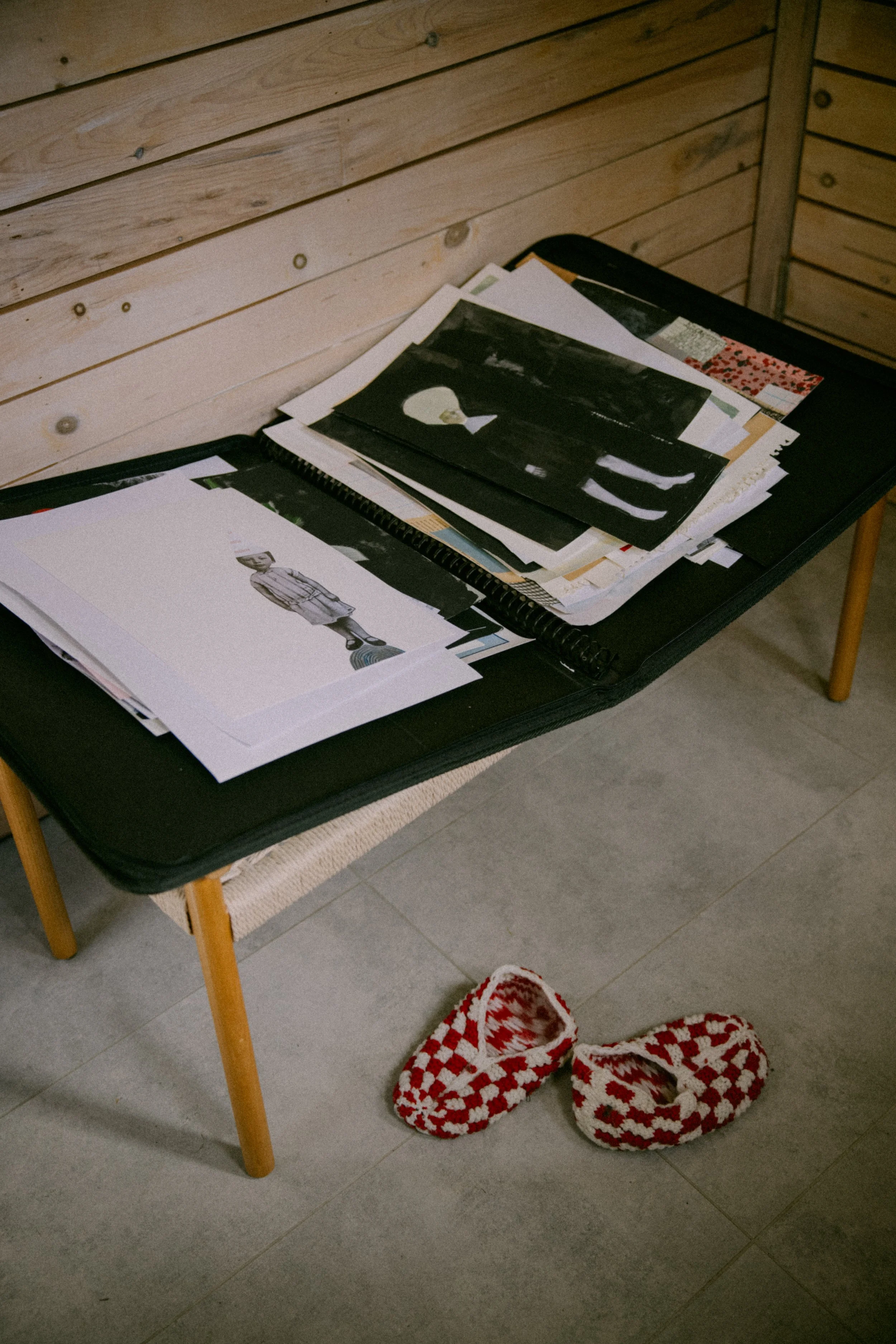
I had brought nearly a hundred works on paper, thinking I would finish them during my stay. Instead, I went through them one by one, reflecting on what might come next. I ended up completing three.
The cabin was beautiful and welcoming, but I didn’t have quite the same freedom of movement or access to the materials I have in my mixed-media studio.
I wrote a lot of poetry, with the idea that perhaps one day I could put together a collection and illustrate it myself.
So, rather than creating images, I found myself moving toward words that might eventually become images.
Since returning home, I’ve become active again in my visual work, and I feel inspired.
Can you describe a typical day during your residency?
No alarm clock!
I woke up whenever I felt like it, usually around eight or eight-thirty. I would slowly make myself some tea and breakfast, and then the urge to explore would kick in.
On rainy days, I spent time looking through my artwork and the materials I had found at thrift and reuse shops.
When the weather was nice, I went for long, peaceful walks along the ocean and the many bays surrounding Seaforth.
I also visited Halifax, Dartmouth, and Cole Harbour.
I usually returned around dinnertime. Without an oven or microwave, I would make soup, a creamy vegetable soup, or something slow-cooked on a burner or the wood stove.
Afterward, I would return to my poetry or spend a little time on my tablet to stay connected with the outside world.
I went to bed early and read. I had the luxury of reading books simply because I wanted to.
That was the rhythm of my week.
How has the landscape or atmosphere of the surroundings influenced your creative process?
I don’t think the quiet or the rhythm of the place changed the way I work.
But I love a wide horizon, and I was struck by the variety of landscapes: the greenery, the forests, the rolling hills, and then those open views of the ocean.
The word that keeps coming back to me is wild.
There’s a wildness to this place that made room for a part of my personality I’ve become more comfortable embracing as I get older.
I love my solitude.
With each residency, I rediscover that freedom I allow myself and the precious solitude I give myself.
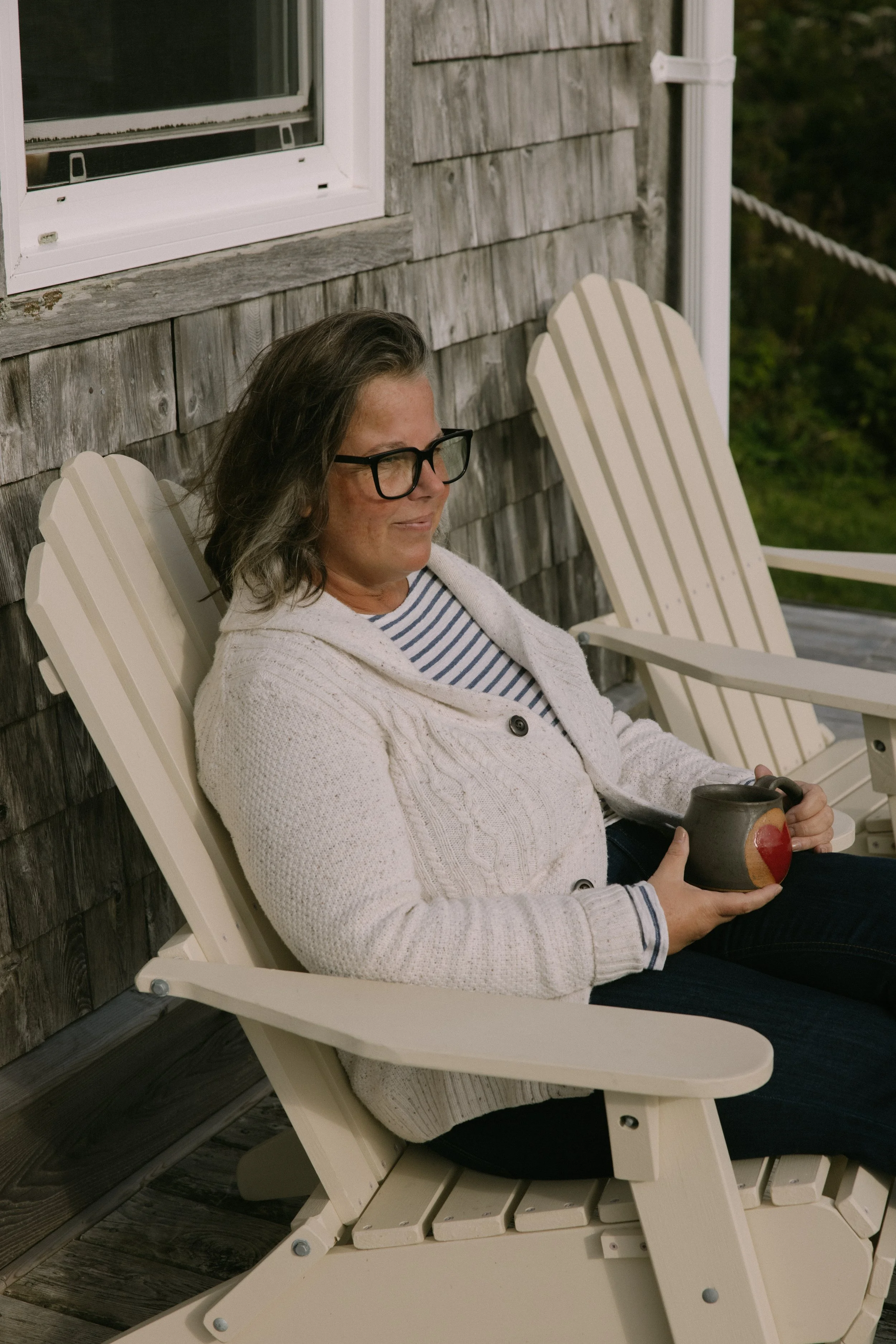
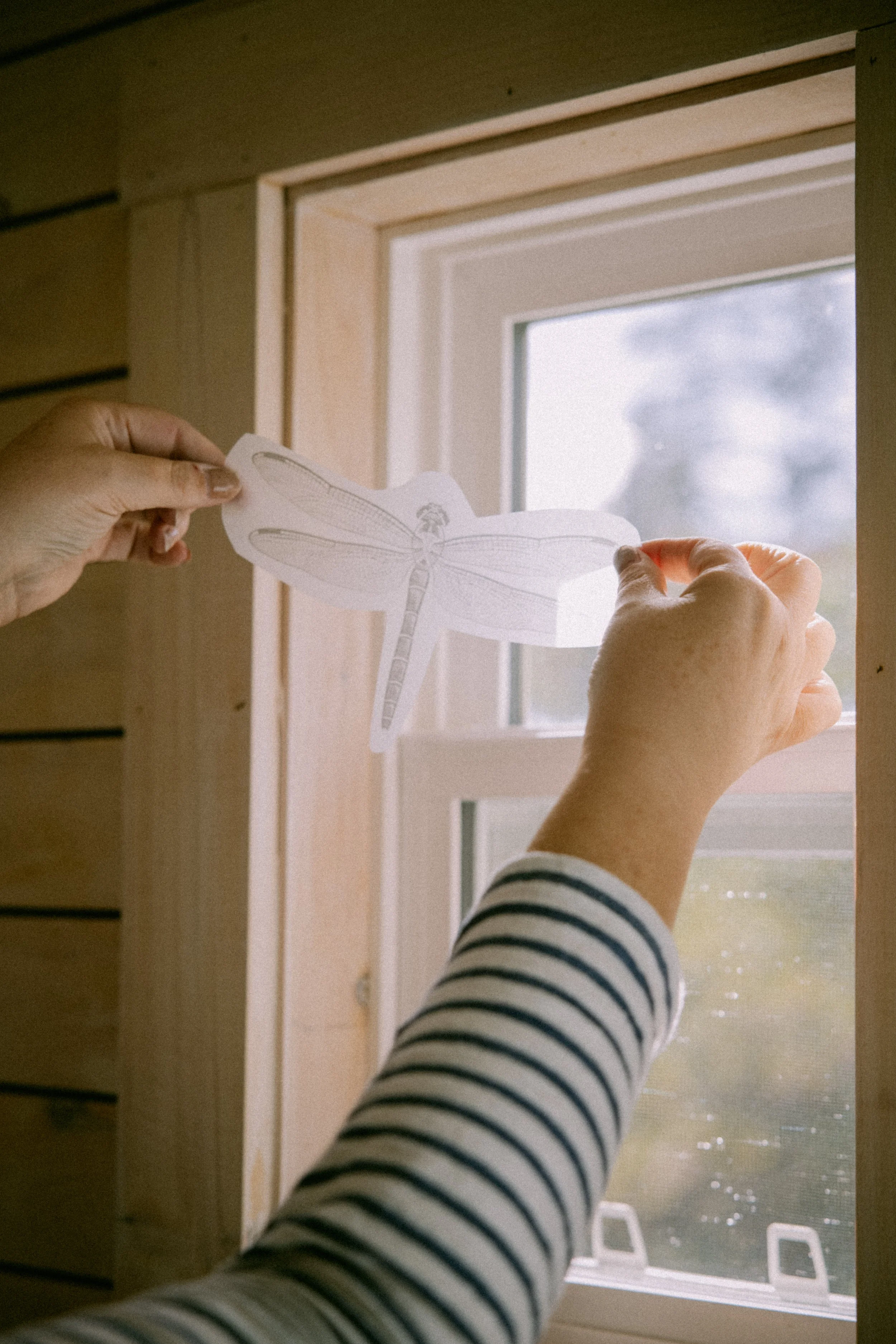
“Part of our routine became talking outside over morning coffee, and one thing quickly became clear: neither of us was used to silence or a slower rhythm. We both live fast, demanding lives, surrounded by people, so the peace of The Parcelles was disorienting—in the best way.”
-Anne-Sophie
Is there a medium or technique you experimented with here that you hadn’t tried before?
Surprisingly, yes!
At a reuse shop, I found a collection of little paint-by-number pots in a wide range of colours. I brought them back to the cabin to try them out.
The colours inspired me, but I was disappointed by the quality of the paint and how little coverage it provided.
With such small quantities and so much transparency, there wasn't much I could do with them.
I don’t think I’ll continue using these paints, but I’m glad I gave myself permission to experiment.
After bringing them home, I donated them back to a reuse shop so they wouldn’t become clutter.
What has challenged you most during this residency?
Finding a balance between my desire to explore the area and my desire to stay at the cabin and create.
During residencies, I often put pressure on myself to be productive and to come home with something inspiring, meaningful, and substantial.
At the same time, I feel like I’m travelling. Being somewhere different makes me want to go out, discover new things, and absorb the places that welcome me.
I didn’t want the experience to be just a vacation, but I also didn’t want to miss out on discovering the region.
My challenge was to make room for both desires and to accept what was happening rather than what I thought should be happening.
How do you see art as a bridge between people, cultures, or generations?
To me, art is a bridge in all three ways.
It’s a precious way of connecting with another person, a group, or another generation.
During my experiences in Europe, I noticed that handmade objects, unique pieces, and the money families choose to spend on them seemed to have a more natural place in everyday life.
Here, I sometimes feel that art is still seen as elitist, and its place in daily life isn't as widely recognized.
And yet, it doesn’t necessarily have to involve a large budget.
When you choose a work of art for deeply personal reasons, when you form a connection with it, it can nourish you for a very long time.
Whether it’s a work on paper, a sculpture, or an illustrated poetry collection, its presence can become something precious.
I feel that people who allow themselves to develop that kind of relationship with art find real happiness in it.
Did you find inspiration through conversations or encounters with people in the area?
Meeting Catherine had a greater impact on me, both personally and in terms of my growth as an artist, than I could have imagined.
Her perspective on my work, her kindness, and our sometimes very personal conversations gave me an unexpected kind of support that meant a great deal to me.
I often think back to her encouragement.
In my own way, I want to give something back for that welcome by telling others about the opportunity to stay here and helping people discover the place, Catherine, her partner, and their family.
I also had conversations with people in reuse shops and with someone at a visual arts institution in Halifax. She knew Québec and had visited before, which I appreciated.On the other hand, in some of the more rural reuse shops, people didn’t even know where Québec was. It didn’t inspire me artistically, but it gave me some perspective: we’re far from being the centre of the universe!
Has this residency shifted something in the way you see your own practice or future projects?
This question was actually at the heart of my goals for the residency.
I thought I would come back with a clear plan for what I wanted to do.
To be completely honest, I’m still uncertain.
I’m questioning which specific projects I’d like to submit and where I might propose them.
I can see that I still have some way to go, but this residency gave me the energy to roll up my sleeves again.
I came home wanting to take action and find my answers, even if I don’t have them yet.
What do you think about the growing presence of artificial intelligence in the creative world? Has it influenced the way you think about your own practice?
This question actually came out of a conversation with Catherine. In the cultural sector, where I also work, I discuss AI with colleagues and organizations. I find that artificial intelligence is often demonized. The threats tend to dominate the conversation, sometimes leaving little room for nuance or possibility.
Personally, I don’t feel threatened by it at the moment. Is that naive? I don’t know. I know these tools are going to change many things, even if we don’t yet know exactly how. But I don’t want that uncertainty to stop me from moving forward.
I care deeply about analogue processes and handmade work.At the same time, I want to be able to use artificial intelligence as a practical tool to support my career.For example, it helps me take my spoken answers and organize my thoughts, write applications, or prepare project proposals.That doesn’t mean accepting everything it produces. I reread, correct, personalize, and question what it suggests.
Another example involves photographs of my artworks behind glass. For years, reflections made those images difficult to present.Using AI to remove the reflections allowed me to finally submit those photographs. It solved a very practical problem, since it isn’t always possible to photograph artwork before it gets framed.
For now, the ways I use AI have been beneficial, particularly when it comes to managing my career.
I want to keep my own judgment and my freedom to explore.
What’s a small, personal memory from your time here that you’ll bring back home with you?
I have a very tender memory of a brief moment spent with Catherine and her partner’s little boy, who was just over two years old.While his father was adjusting the shower thermostat, the two of us found ourselves together.
I was touched by his beautiful spirit, what I perceived as a remarkable maturity for his age, his observant gaze, and his quiet strength. I worked with children for many years, and I felt a connection with him.
Little by little, I could feel his initial reserve fading away.That small moment brought me genuine happiness.
What role do you think residencies like The Parcelles play in supporting artists today?
For me, they validate the artist.
Giving yourself a residency means allowing yourself to set aside time and space for your practice, while knowing that a place is supporting that process.
My last four residencies have all required a personal financial contribution.
But the support is still very real. At The Parcelles, the artist rate was 60% lower than the regular rate.
That difference makes the experience much more accessible.
These places offer freedom to think, create, and find inspiration in an environment that takes us outside our everyday lives.
Even though I have a beautiful backyard at home, I know it so well and see it so often that it doesn’t inspire me in the same way as somewhere new.
Giving artists access to the unfamiliar at a more affordable rate is a precious opportunity.
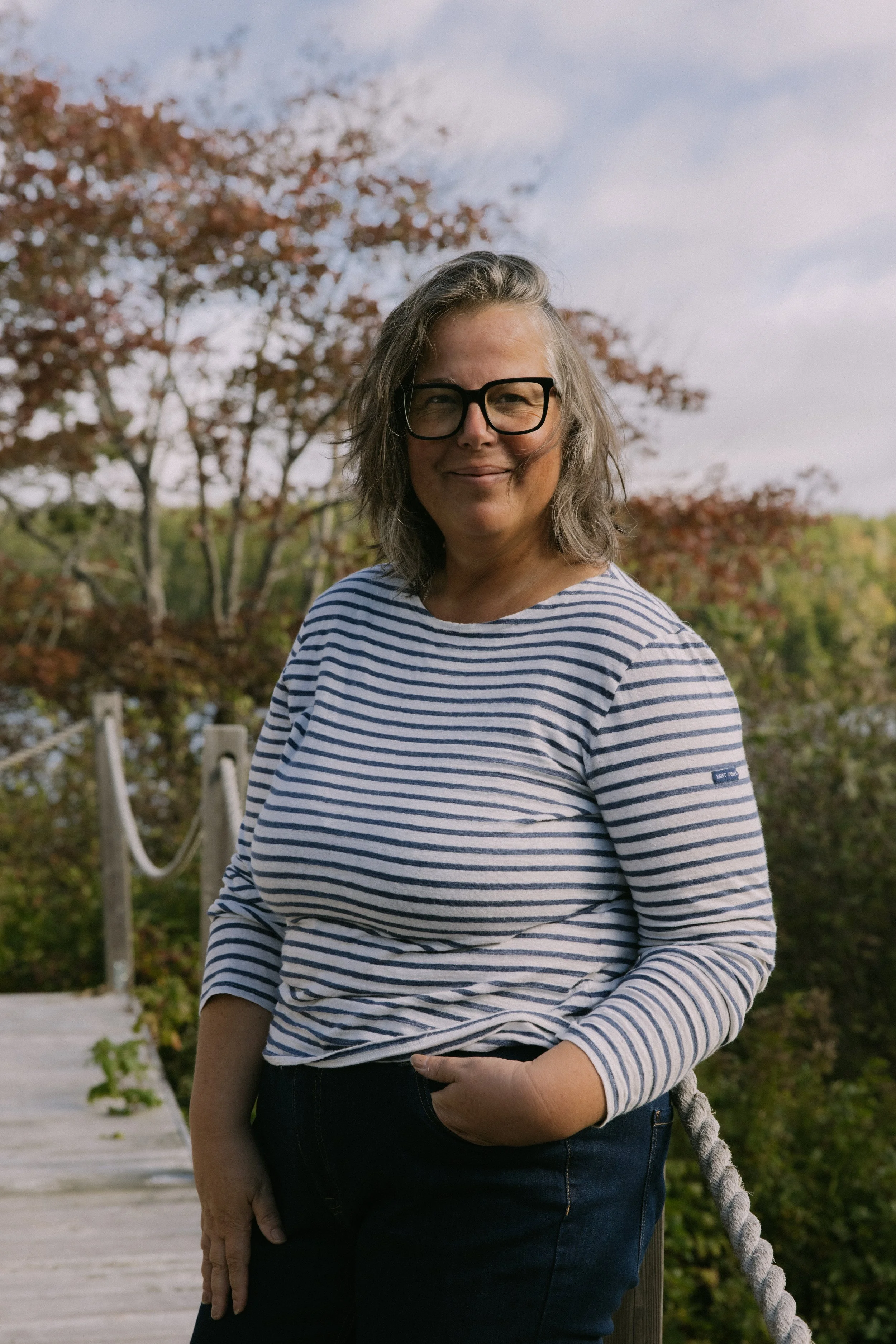
Anik left with fewer finished pieces than she had planned, but perhaps with more to work from. A few poems, new questions, and a renewed desire to get back to her studio. I like that her experience doesn't fit neatly into a story of transformation. Some things take longer to find their place, in life as much as in art.
Follow Anik Lachance / @anikartillustrationcollage
Photography by Catherine Bernier / @cath.be