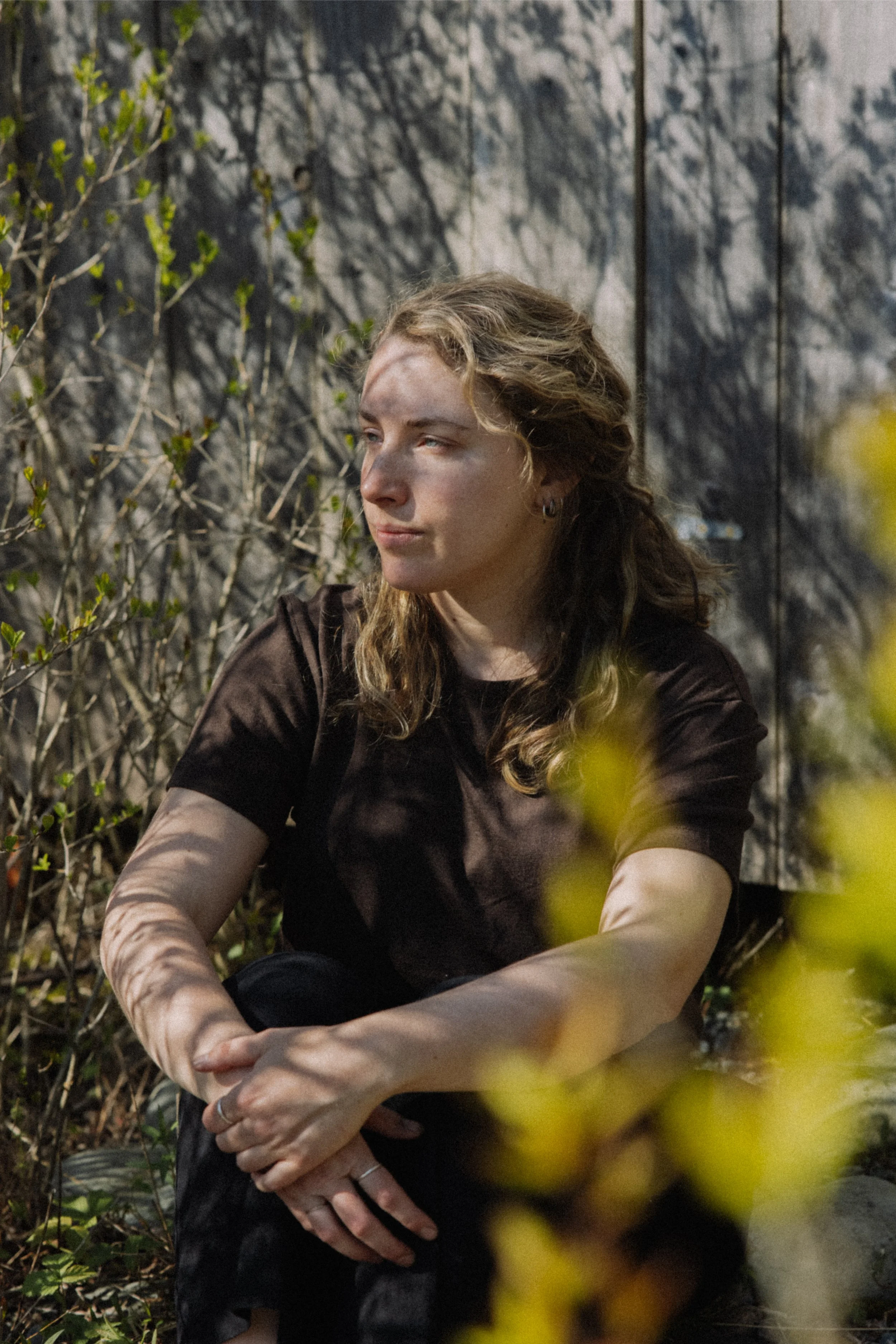
Catherine Blanchet
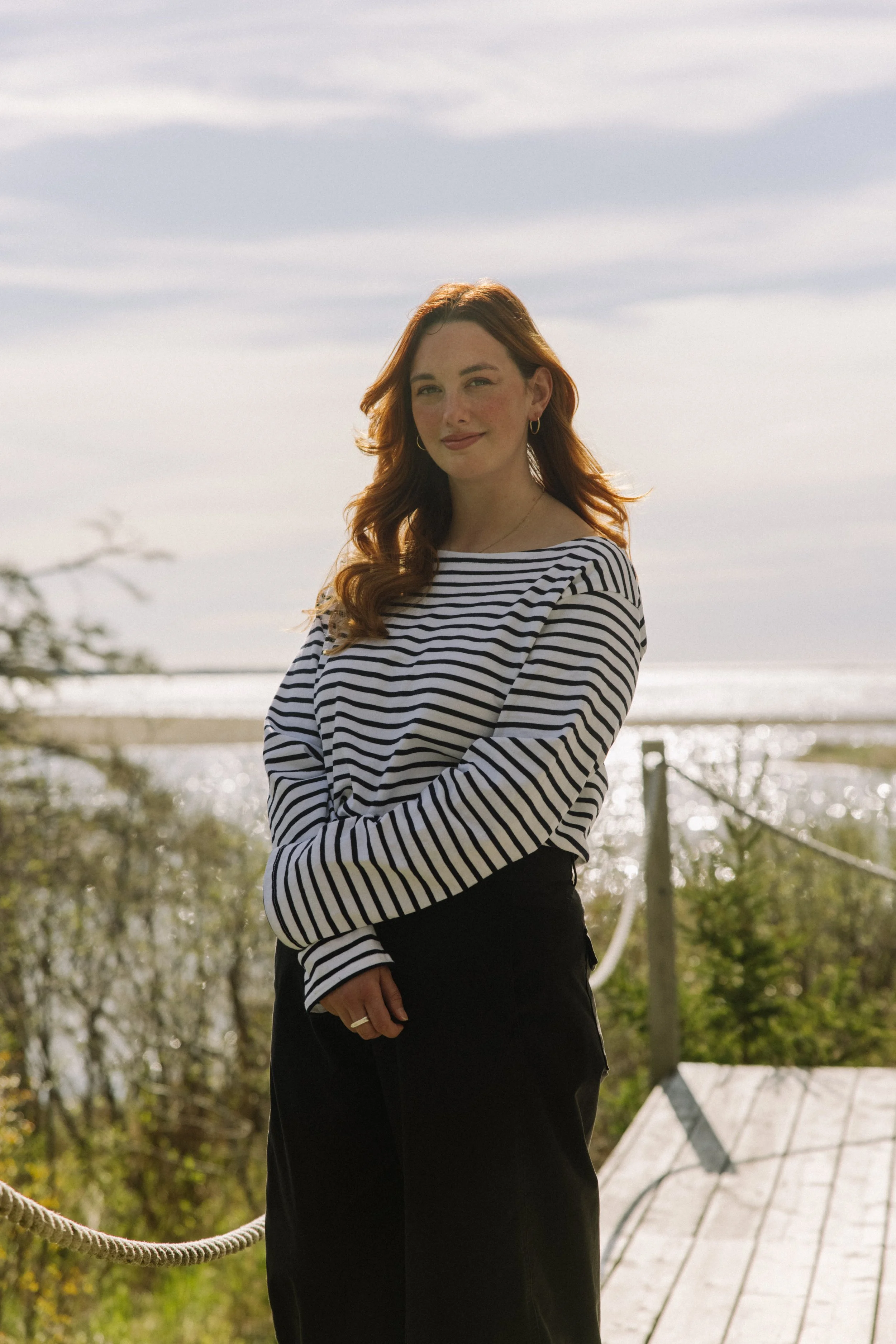
Interview & Photography / Catherine Bernier
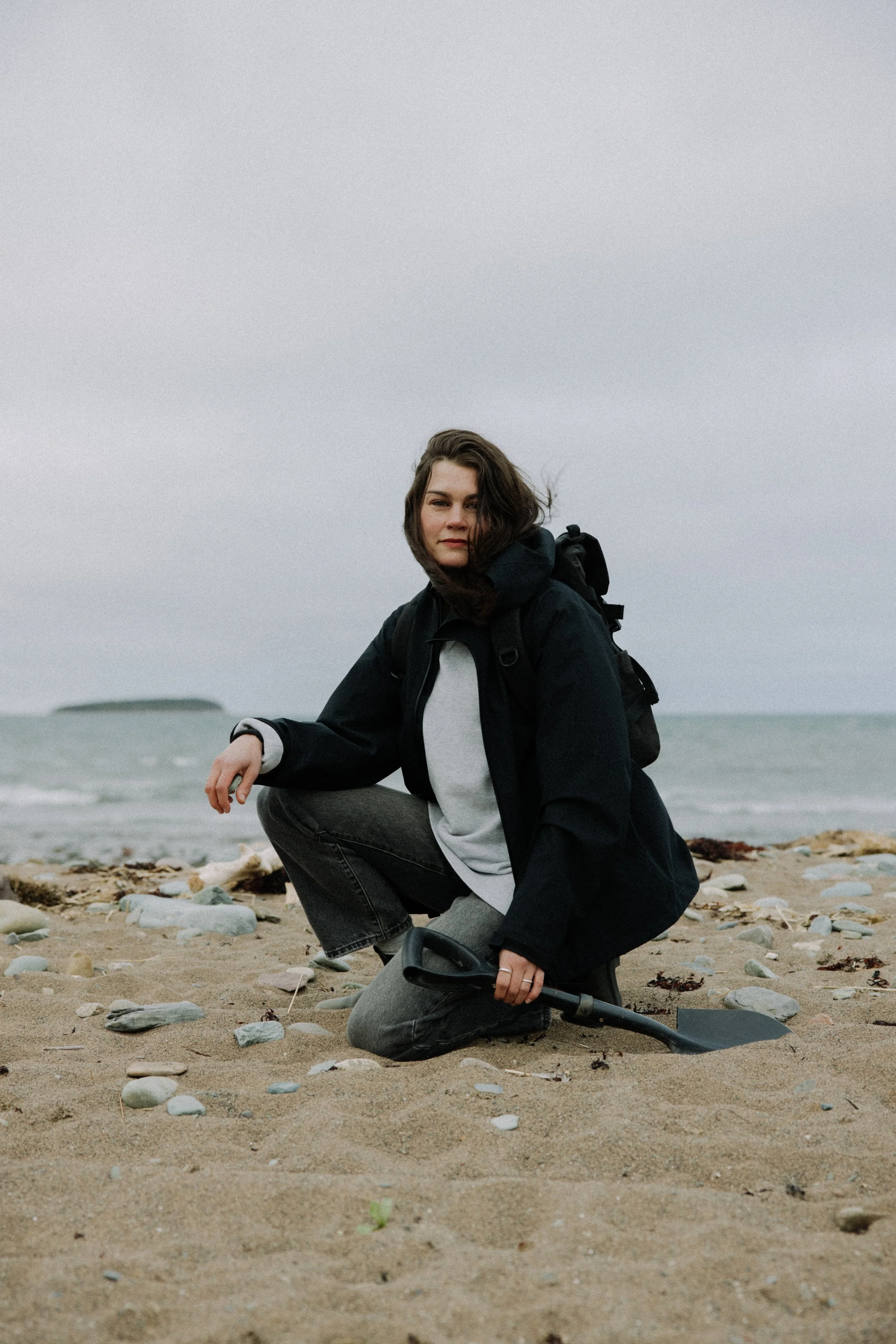
Selected for the annual ARTEA × The Parcelles artist residency, visual artist Catherine Blanchet spent time in Seaforth slowing her practice and deepening a material research rooted in stone and earth. The residency offered a rare pause from daily life—space to draw, write, walk the shoreline, and nurture an ongoing body of work shaped by attention, slowness, and close observation of the landscape.
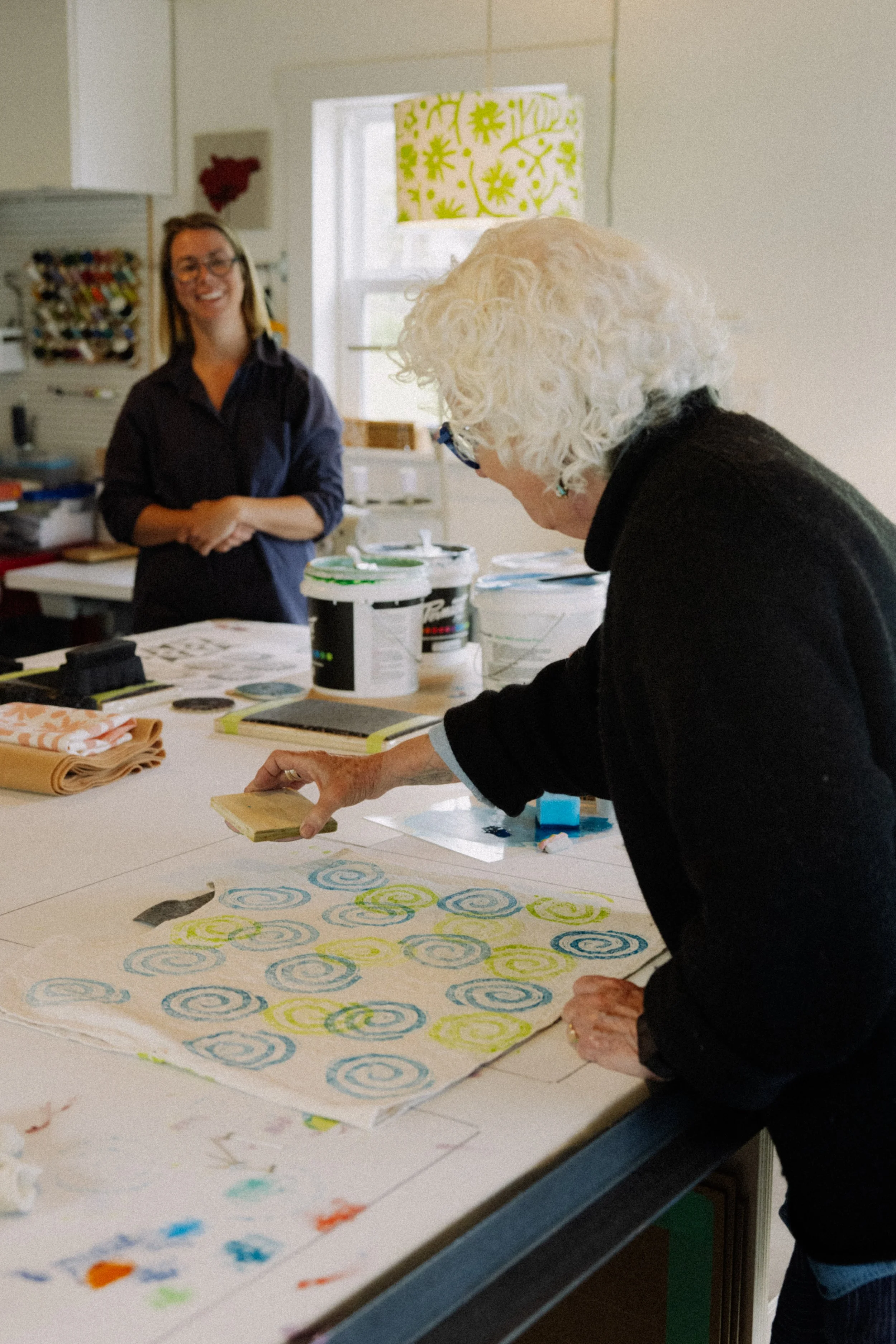
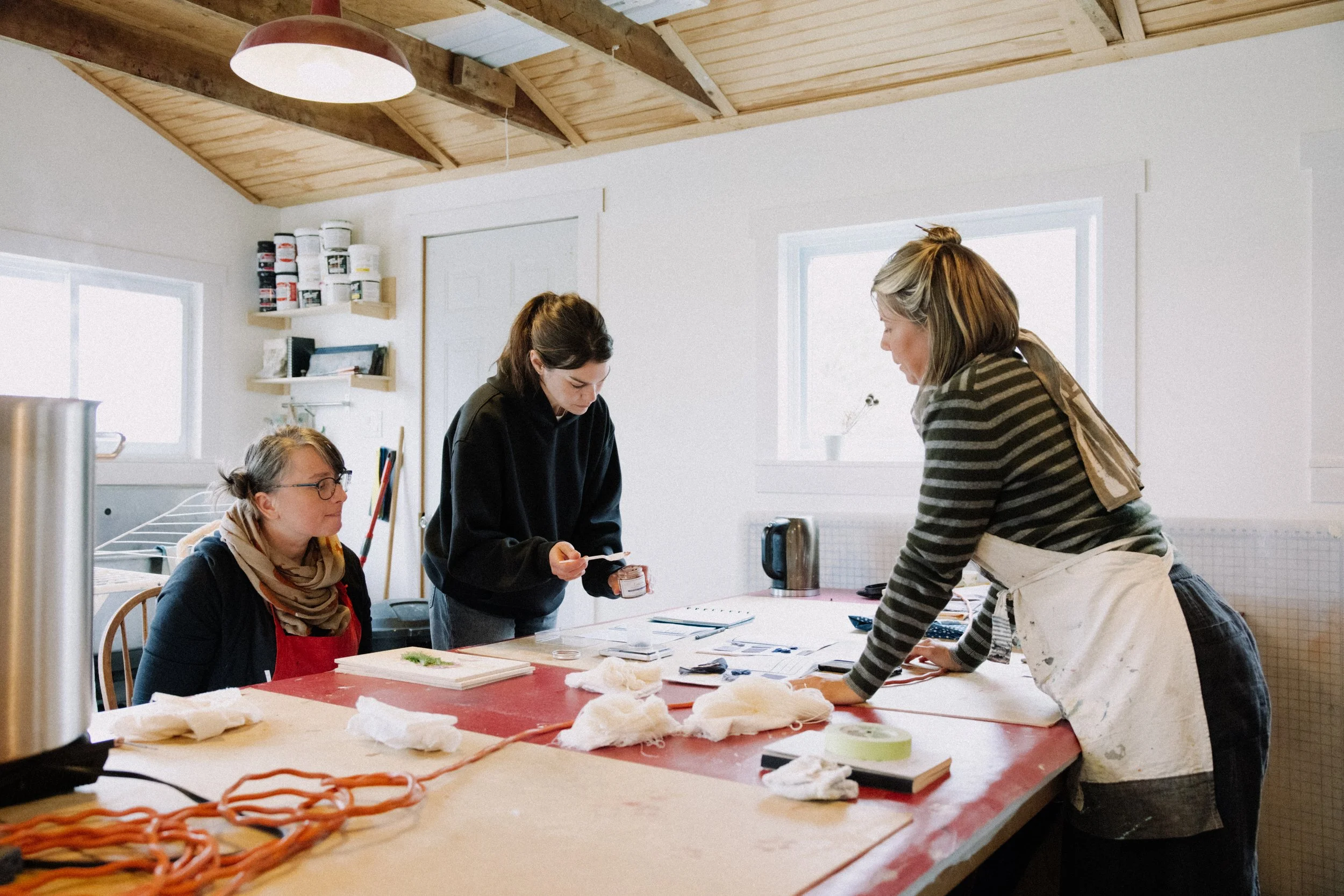
Her time here also unfolded through exchange and collaboration. As part of the residency, Catherine participated in a natural dye workshop led by Alissa Kloet, founder of Seaforth-based studio Keephouse, alongside Halifax–based artist Maria Doering. This shared experience complemented her individual studio practice, expanding her exploration of natural pigments and materials through hands-on experimentation, dialogue, and collective learning.
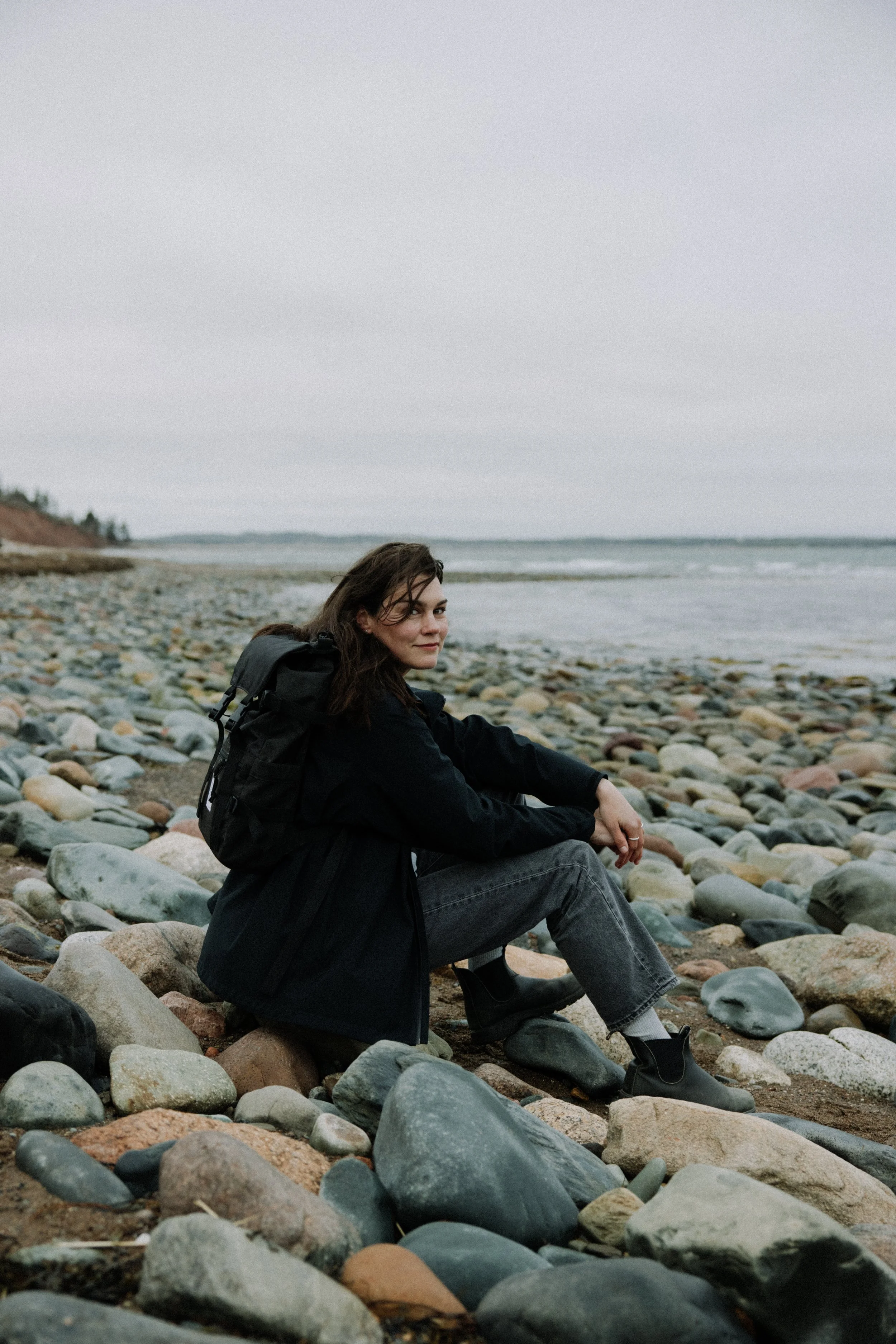
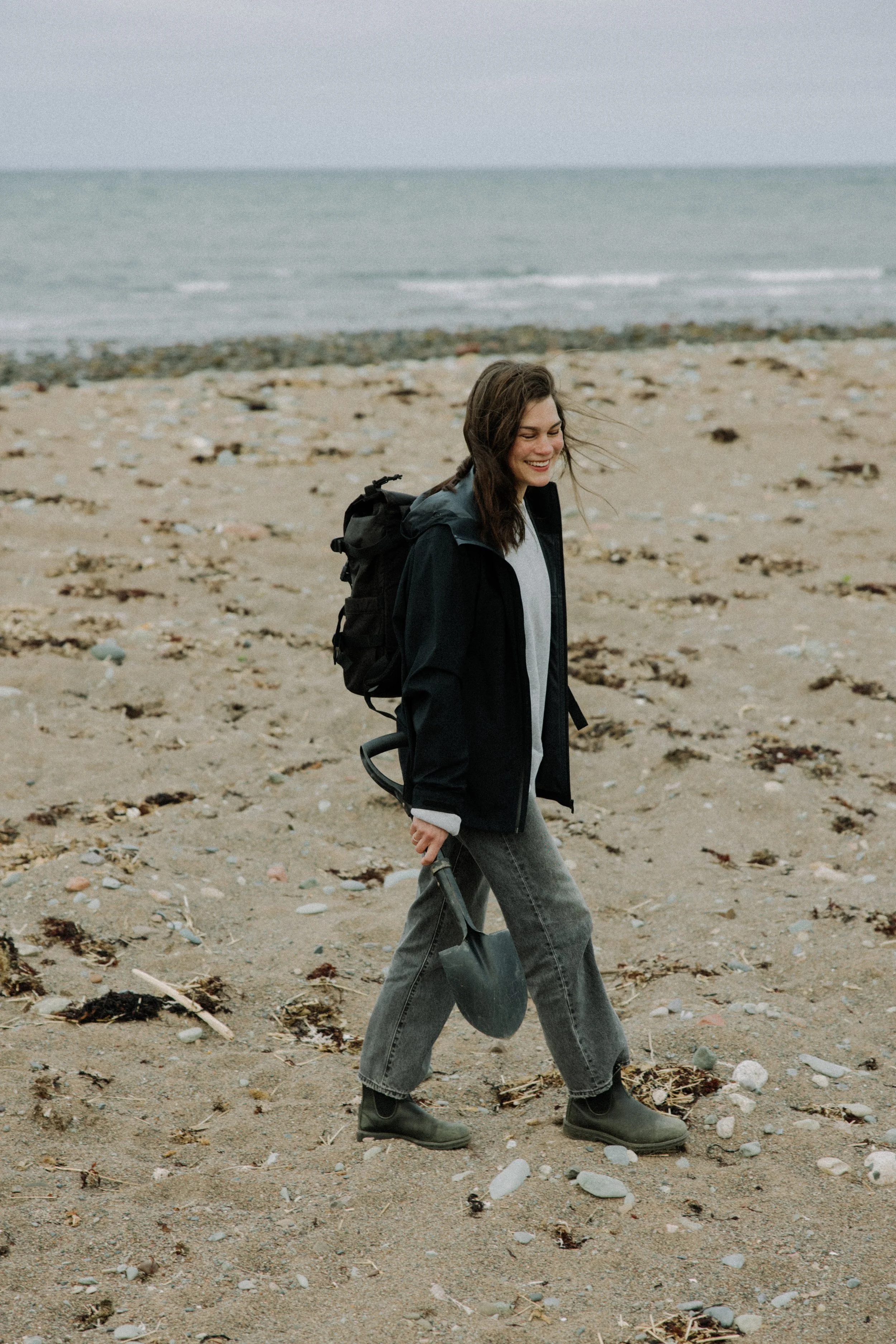
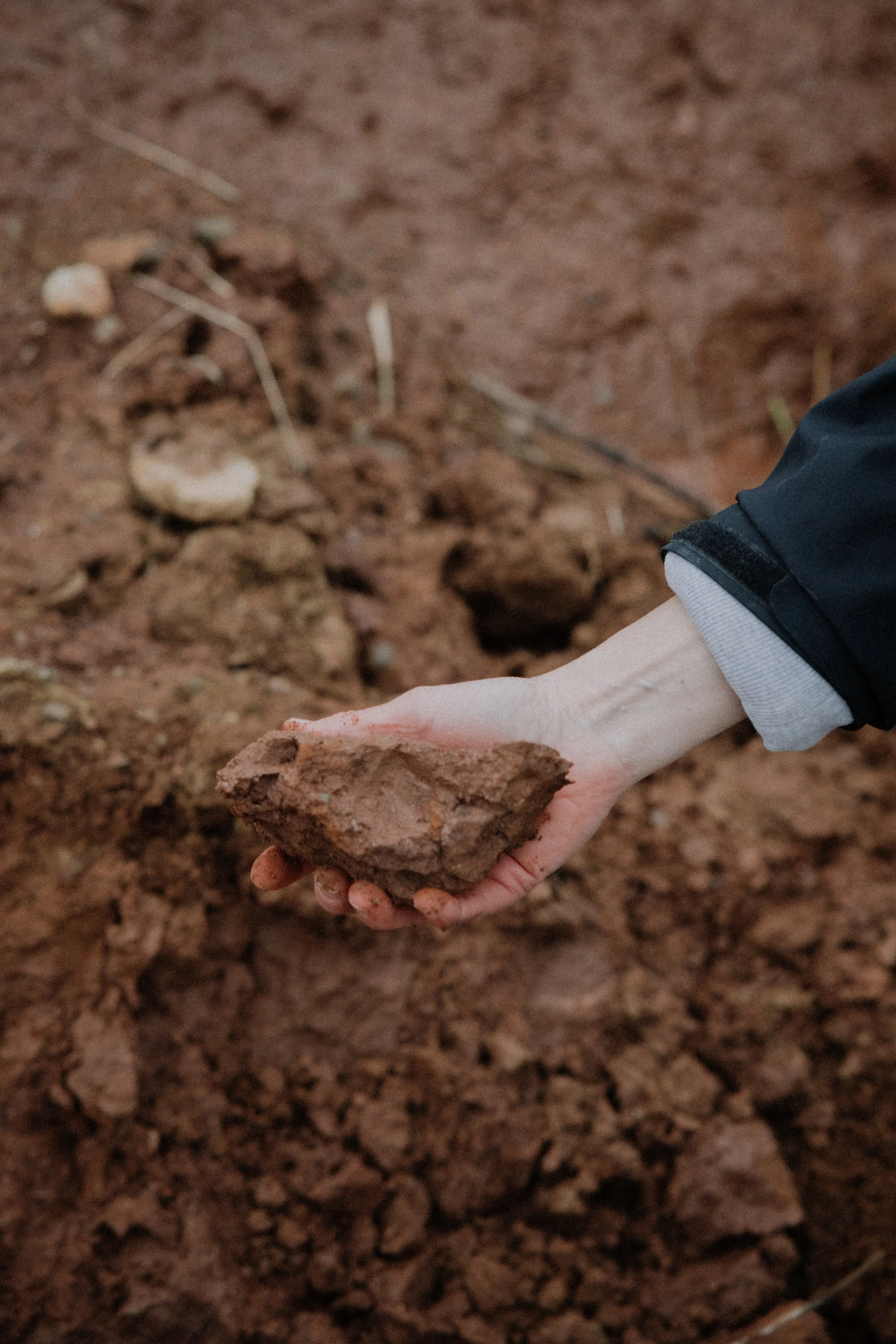
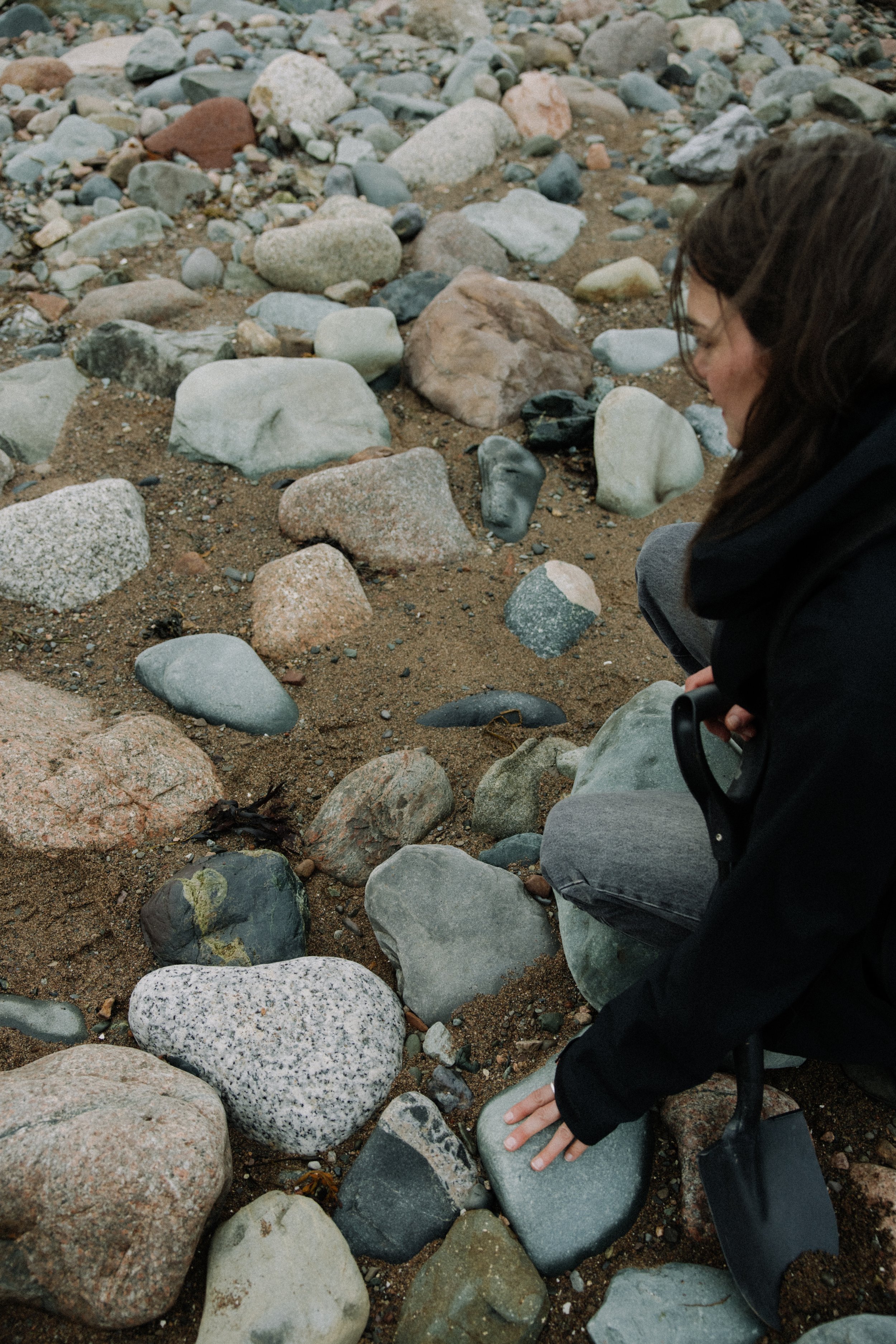
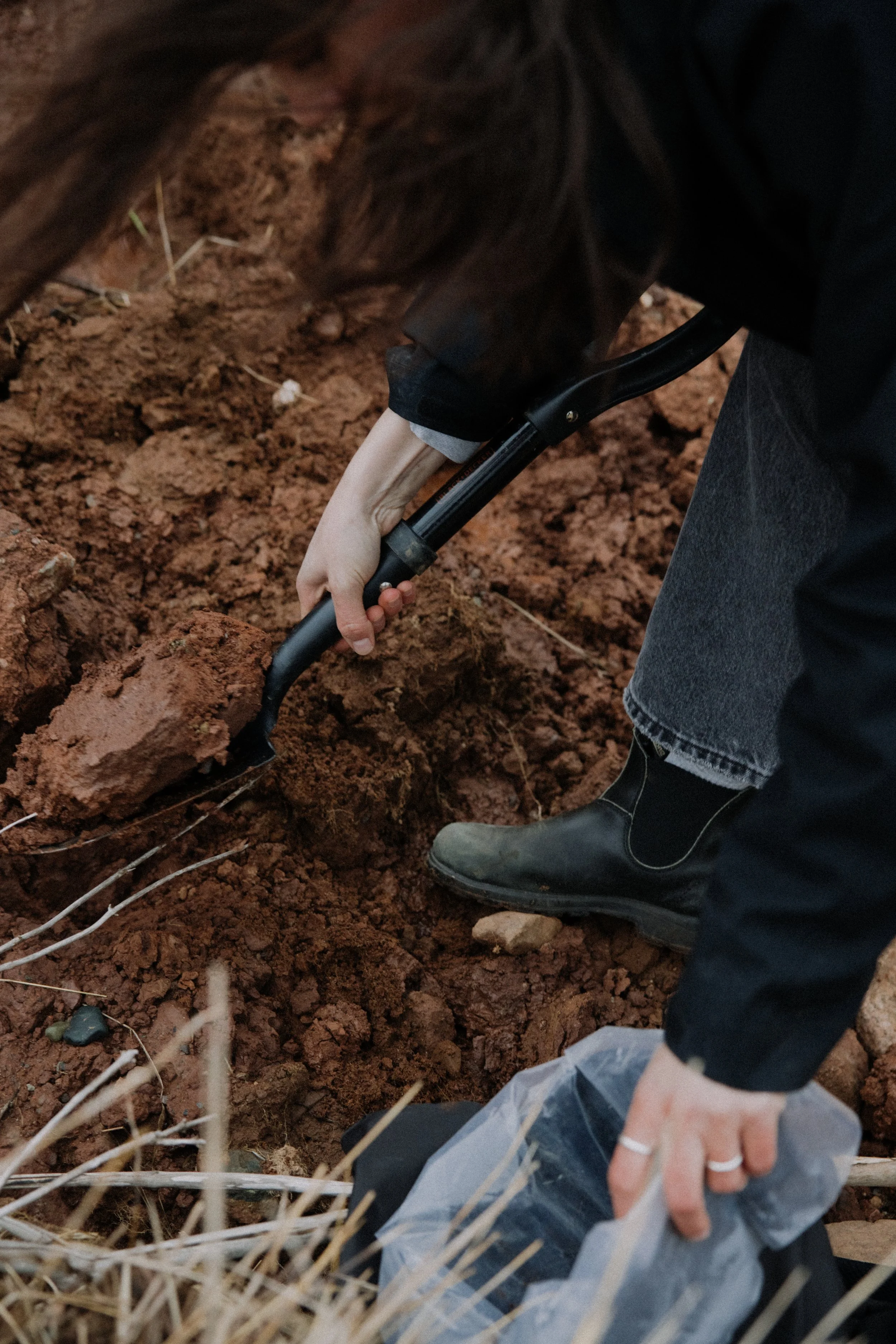
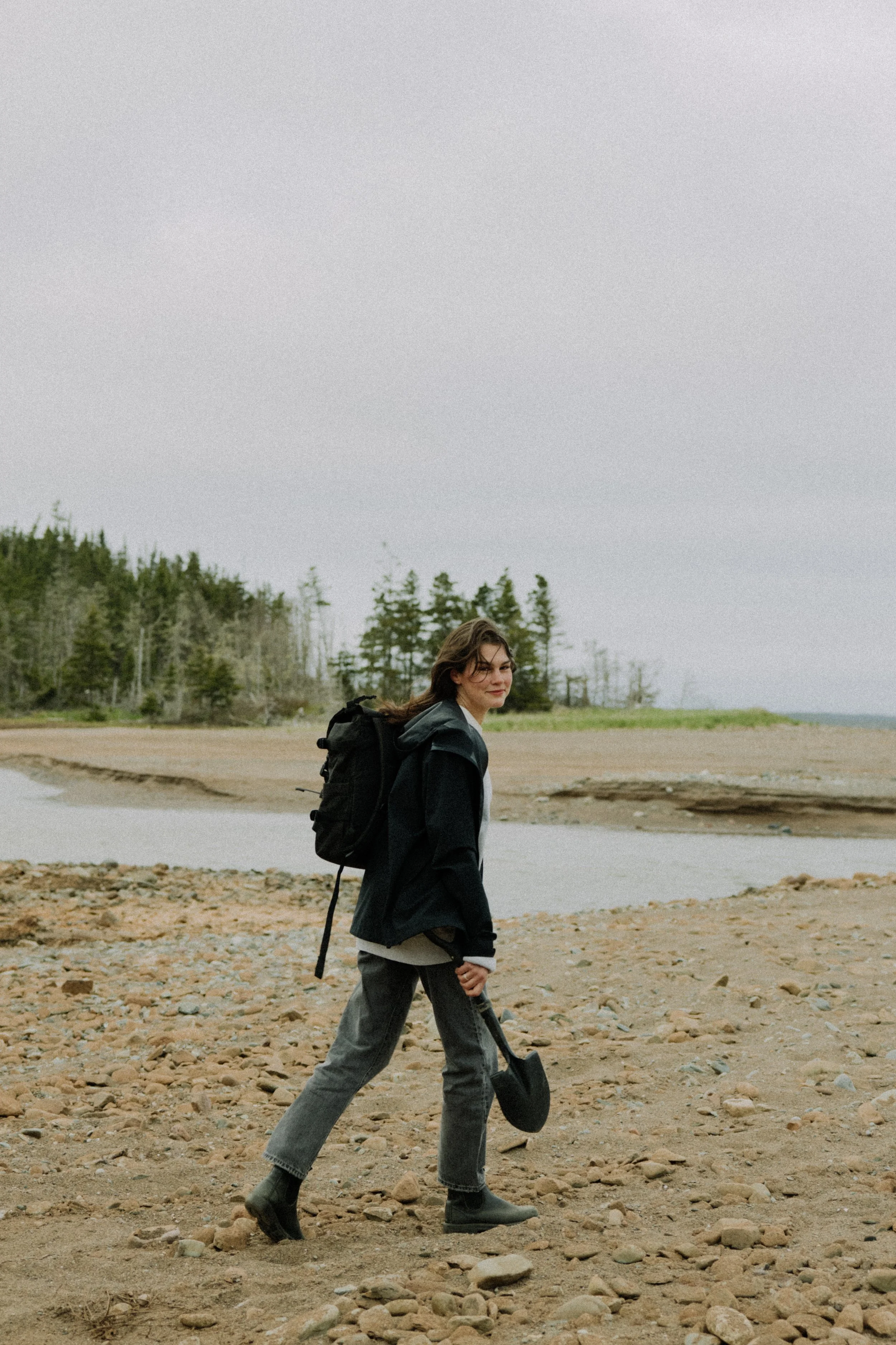
Unfazed by November winds and the dirt under her feet, Catherine roamed the beach collecting stones, clay, and other materials for her work—moments of attentive research that naturally led into our conversation about her practice.
Tell us about you and your practice.
I am originally from a small village along the St. Lawrence River. I have been drawing since childhood and have always been fascinated by great artists and their works. I began my academic path in art history before shifting toward visual arts practice.
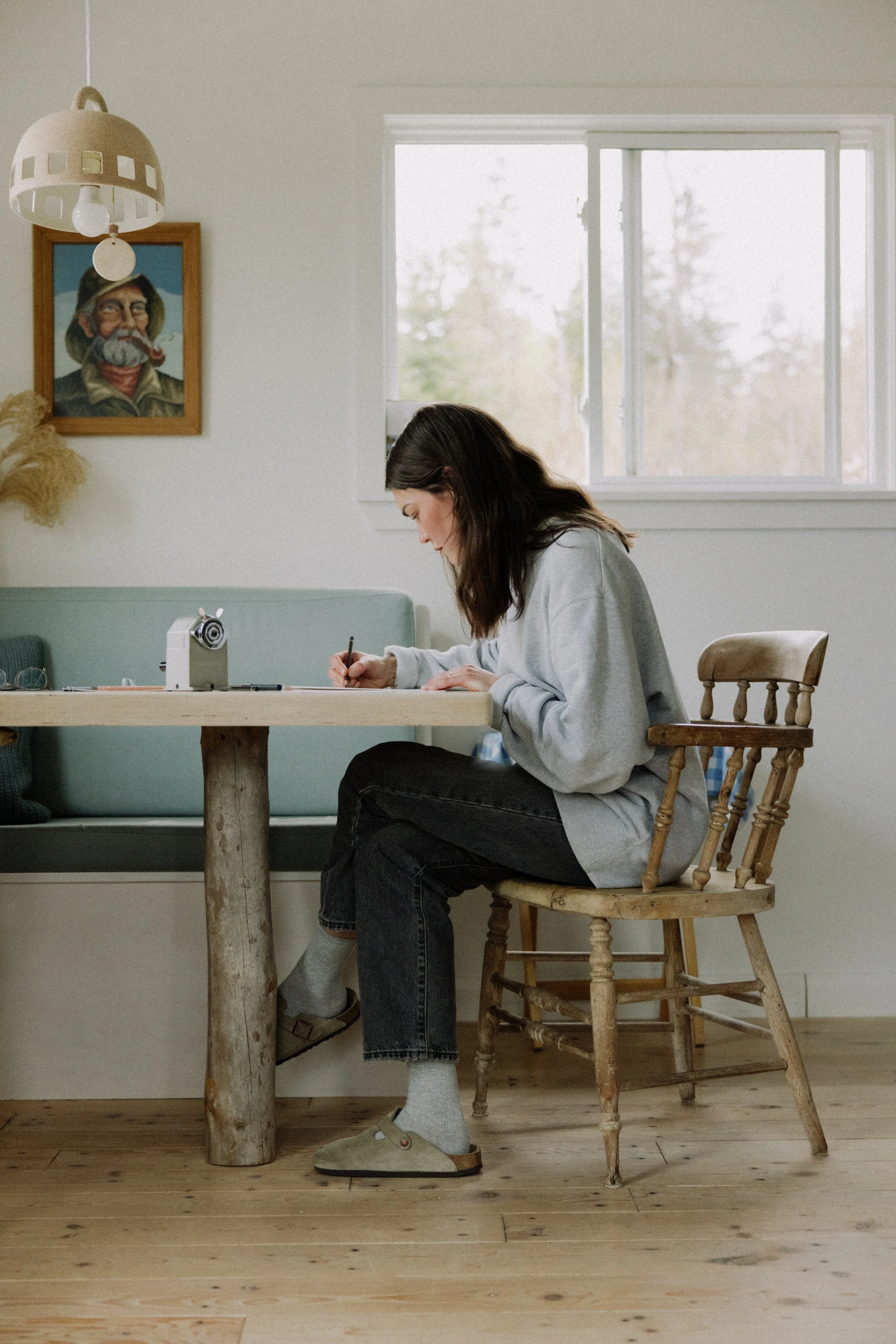
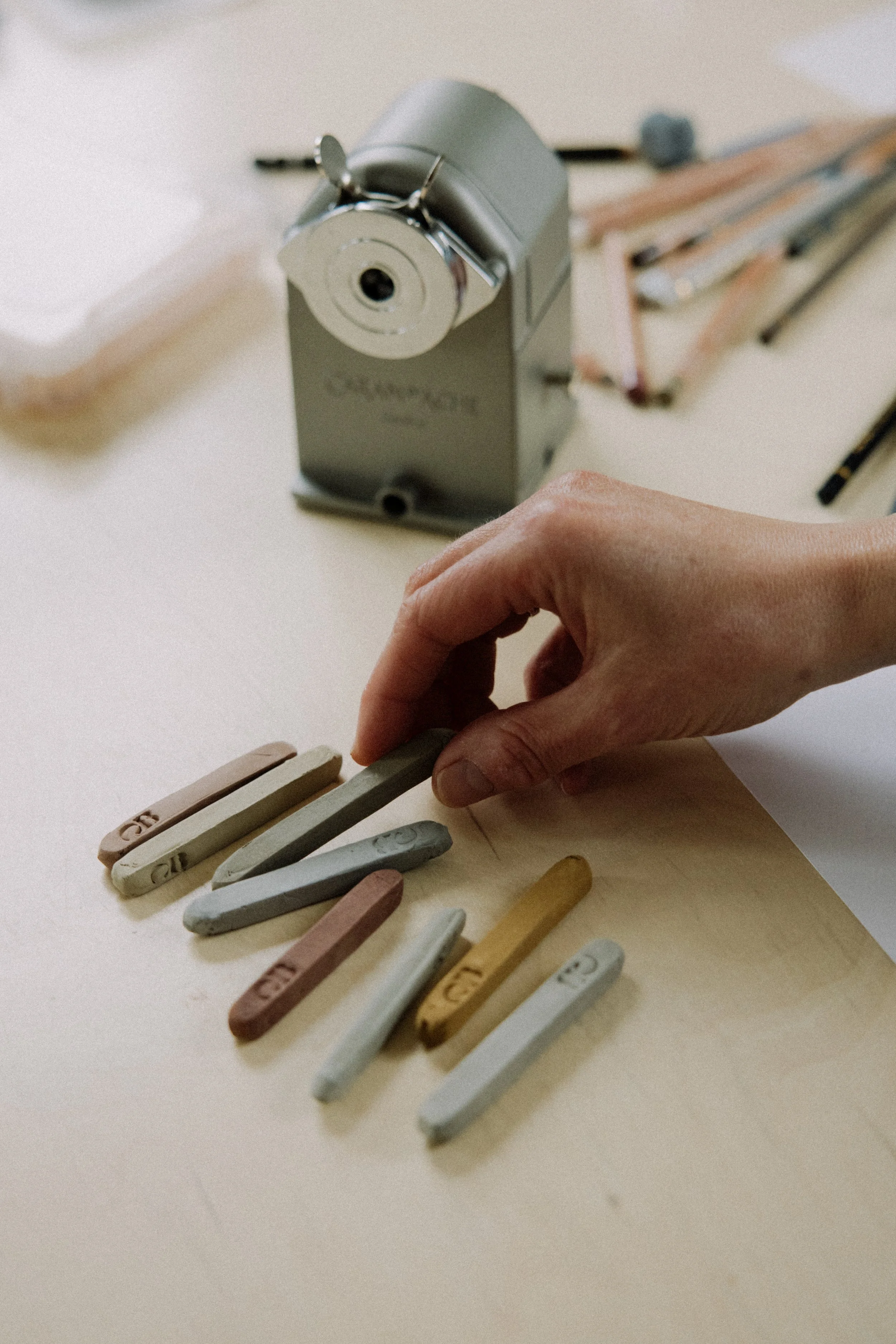
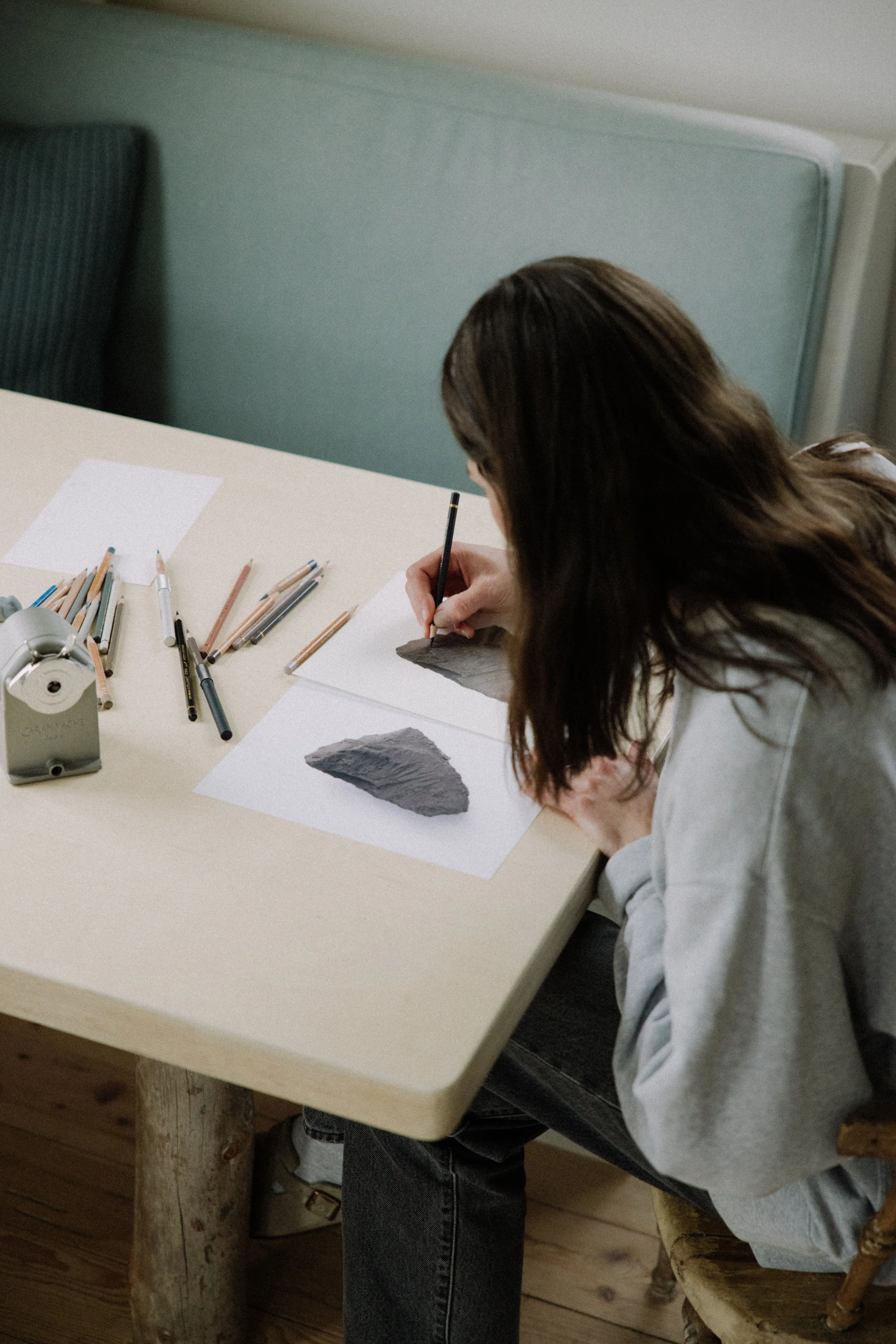
My artistic practice focuses on stone and earth. I collect rocks, which I reinterpret through drawing using pastels, colored pencils, and graphite on paper. My style is hyperrealistic and requires embracing slowness in my life. I also collect clay in nature, with the intention of shaping this material into artworks. This is a research-based practice I began two years ago and continue to pursue.
My work as a whole revolves around time, territory, and material. The sensitivity and fragility of my works engage in dialogue with these notions.
How does your cultural background or personal story shape your practice?
Growing up in the countryside, I have always been deeply attuned to nature. My childhood was spent playing in the forest, wandering along the riverbanks, and biking through country roads. I believe this upbringing taught me how to live with long stretches of time.
I have also always enjoyed foraging and collecting objects—shells, fossils, rocks, plants, and more. This habit followed me into adulthood, particularly through flea markets and antique shops.
I have a collector’s side, somewhat despite myself, as I value minimalism and simplicity. My life is made up of tensions like this, and I think my inner contradictions are reflected in my work.
A few years ago, I was with my children on the riverbanks, gathering small treasures left behind by the tide. That moment awakened something in me and inspired my stone drawings. Life with children helps me cultivate contemplation and renew my sense of wonder toward the fabric of everyday life.
What were your intentions for the residency and how did it go?
This residency was the result of a collaboration between The Parcelles and ARTEA. The call for projects proposed a creation stay that included a day of introduction to natural dye techniques.
My intention was to deepen my knowledge of natural materials for the production of pigments and dyes. This interest already existed in my practice: I had recently made pastels from soils and minerals I had collected.
I therefore used the residency to experiment on paper with these handmade pastels. These explorations allowed me to better understand the possibilities and limitations of this artisanal medium.
Can you describe a typical day during your residency?
My residency days unfolded quietly. I tried to savor every moment spent in this place, which allowed me to put my daily life on pause and devote myself entirely to creation.
The days usually began with simple gestures, such as making coffee, followed naturally by a moment of writing. They then filled with drawing sessions, walks along the ocean with photography, stone collecting, or reading—each day unfolding differently, depending on my mood.
The evenings invariably ended to the sound of a crackling fire in the hearth.
How has the landscape or atmosphere of Seaforth influenced your creative process?
The gentleness and tranquility of Seaforth’s landscape harmonized perfectly with my already contemplative working rhythm. The peaceful atmosphere nurtured my attentive observation of the elements of the landscape.
The memory I carry with me is shaped by the sounds, the wind, and the colors that passed through me during my stay.
“On the coast, erosion is very visible. This reality intensified my reflections on the phenomenon and leads me to adopt a responsible gathering practice aligned with my values.”
- Catherine
Is there a medium or technique you’ve experimented with here that you hadn’t tried before?
During my residency, I had the opportunity to take part in an introduction to natural textile dyeing techniques with Alissa Kloet, an artist from the Keephouse studio in Seaforth.
It was the very first time I explored this medium. The training was dense and inspiring, guiding us through each step while allowing us to try different methods. It broadened my perspective on the use of natural elements as colorants.
What has challenged you most during this residency?
Honestly, although I enjoy driving, the journey from Québec City to Seaforth was the biggest challenge (nine hours, after all!). It would be untrue to say I suffered from solitude—I truly savored this temporary isolation.
How do you see art as a bridge between people, cultures, or generations?
I believe art speaks to both the heart and the intellect. Creation allows ideas and sensations that transcend language to take form.
For me, art is a universal form of communication that enables us to understand the world, rediscover it, and think about it collectively, regardless of our origins.
Have you found inspiration in conversations or encounters with locals?
The workshop with Alissa took place in the presence of Maria Doering, an artist based in Dartmouth, Nova Scotia. I was able to exchange with both artists about our respective practices as well as our realities as artist-mothers.
While discussing my research on natural clay, Alissa also told me about an exhibition by two Seaforth artists—the ceramicist Iris Patterson and visual artist Marlene York—whom I had the chance to meet.
These exchanges were extremely enriching and shed new light on my research.
Has this residency shifted something in the way you see your own practice or future projects?
Since becoming interested in natural clay, the act of extraction I perform in the landscape has increasingly raised questions for me. I fear damaging the landscape, harming the cliffs that delight me so deeply.
On the island coast, erosion is very visible. This reality intensified my reflections on the phenomenon and leads me to adopt a responsible gathering practice aligned with my values.
Artistically, the fragility of the landscape has become a central concern, one that is embodied in my studio work.
What’s a small, personal memory from your time here that you’ll bring back home with you?
I carried back with me the songs of unfamiliar birds, the shifting, misty view framed by the skylight seen from the mezzanine, the visit of a hare, my hair whipped by the wind, and all the rocks waiting patiently for me to come meet them.
What role do you think residencies like The Parcelles play in supporting artists today?
I believe a creative stay like the one offered by The Parcelles is essential for artists. By changing the context of creation, the residency opens up new perspectives and offers time for introspection.
The environment, deeply inspiring, calls for calm and contemplation. Finally, the possibility of creating without the obligation of a public presentation at the end of the stay fosters freedom, experimentation, and research.
Through her residency at The Parcelles, Catherine Blanchet deepened a practice already firmly anchored in attentive listening to the world and its materials. Her work—at once meticulous and fragile—reminds us of the importance of looking carefully and of cultivating a respectful relationship with the land. Between stone, earth, and silence, her work becomes a space where the landscape gently settles—onto paper and into memory.
Follow Catherine Blanchet / @catherineblanchet_
Portraits by Catherine Bernier / @cath.be